Pelagianism and Its Critics: A Study Summary
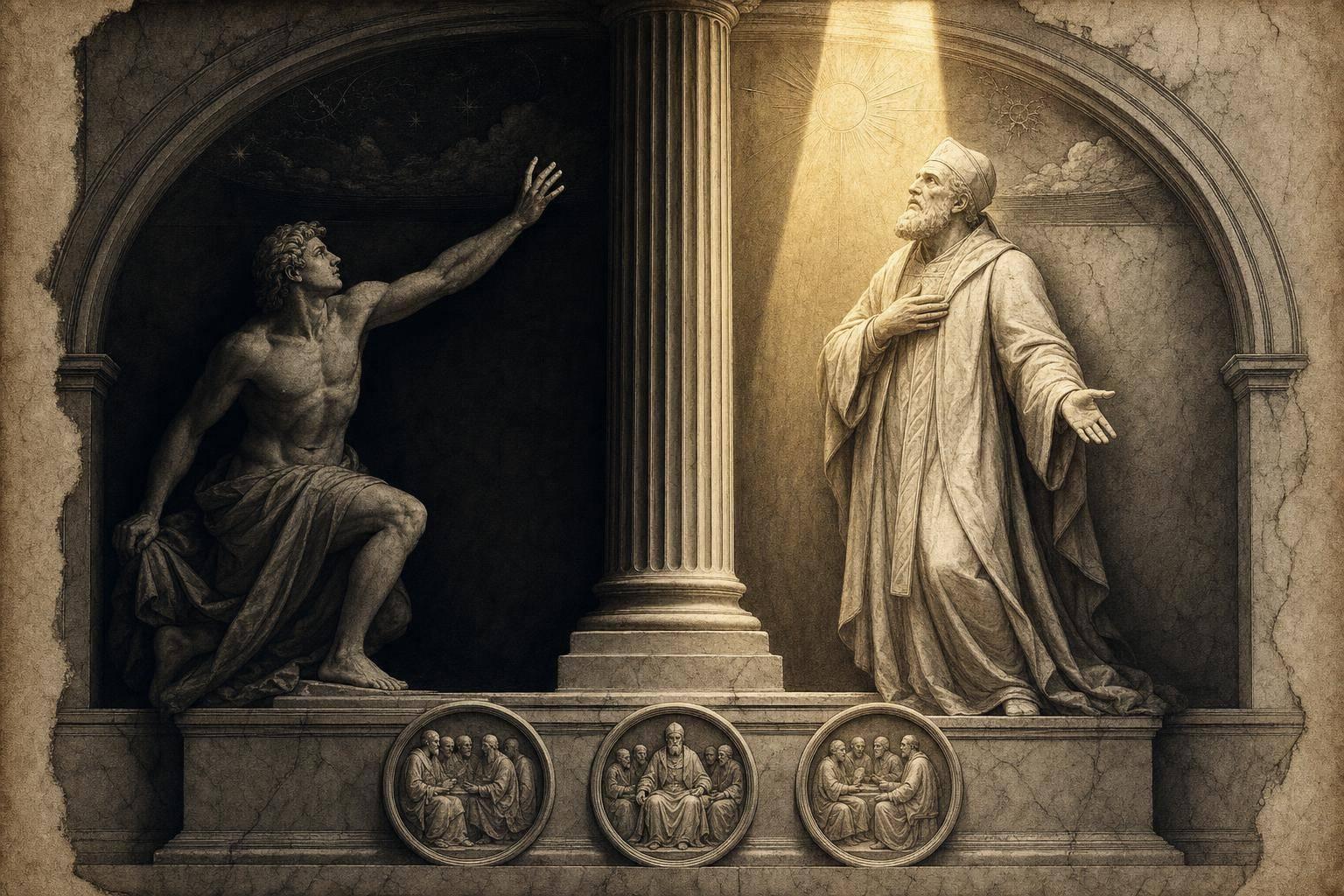

At the heart of this dispute is one blunt question: can people do good by their own will, or do they need God’s grace first? My short answer is this: Pelagius said the human will can obey God without inner damage from Adam’s sin, while Augustine, Jerome, and church councils said the will is hurt by sin and needs grace before it can turn to the good.
If you want the whole article in one view, here it is:
Pelagius said people are born without Adam’s guilt
He treated sin as a personal act, not something passed down at birth
He said free will is enough to make moral choice possible
He treated grace mainly as God’s gifts like creation, law, and Christ’s teaching
Augustine argued that sin damages the will, so grace must come first
Jerome rejected the idea that a person can live without sin
The Council of Carthage condemned the denial of inherited sin and said grace is not optional
That is why this debate mattered so much. It was not just about one monk or one bishop. It was about freedom, blame, guilt, sin, and salvation.
4.13 The Heresies - Pelagianism and the Seeds of Calvinism | Way of the Fathers
Quick Comparison
Issue | Pelagius | Augustine and allies | Council view |
|---|---|---|---|
Human condition at birth | No inherited guilt | Humanity marked by Adam’s sin | Denial of inherited sin rejected |
Free will | Able to choose good on its own | Wounded by sin | Not enough without grace |
Grace | Help, law, example | God’s prior help that heals the will | Required for good action |
Sinlessness | Tends toward strong human moral power | No one lives free from sin by self-power | Claims of this kind rejected |
My takeaway: the article shows how one dispute produced two rival views of human nature. One says, “You can obey, so you are fully accountable.” The other says, “You are accountable, but your will needs healing first.” Everything else in the piece flows from that split.
Pelagianism in Historical Context
Pelagius was an ascetic teacher active in Rome in the late 4th and early 5th centuries. He put a strong focus on discipline, and that set off a much larger dispute about a hard question: is human effort enough for moral good?
Pelagius, Rome, and Moral Rigor in Late Antiquity
Pelagius pushed back against Christians who excused sin by pointing to human weakness. So he stressed daily Christian discipline and argued that Christians can choose the good and are fully responsible for what they do. For Pelagius, moral responsibility depended on real freedom, not inherited guilt.
Why Pelagius and Pelagianism Are Not Always the Same
"Pelagianism" is a later doctrinal label shaped by controversy, not a direct transcript of Pelagius's surviving writings. His opponents, especially Augustine and Jerome, summarized and hardened his views in polemical form, and church councils later condemned Pelagianism as a heresy.
That means later Pelagianism is a disputed development of Pelagius's thought, not a simple copy of it. And that difference matters, because it leads straight into the debate over original sin, free will, and grace.
The Doctrinal Core: Original Sin, Free Will, and Grace

Pelagianism vs. Augustine: Original Sin, Free Will & Grace Compared
Original sin, free will, and grace sit at the heart of the Pelagian controversy.
Why Pelagianism Rejects Inherited Guilt from Adam
Pelagianism says human beings are born without inherited guilt. In this view, Adam's sin does not pass guilt down to later people. What it passes on is a bad example.
That point matters because Pelagianism treats sin as a personal act. If sin is something a person does, then guilt belongs to the one who commits it. It can't be handed down from parent to child like a family heirloom.
Free Will as the Basis of Moral Responsibility
Pelagianism puts free will at the center of moral responsibility. It holds that human freedom is enough for obedience, so people can choose good or evil in a real sense.
Because that choice is real, praise and blame make sense. A person is held responsible for what he or she does, not for a fault inherited from Adam. In that framework, moral responsibility stays fully with the human person.
How Pelagianism Defines Grace
Pelagianism does not reject grace outright. Instead, it gives grace a narrower role. Grace is understood as creation itself, the gift of free will, the Law, and Christ's example.
For Augustine, this was the breaking point in the dispute. He argued that grace was not just outside help or moral guidance. That clash over what grace is - and what human beings need from it - became a main issue in the controversy.
The Main Critiques: Augustine, Jerome, and the Church Councils
Critics said Pelagianism went too far in three ways. It denied inherited sin, gave too much weight to free will, and treated grace like a follow-up rather than the starting point.
Augustine's Case Against Pelagian Freedom
The core issue was simple: does the human will need to be healed before it can choose the good? Augustine said yes.
In his view, Adam's sin damaged human nature, including the will itself. That meant grace had to come first, before any turn toward God. People still make choices. Augustine wasn't denying that. But he argued that, on their own, they cannot choose the good.
Jerome and the Council of Carthage
Jerome pushed back hard against impeccantia - the claim of sinlessness. His point was blunt: no human being lives without sin, and even good actions depend on God's help. Free will is still real, but it does not stand on its own.
The Council of Carthage took the same line. It condemned the denial of inherited sin and the claim that free will can work without grace. Its ruling treated grace as necessary, not optional.
The contrast is easier to see side by side.
Comparison Table: Pelagian Claims, Augustinian Critiques, and Conciliar Rulings
Topic | Pelagian Position | Augustine's Critique | Conciliar Ruling |
|---|---|---|---|
Original sin | No inherited guilt | Sin wounds nature | Inherited sin denied |
Free will | Will is sufficient | Will is wounded | Free will insufficient without grace |
Grace | Grace as aid, example, and law | Grace as prior help | Grace indispensable |
This dispute points to a bigger philosophical problem: what does moral responsibility look like if human nature is wounded?
Philosophical Significance and Conclusion
What the Debate Means for Moral Responsibility and Human Nature
After following the doctrinal clash, the big issue comes into view: what does this say about freedom and responsibility?
Pelagianism treats freedom as the power to choose good or evil without inward corruption. If that view is right, moral responsibility looks simple: you chose, so you are accountable. Augustine pushes back on that. He argues that if the will is bound by sin, freedom is not as complete as it seems. In that frame, grace does not restrict freedom. It restores it.
That changes the shape of the whole debate. It presses on a bigger problem: does an inherited condition limit freedom and reshape blame, praise, and justice? And can human beings choose the good without divine grace at all?
Key Takeaways from the Pelagian Controversy
These points flow straight from the dispute over original sin, free will, and grace.
The denial of inherited sin drives the rest of the system.
If inherited sin is denied, the will remains intact, grace becomes optional, and the need for redemption is weakened.
Augustine treats free will as real, but not enough on its own.
Carthage fixed grace as necessary, not optional.
FAQs
Why did Augustine think free will was not enough?
Augustine argued that free will, by itself, was not enough for salvation because original sin had wounded human nature. In his view, the human will had become so bent out of shape that it could not choose the good on its own.
That’s where he parts ways with the Pelagians. They put far more weight on human choice alone. Augustine did not. He believed people needed divine grace to heal the will and restore the freedom needed for real moral and spiritual integrity.
Did Pelagius completely deny grace?
The provided sources do not explain Pelagius’s view of grace or clearly state his position on original sin. Based on these sources alone, this question can’t be answered.
Why was rejecting original sin seen as so serious?
Rejecting original sin was treated as a serious problem because it weakened the case for divine grace. If people could become morally perfect, or turn to God by sheer force of will, then humanity would no longer look deeply fallen or wholly dependent on Christ for salvation.
And once that idea starts to slip, the Christian framework of redemption loses the main reason it exists.


