

Every translation is an interpretation. The translator makes choices — about register, philosophical weight, idiomatic equivalents — that shape the reader's access to the original argument. Most editions hide this entirely.
Logos editions do not. Where the translation departs from strict literalism for the sake of readability, editorial notes record the original term, its semantic range, and the reasoning behind the choice made. Readers are treated as capable of evaluating that reasoning themselves.
"The Greek word logos means reason, word, and account simultaneously. No English equivalent captures all three. We do not pretend otherwise."
This transparency is not incidental. It is a philosophical commitment: the reader's encounter with the text should be honest about the mediation involved.

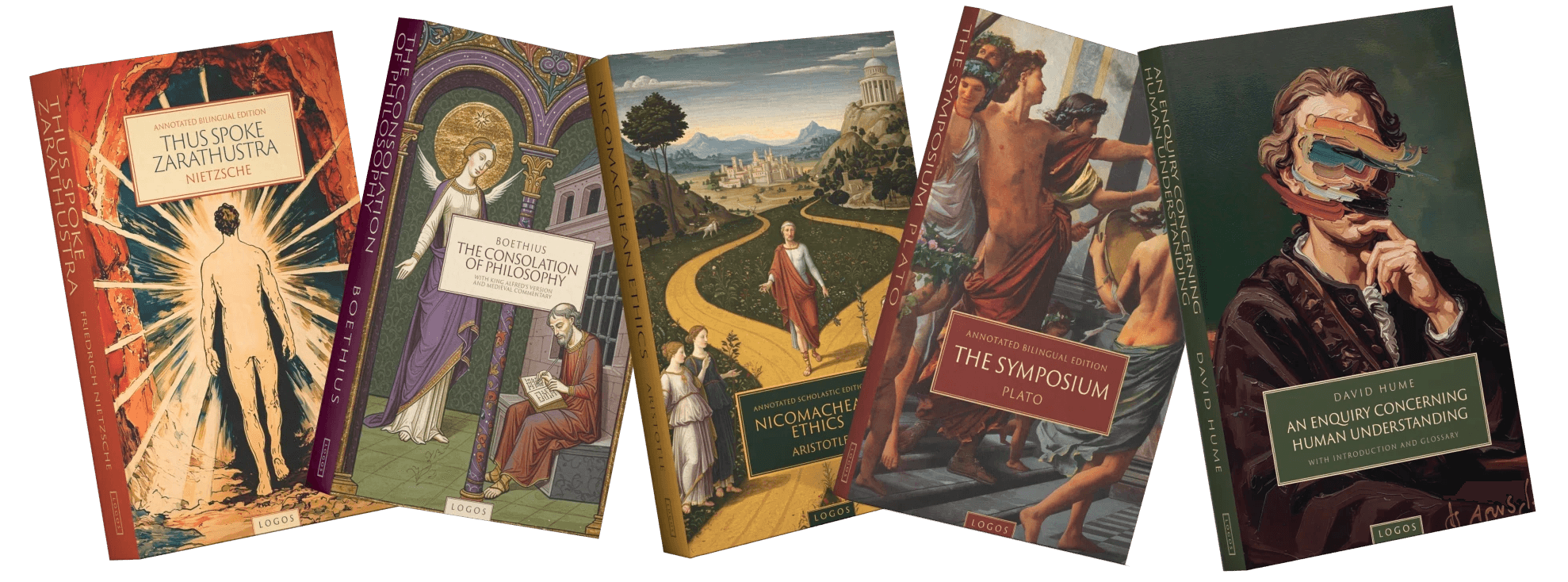
Logos translations are produced by scholars with active publication records in the relevant philosophical tradition. Translators are required to submit a translator's preface justifying their key terminological choices, which appears in full in each edition.
We do not commission translations optimized for accessibility at the cost of philosophical accuracy. Where a passage is genuinely difficult in the original, the translation preserves that difficulty, supported by annotation — not by simplification.