








ABOUT LOGOS PUBLISHING

A publishing house

built for serious readers.

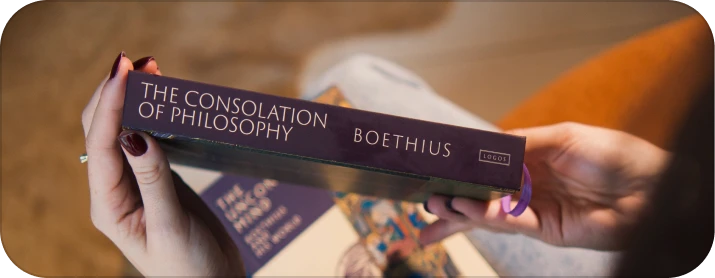
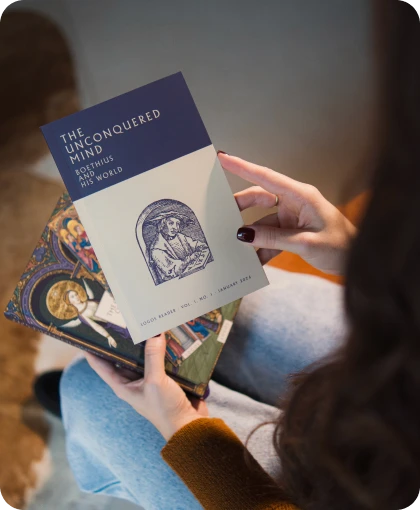
Logos Publishing exists for readers who want to engage philosophy on its own terms — not as self-improvement, not as intellectual décor, but as a demanding and consequential practice.

ABOUT LOGOS PUBLISHING

A publishing house built for serious readers.

Logos Publishing exists for readers who want to engage philosophy on its own terms — not as self-improvement, not as intellectual décor, but as a demanding and consequential practice.

ABOUT LOGOS PUBLISHING

A publishing house

built for serious readers.

Logos Publishing exists for readers who want to engage philosophy on its own terms — not as self-improvement, not as intellectual décor, but as a demanding and consequential practice.

ORIGIN

What we are building, and why.

What we are building, and why.

Logos Publishing was founded on a specific conviction: that there is a readership prepared to take philosophy seriously, and that the publishing market has consistently failed to serve it.

The dominant mode of philosophy publishing in the English-speaking world bifurcates between academic editions inaccessible to general readers and popular titles that reduce philosophical thought to aphorism and lifestyle guidance.

Neither is adequate. Logos was founded to occupy the space between them — rigorous enough to satisfy serious scholars, materially refined enough to function as objects worth keeping, and editorially framed to support readers who are willing to do the work.

WHAT WE PUBLISH

The philosophical tradition,

presented without concession.

The philosophical tradition, presented without concession.

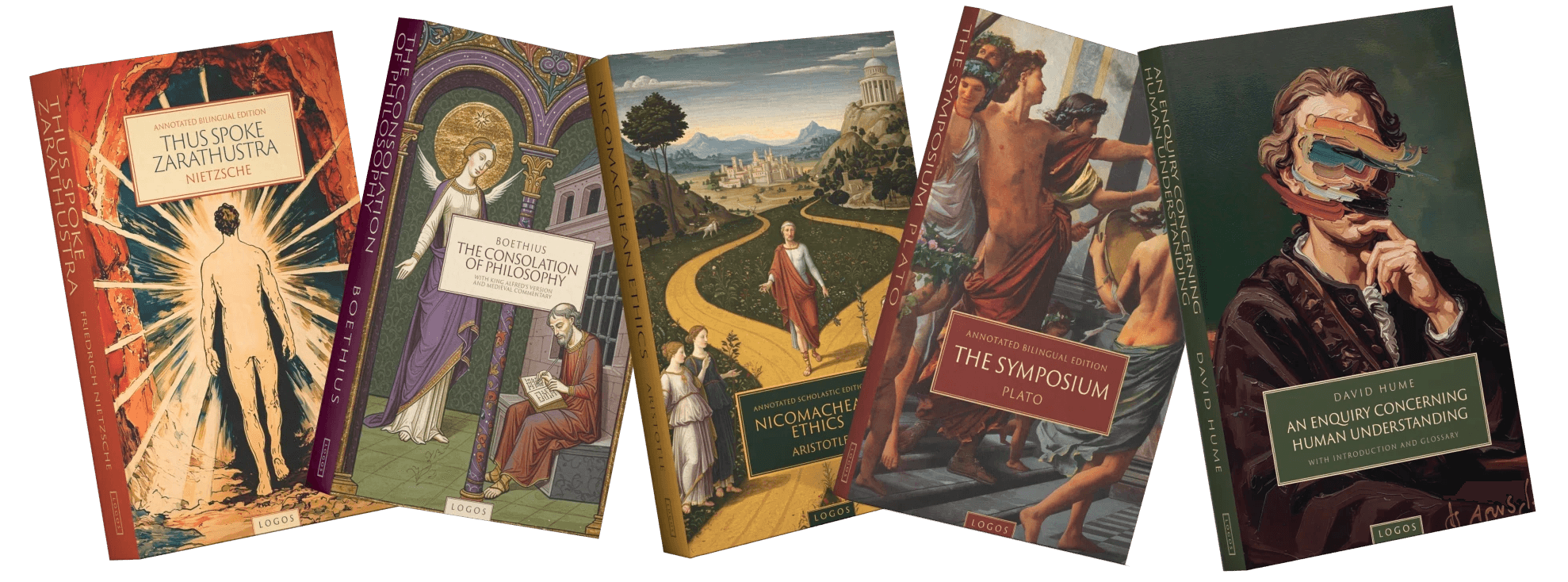
Each Logos edition is organized around a single major philosophical work. The selection criteria are not commercial. Works are chosen because they represent necessary nodes in the history of Western philosophical thought — texts that cannot be bypassed by a reader who wishes to understand how we arrived at the questions we now face.

Each Logos edition is organized around a single major philosophical work. The selection criteria are not commercial. Works are chosen because they represent necessary nodes in the history of Western philosophical thought — texts that cannot be bypassed by a reader who wishes to understand how we arrived at the questions we now face.

1

Text

The primary philosophical work, in original language and English translation, presented without abridgment.

2

Context

A scholarly introduction covering the work's historical moment, its argument, and its subsequent reception in the tradition.

3

Discourse

Member access to guided discussion, scholar commentary, and archival editorial content extending the conversation.

THE MEMBERSHIP MODEL

Philosophy as a

practice, not an event.

Logos is structured as a membership because philosophy is not an event. It is a sustained practice that develops through accumulated reading, returned attention, and engagement with a sequence of works that build on one another. A single volume is a beginning, not an education.

The monthly format imposes a productive constraint: one work at a time, followed rather than accumulated. Members are not acquiring a library. They are maintaining a practice.

THE MEMBERSHIP MODEL

Philosophy as a

practice, not an event.

Logos is structured as a membership because philosophy is not an event. It is a sustained practice that develops through accumulated reading, returned attention, and engagement with a sequence of works that build on one another. A single volume is a beginning, not an education.

The monthly format imposes a productive constraint: one work at a time, followed rather than accumulated. Members are not acquiring a library. They are maintaining a practice.

INTELLECTUAL PROGRAMMING

The edition is the beginning of the conversation.

The edition is the beginning of the conversation.

The edition is the beginning of the conversation.

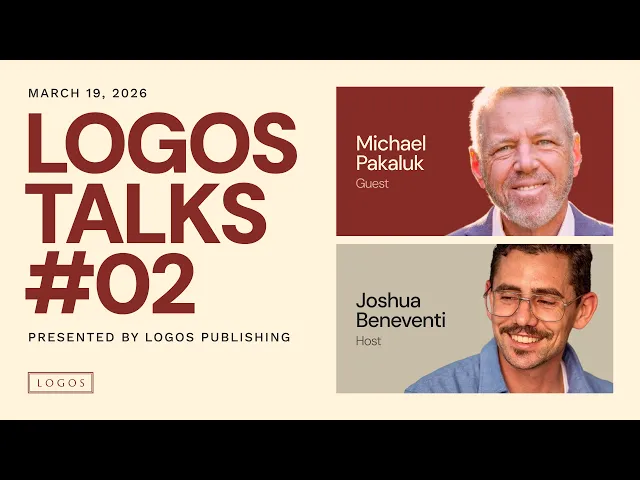
Logos Publishing organizes a programme of scholar-led talks, discussions, and recorded lectures structured around each edition's work and its broader philosophical context.

These are not promotional events. They are an intellectual extension of the edition — an opportunity for members to hear the text discussed by scholars who have spent careers with it.

Programming is available to all active members and is archived in the member area for subsequent access.