RENÉ DESCARTES

RENÉ DESCARTES

Discourse on the Method

Discourse on the Method

Where modern philosophy begins

and start receiving a philosophy masterpiece every month.
Discover what’s inside the box

Discover what’s

inside the box

Details that make

the difference:

Details that make

the difference:

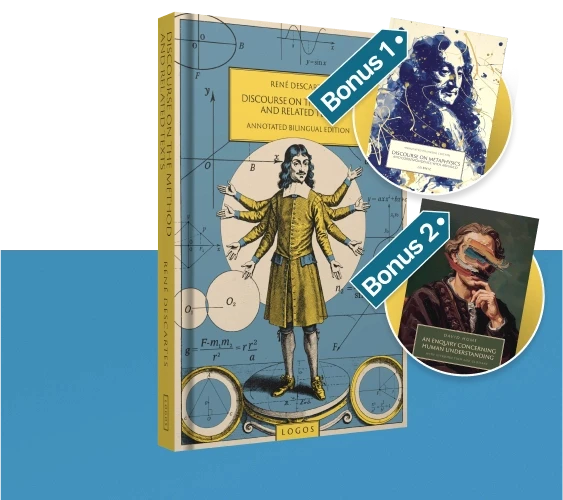
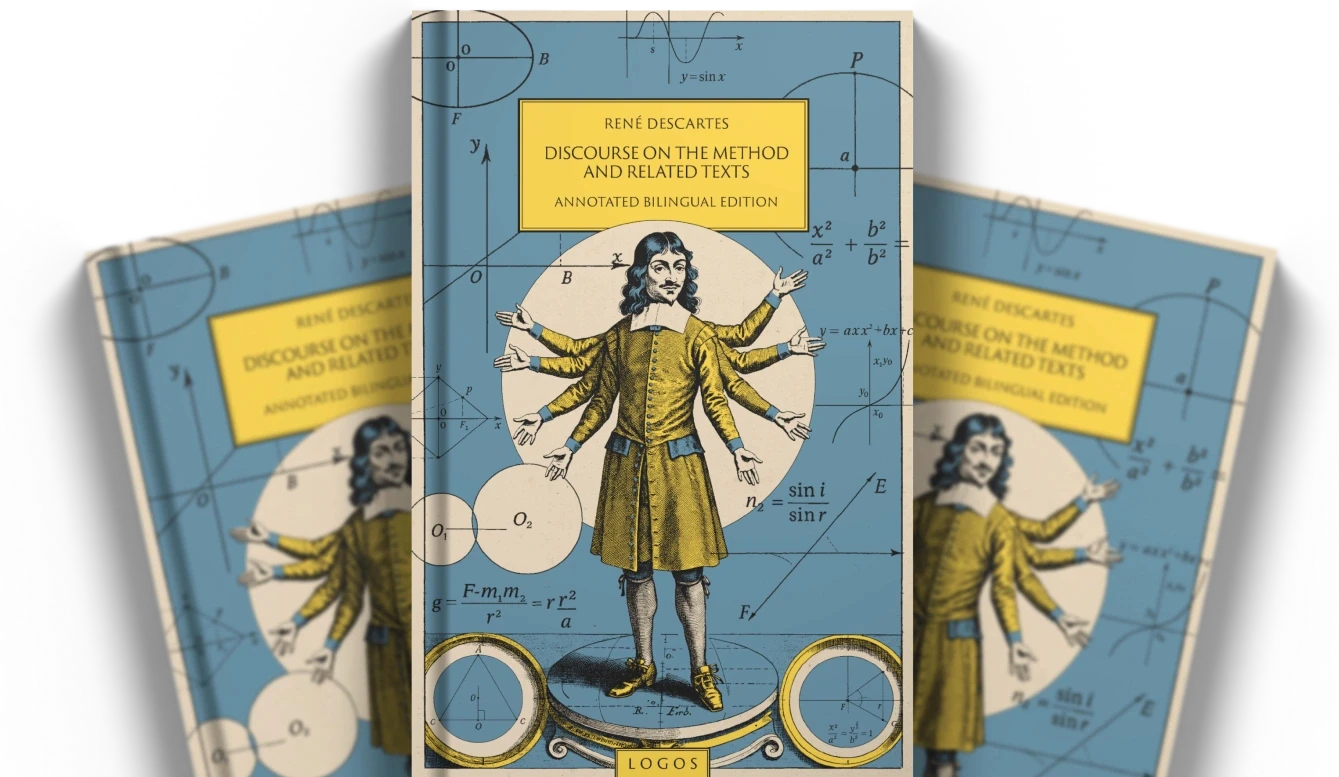
Bilingual facing-page edition 

English translation on the recto, original French or Latin on the verso. The French follows the Adam-Tannery critical edition, preserving the seventeenth-century orthography of the original. Latin is used for the Geometrical Exposition.

Translation

The Discourse appears in John Veitch's translation (1850), revised to update forms archaic enough to impede contemporary reading. The Geometrical Exposition, the Letter-Preface to the Principles of Philosophy, and the fifteen letters were newly translated for this edition by the Logos Publishing editorial team.

Four texts under one cover 

The Discourse on the Method in six parts; the Geometrical Exposition; the Letter-Preface to the Principles of Philosophy (1647); and fifteen letters from 1633–1638 exchanged with Mersenne, Huygens, Pollot, Noël, Morin, and others.

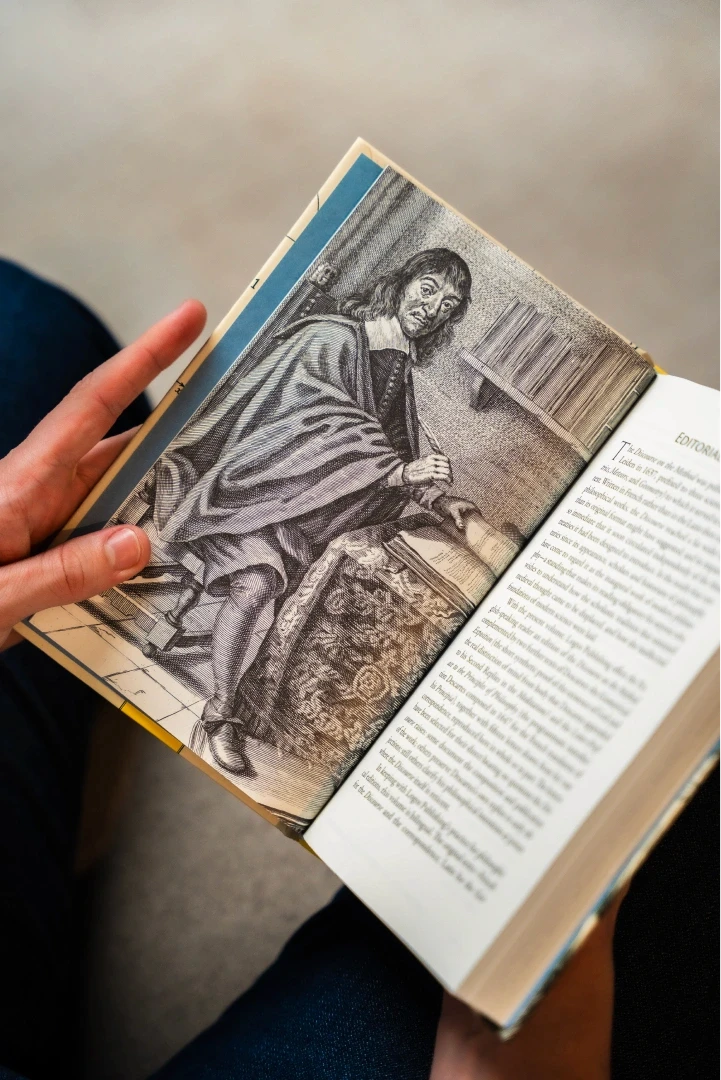
Editorial apparatus 

The six-part structure of the Discourse is marked by headings within the text. Footnotes provide historical, biographical, and contextual commentary, identify Descartes's sources, and offer occasional philosophical glosses.

Glossary of Cartesian terms

33 entries covering the principal terms of Descartes's philosophical vocabulary, each with a definition, the original French or Latin term, philosophical context, and cross-references.

Editorial note

Situates the Discourse within the volume, documents the sources used, explains the dual translation regime, and establishes the editorial conventions adopted throughout.

Situates the Discourse within the volume, documents the sources used, explains the dual translation regime, and establishes the editorial conventions adopted throughout.

Hardcover binding

Durable, premium hardcover with a ribbon marker, designed for a lifetime on your shelf, and an additional thematic bookmark.

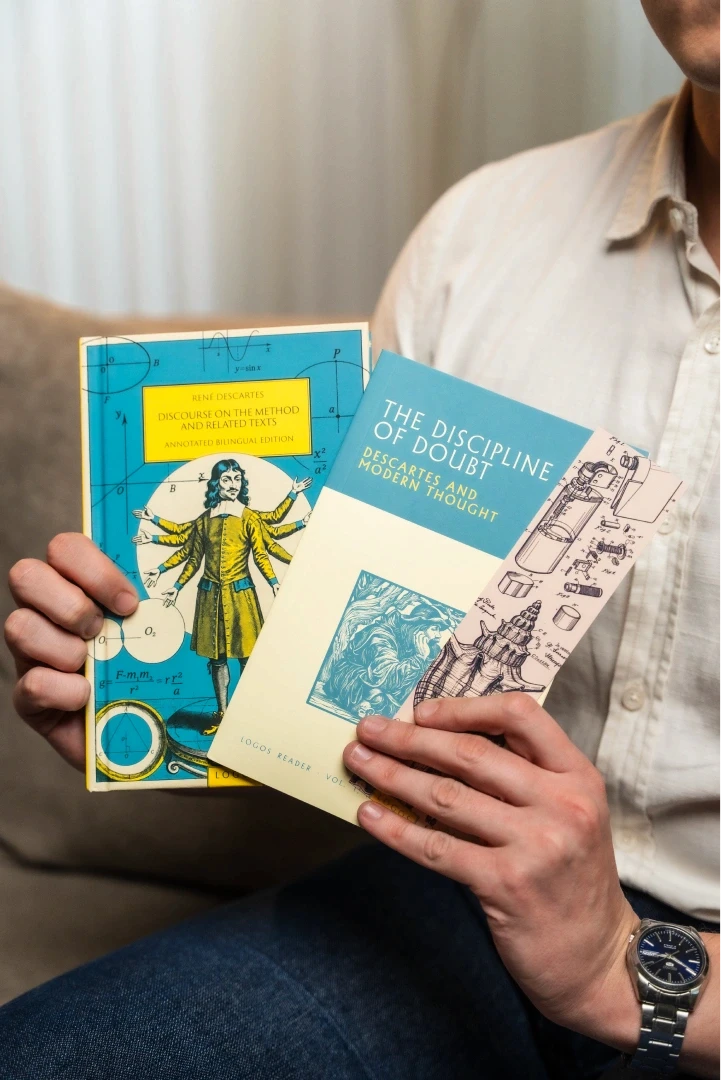
Logos Reader included

Includes a special issue of the Logos Reader dedicated to Descartes's life, philosophical system, and intellectual legacy.
Discourse on the Method and Related Texts

The founding document of modern philosophy, and the first systematic attempt to establish how the mind, working by its own method alone, can arrive at certain knowledge.

The founding document of modern philosophy, and the first systematic attempt to establish how the mind, working by its own method alone, can arrive at certain knowledge.

Published anonymously on June 8, 1637, in Leiden, the Discourse was written as a preface to three scientific treatises: the Dioptrics, the Meteors, and the Geometry. Descartes chose to write in French, not Latin — he wanted to be read by those who used natural reason, unmediated by years of scholastic formation. The text circulated independently almost immediately and has not stopped since.

Published anonymously on June 8, 1637, in Leiden, the Discourse was written as a preface to three scientific treatises: the Dioptrics, the Meteors, and the Geometry. Descartes chose to write in French, not Latin — he wanted to be read by those who used natural reason, unmediated by years of scholastic formation. The text circulated independently almost immediately and has not stopped since.

In six parts, Descartes narrates his intellectual trajectory from La Flèche to the Dutch isolation in which he conceived his reform of knowledge, setting out his four rules of method, a provisional moral code, the cogito and the proof of God's existence, a survey of his physics, and the program for a unified science. This edition presents the Discourse alongside the Geometrical Exposition, the Letter-Preface to the Principles of Philosophy, and fifteen letters from 1633–1638 in which Descartes responds to objections and explains choices left implicit in the text itself.

In six parts, Descartes narrates his intellectual trajectory from La Flèche to the Dutch isolation in which he conceived his reform of knowledge, setting out his four rules of method, a provisional moral code, the cogito and the proof of God's existence, a survey of his physics, and the program for a unified science. This edition presents the Discourse alongside the Geometrical Exposition, the Letter-Preface to the Principles of Philosophy, and fifteen letters from 1633–1638 in which Descartes responds to objections and explains choices left implicit in the text itself.

"Je pense, donc je suis." Descartes wrote that in Part IV as the first truth to survive radical doubt, and from it the entire structure of modern epistemology would be built.

"Je pense, donc je suis." Descartes wrote that in Part IV as the first truth to survive radical doubt, and from it the entire structure of modern epistemology would be built.

René Descartes: The man who made doubt a method

René Descartes: The man who made doubt a method

Born on March 31, 1596, in La Haye-en-Touraine, Descartes was educated at the Collège Royal de La Flèche, where he received the full classical formation of the era. He was especially drawn to mathematics — the one discipline whose demonstrations seemed to him to produce genuine certainty. After a law degree at Poitiers and military service in the Netherlands, he met the physicist Isaac Beeckman, who convinced him that mathematics and mechanics could be unified into a single science of nature. In the winter of 1619, stationed near Ulm, three dreams in a single night confirmed his vocation: he was to reform all knowledge.

Born on March 31, 1596, in La Haye-en-Touraine, Descartes was educated at the Collège Royal de La Flèche, where he received the full classical formation of the era. He was especially drawn to mathematics — the one discipline whose demonstrations seemed to him to produce genuine certainty. After a law degree at Poitiers and military service in the Netherlands, he met the physicist Isaac Beeckman, who convinced him that mathematics and mechanics could be unified into a single science of nature. In the winter of 1619, stationed near Ulm, three dreams in a single night confirmed his vocation: he was to reform all knowledge.

In 1628 he settled in the Protestant Netherlands, moving residence some eighteen times over twenty years to preserve his solitude. There he composed his principal works: the Discourse on the Method (1637), the Meditations on First Philosophy (1641), the Principles of Philosophy (1644), and The Passions of the Soul (1649). His correspondence with Princess Elisabeth of Bohemia, begun in 1643, produced his most sustained thinking on the union of mind and body.

In 1628 he settled in the Protestant Netherlands, moving residence some eighteen times over twenty years to preserve his solitude. There he composed his principal works: the Discourse on the Method (1637), the Meditations on First Philosophy (1641), the Principles of Philosophy (1644), and The Passions of the Soul (1649). His correspondence with Princess Elisabeth of Bohemia, begun in 1643, produced his most sustained thinking on the union of mind and body.

In October 1649 he left for Stockholm at the insistence of Queen Christina of Sweden, who required philosophy lessons at five in the morning, in a cold castle, in the northern winter. He contracted pneumonia and died on February 11, 1650. He was fifty-three. Spinoza, Malebranche, Leibniz, and Locke all entered a tradition he had founded. The vocabulary of modern epistemology (the method of doubt, the cogito, the mind-body problem) begins here.

In October 1649 he left for Stockholm at the insistence of Queen Christina of Sweden, who required philosophy lessons at five in the morning, in a cold castle, in the northern winter. He contracted pneumonia and died on February 11, 1650. He was fifty-three. Spinoza, Malebranche, Leibniz, and Locke all entered a tradition he had founded. The vocabulary of modern epistemology (the method of doubt, the cogito, the mind-body problem) begins here.

Inside the Logos ReadeR

Inside the Logos ReadeR

The Discipline of Doubt:

Descartes and Modern Thought

The Discipline of Doubt:

Descartes and Modern Thought

This issue accompanies the Discourse with three texts that approach Descartes from distinct but converging angles:

This issue accompanies the Discourse with three texts that approach Descartes from distinct but converging angles:

Descartes and His Philosophical System A Logos Reader original covering Descartes's life and intellectual formation, the four rules of method, the methodical doubt and the cogito, the proofs of God's existence, the real distinction between mind and body, his mechanical philosophy, and the Cartesian legacy.

"On Descartes's Discourse on Method," by Thomas Henry Huxley A lecture delivered in 1870, reading Descartes as the common ancestor of two great branches of modern thought: the critical idealism that runs through Berkeley and Hume to Kant, and the physiological materialism that runs through La Mettrie and Priestley to modern science.

"Essay on Descartes's Philosophy," by Lucien Lévy-Bruhl Originally published in 1903, this essay reconstructs the internal logic of Cartesian thought: the decisive break with scholasticism, the sovereignty granted to reason by the rule of evidence, the role of analytic geometry as a model of method, and the lasting imprint Cartesianism left on the French philosophical tradition from the eighteenth century through the Revolution and into the nineteenth.

Further Reading Academic references for deeper study.

Further Reading Academic references for deeper study.

What is the Philosophy Club?

What is the Philosophy Club?

A philosophy box delivered

to your door every month.

A philosophy box delivered to your door every month.

A philosophy box delivered

to your door every month.

When you join the Logos Philosophy Club, you receive one essential work of philosophy at home each month. Over time, you build a personal philosophical library with high-quality editions—translated directly from the original language and, when possible, presented in bilingual format.

Our community

Our community

Growing a global movement

Growing a global movement

Growing a global movement

The Logos Philosophy Book Club is an intellectual community dedicated exclusively to foundational philosophical works.

Built on the experience of our publishing group in Brazil, where readers, translators, scholars, and publishers now share a common mission: to produce high-quality philosophical editions faithfully translated, carefully edited, designed for serious reading.


This is more than a subscription. It is a commitment to restoring philosophy as a disciplined and living tradition.

This is more than a subscription. It is a commitment to restoring philosophy as a disciplined and living tradition.

How Does It Work?

How Does It Work?

Heres how your subscription

works, step by step:

Heres how your subscription

works, step by step:

Heres how your subscription

works, step by step:

01

Choose your membership

Choose the plan that fits you best, monthly or annual. Past editions are available for purchase as well. Subscribers can purchase past editions at a discounted rate in the members area.

02

How shipping works

Each month we announce a new edition. Your first shipment arrives around the 15th of the following month.
03

Monthly shipping

Monthly shipping

From that point on, as a member, a new philosophy box is shipped each month. All boxes are dispatched during the month following the release cycle.

03

Monthly shipping

From that point on, as a member, a new philosophy box is shipped each month. All boxes are dispatched during the month following the release cycle.

Is this for me?

Is this for me?

So, who is the

Philosophy Club for?

So, who is the

Philosophy Club for?

So, who is the

Philosophy Club for?

For those who want to engage deeply with the legacy of the greatest thinkers in history.

For readers who want to build a solid, lasting philosophy library.

For students engaged in higher education or simply interested in the great books of our shared history.

For professionals who understand that serious work requires a broad and rigorous intellectual formation.

Our BOOKS

Our BOOKS

Explore the works weve released so far

Explore the works weve released so far

Explore the works weve released so far

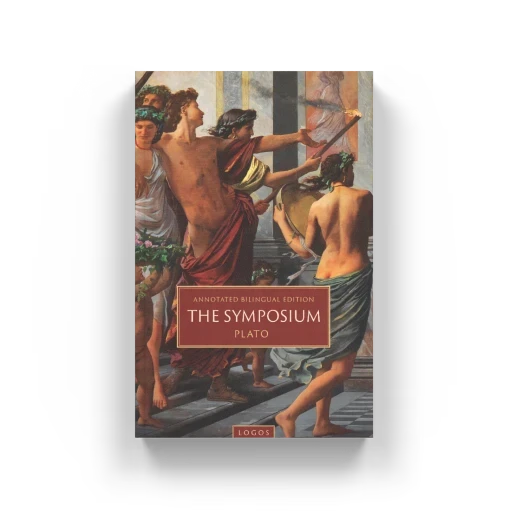
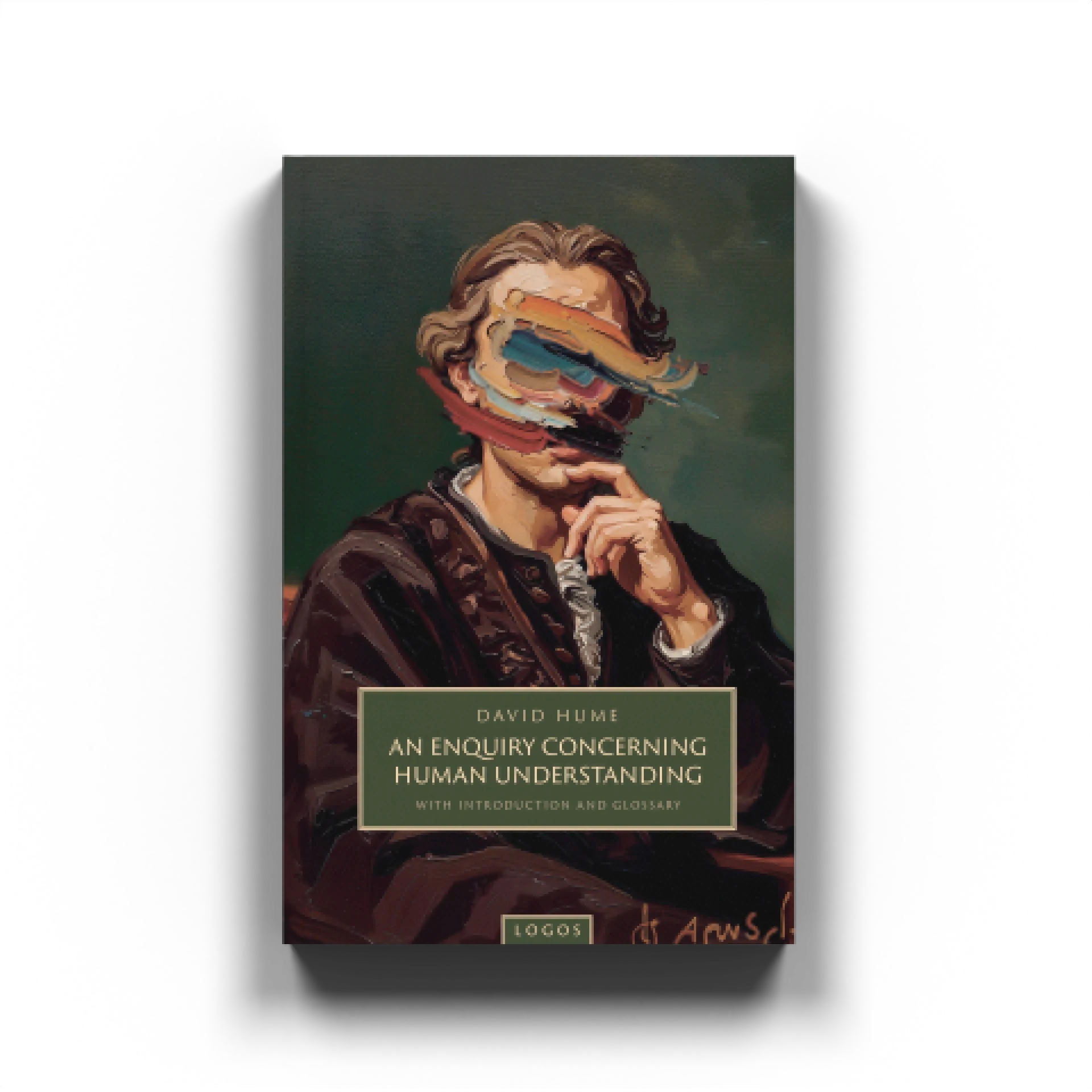
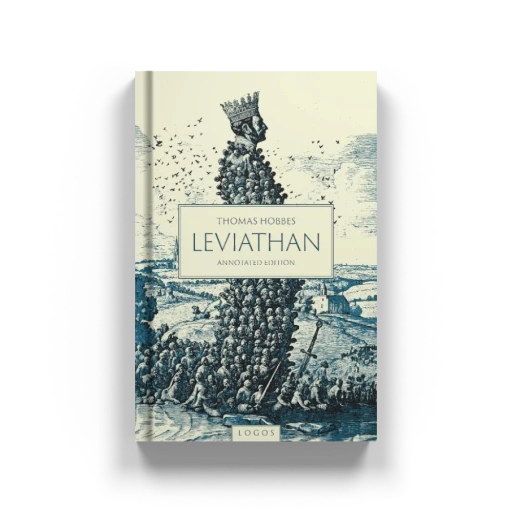
The Logos Philosophy Club publishes major philosophical works, carefully edited and presented in bilingual editions designed for serious study.
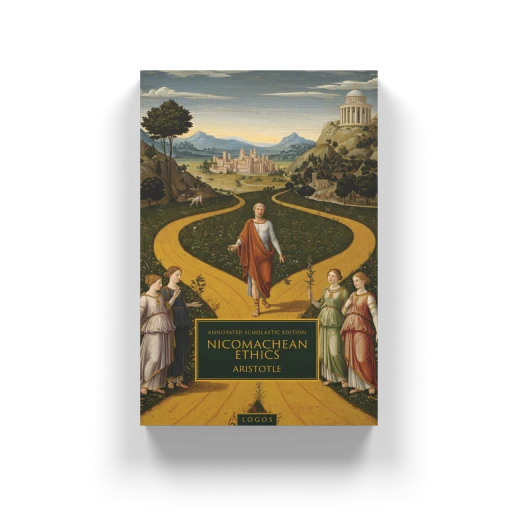

With an Annual Membership, you receive the current release, gain access to all future editions while your plan remains active, and can purchase past releases at exclusive member pricing.


Why join the Club?

Why join the Club?

See what our members have to say

See what our members have to say

John Roche

I love my copy. The book is sturdy and very well bound, but so far the scholastic commentary is the real gem. I laminated the poster and hung it in my classroom. I hope Consolation of Philosophy comes with a poster too!

John Roche

I love my copy. The book is sturdy and very well bound, but so far the scholastic commentary is the real gem. I laminated the poster and hung it in my classroom. I hope Consolation of Philosophy comes with a poster too!

Nicolás Carreño Román

Wow! This looks like the kind of book subscription that's worth it!

Nicolás Carreño Román

Wow! This looks like the kind of book subscription that's worth it!

Spencer Simons

Got mine. Love it already. The poster is a nice perk I wasn’t aware of. I’m gonna grab a frame tomorrow and hang it on my bedroom wall.

Spencer Simons

Got mine. Love it already. The poster is a nice perk I wasn’t aware of. I’m gonna grab a frame tomorrow and hang it on my bedroom wall.

FAQ

FAQ

Frequently Asked Questions

Frequently Asked Questions

What am I subscribing to?

When will I receive my books?

When will I receive the next books in the Club?

Is shipping available everywhere in the U.S.?

Will I receive tracking information?

Are taxes and shipping included?

What is the difference between the Monthly and Yearly memberships?

How does billing work for the Yearly Membership?

Will I be charged on the same date every month?

What happens if my payment fails (card declined)?

Can I cancel my subscription?

Can I pause my membership?

Can I switch between Monthly and Yearly?

Do you offer refunds if I forget to cancel?

Can I gift a membership?

How do you choose the monthly books?

Can I skip a month if I already own the book?

What is your returns and damages policy?

Can I change my shipping address after subscribing?

How can I contact support?

What am I subscribing to?

When will I receive my books?

When will I receive the next books in the Club?

Is shipping available everywhere in the U.S.?

Will I receive tracking information?

Are taxes and shipping included?

What is the difference between the Monthly and Yearly memberships?

How does billing work for the Yearly Membership?

Will I be charged on the same date every month?

What happens if my payment fails (card declined)?

Can I cancel my subscription?

Can I pause my membership?

Can I switch between Monthly and Yearly?

Do you offer refunds if I forget to cancel?

Can I gift a membership?

How do you choose the monthly books?

Can I skip a month if I already own the book?

What is your returns and damages policy?

Can I change my shipping address after subscribing?

How can I contact support?

What am I subscribing to?

When will I receive my books?

When will I receive the next books in the Club?

Is shipping available everywhere in the U.S.?

Will I receive tracking information?

Are taxes and shipping included?

What is the difference between the Monthly and Yearly memberships?

How does billing work for the Yearly Membership?

Will I be charged on the same date every month?

What happens if my payment fails (card declined)?

Can I cancel my subscription?

Can I pause my membership?

Can I switch between Monthly and Yearly?

Do you offer refunds if I forget to cancel?

Can I gift a membership?

How do you choose the monthly books?

Can I skip a month if I already own the book?

What is your returns and damages policy?

Can I change my shipping address after subscribing?

How can I contact support?