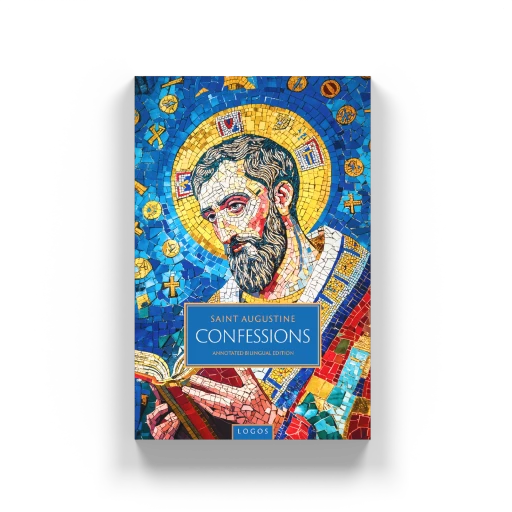
SAINT AUGUSTINE

SAINT AUGUSTINE

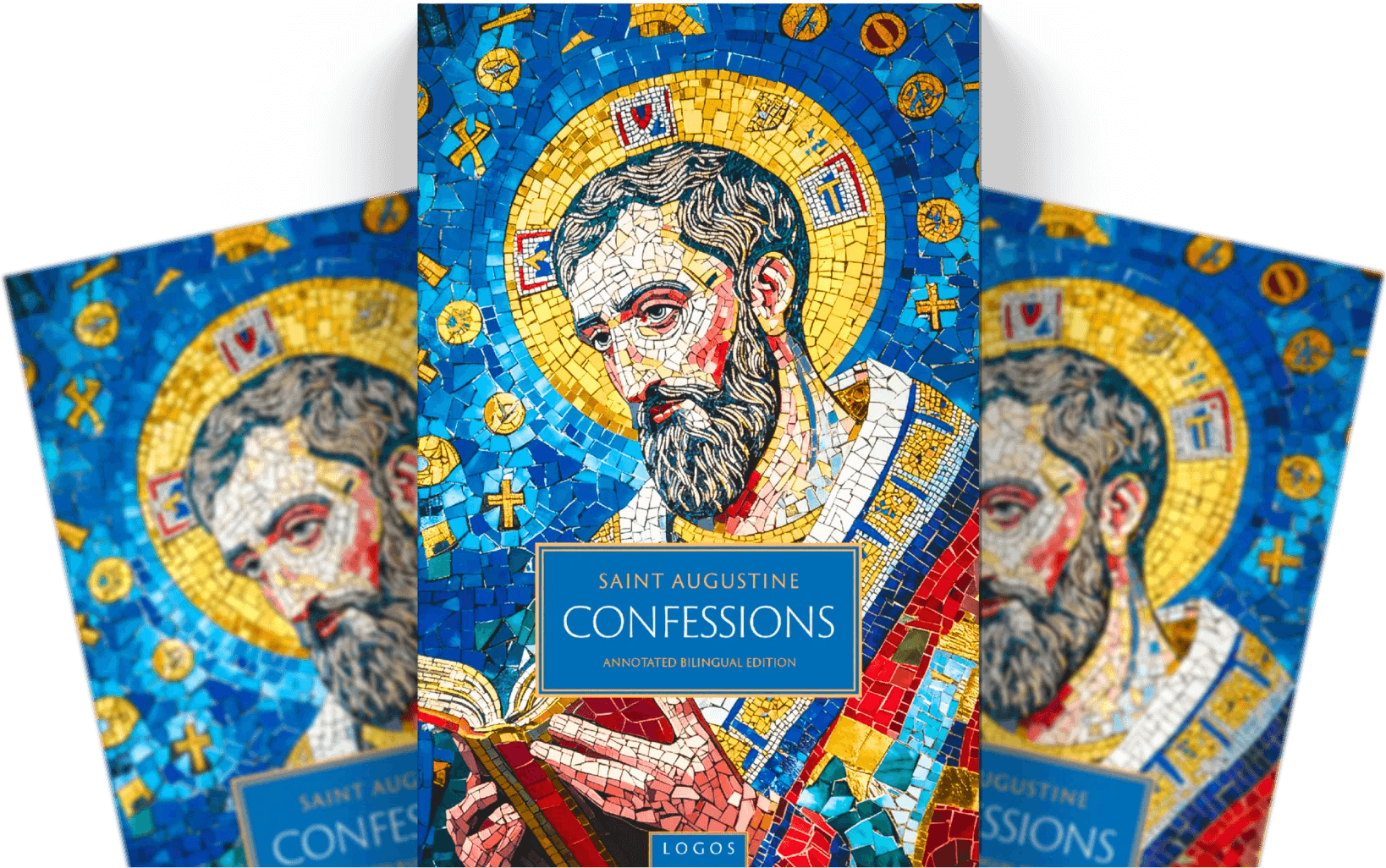
Confessions

Confessions

The book that turned introspection into philosophy

The book that turned introspection into philosophy

and start receiving a philosophy masterpiece every month.

Discover whats inside the box

Discover whats

inside the box

Details that make

the difference:

Details that make

the difference:

Bilingual edition

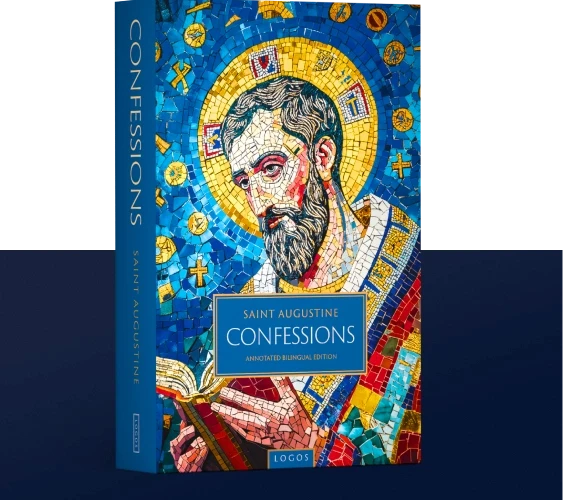
The Latin text alongside the English translation based on the critical editions of Paris (1679) and Venice (1735), collated with Gaume's critical edition, and the revised translation of Edward B. Pusey.

Editorial notes and annotations

Detailed commentary clarifying Augustine's terminology, his engagement with Neoplatonism, Manichaeism, and the Scholastic tradition, as well as the biblical references that run throughout the text.

Introduction by Wilhelm Dilthey

An introductory essay situating Augustine within the intellectual, theological, and philosophical currents of late antiquity, recovering the full weight of his questions for the contemporary reader.

Analytical index

A comprehensive index tracing the principal concepts and arguments across both the Discourse and the Correspondence, designed for profound study.

Hardcover binding

Durable, premium hardcover with a ribbon marker, designed for a lifetime on your shelf, and an additional thematic bookmark.

Logos Reader included

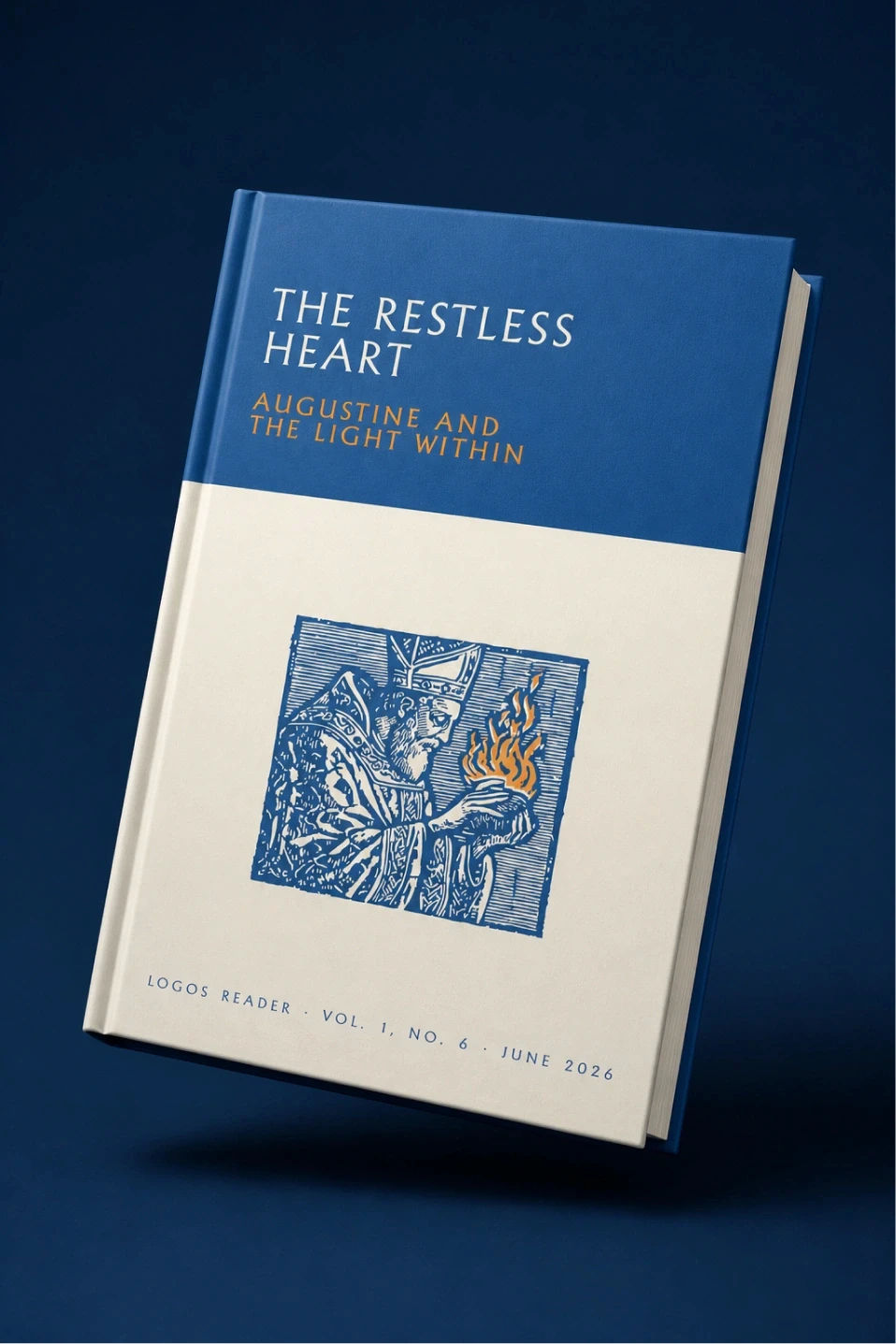
Includes a special issue of the Logos Reader dedicated to Augustine's philosophical system, his relationship to the classical tradition, and the metaphysical legacy of the Confessions.

Confessions

The founding text of Western autobiography and one of the most rigorous philosophical investigations of memory, time, desire, and the self ever written.

The founding text of Western autobiography and one of the most rigorous philosophical investigations of memory, time, desire, and the self ever written.

In 397, Augustine of Hippo began writing a text unlike anything that had preceded it. Addressed entirely to God throughout all thirteen books, the Confessions narrates his intellectual and spiritual journey — through Manichaeism, Academic skepticism, and Neoplatonism — toward his conversion to Christianity, culminating in a sustained philosophical inquiry into memory, time, and the structure of the self.

In 397, Augustine of Hippo began writing a text unlike anything that had preceded it. Addressed entirely to God throughout all thirteen books, the Confessions narrates his intellectual and spiritual journey — through Manichaeism, Academic skepticism, and Neoplatonism — toward his conversion to Christianity, culminating in a sustained philosophical inquiry into memory, time, and the structure of the self.

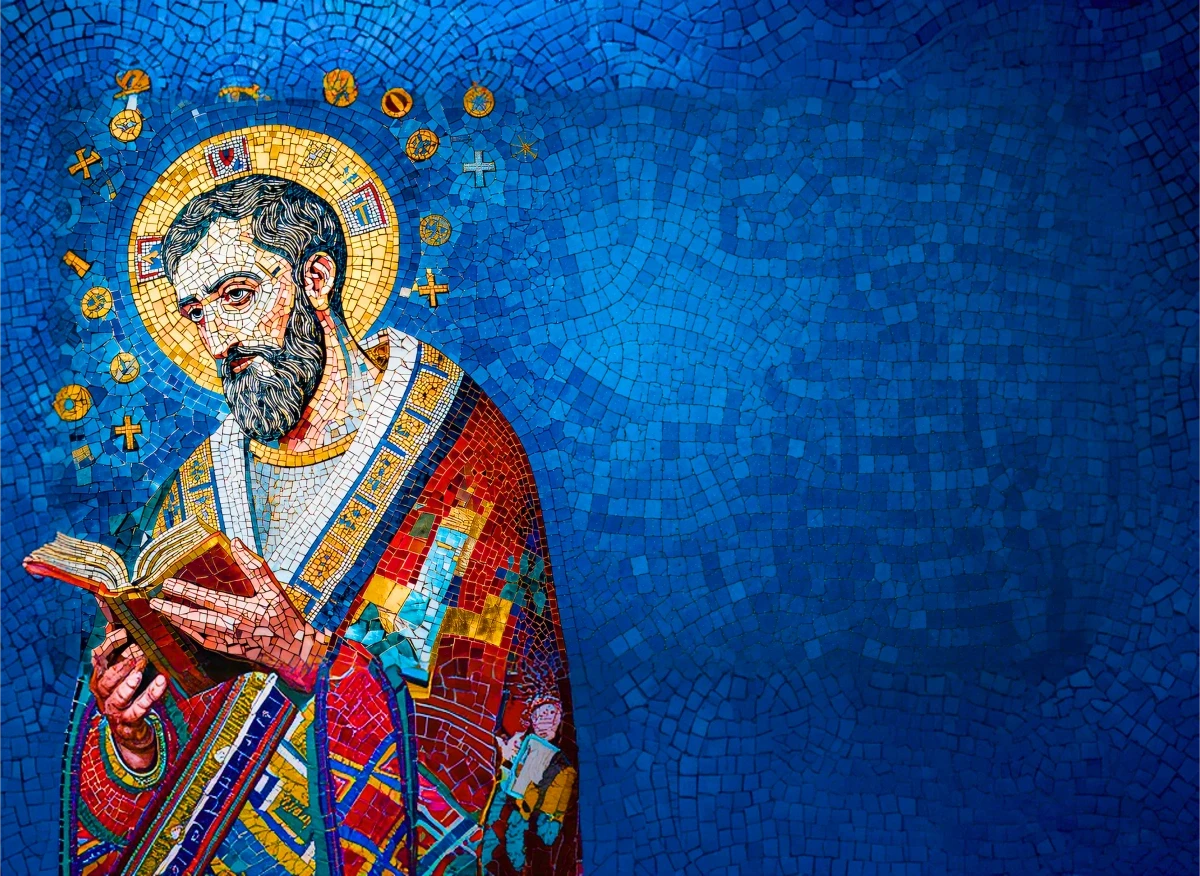
Augustine asks why the mind has such poor knowledge of itself, descending into what he calls an abyss, discovering depths that exceed the self's own capacity for self-examination. He dismantles the ordinary understanding of time, arguing that past, present, and future are not properties of the external world but modes of the mind's own attention — an argument that remained foundational for phenomenology.

Augustine asks why the mind has such poor knowledge of itself, descending into what he calls an abyss, discovering depths that exceed the self's own capacity for self-examination. He dismantles the ordinary understanding of time, arguing that past, present, and future are not properties of the external world but modes of the mind's own attention — an argument that remained foundational for phenomenology.
The Confessions was never meant to be a philosophical treatise. That is part of what makes it one.

The Confessions was never meant to be a philosophical treatise. That is part of what makes it one.

Saint Augustine: A restless mind that changed everything

Born in 354 in Thagaste, in what is now Algeria, Augustine was a trained rhetorician, a former professor of rhetoric in Milan, and one of the most formidable intellects of late antiquity. He became bishop of Hippo in 396 — one year before writing the Confessions.

He had passed through Manichaeism, Academic skepticism, and Neoplatonism before arriving at Christianity. Each tradition left its mark. His philosophical formation was rigorous and pluralistic, and the Confessions bears the trace of every intellectual encounter he survived.

His influence is without parallel in Western thought. Pascal read the Confessions and wrote the Pensées. Kierkegaard found in it the vocabulary for despair. Heidegger analyzed it in his 1921 Freiburg lectures and returned to it in Being and Time. Hannah Arendt wrote her doctoral dissertation on his concept of love. The book has been generating readers who think it was written for them for fifteen centuries.

Saint Augustine: A restless mind that changed everything

Born in 354 in Thagaste, in what is now Algeria, Augustine was a trained rhetorician, a former professor of rhetoric in Milan, and one of the most formidable intellects of late antiquity. He became bishop of Hippo in 396 — one year before writing the Confessions.

He had passed through Manichaeism, Academic skepticism, and Neoplatonism before arriving at Christianity. Each tradition left its mark. His philosophical formation was rigorous and pluralistic, and the Confessions bears the trace of every intellectual encounter he survived.

His influence is without parallel in Western thought. Pascal read the Confessions and wrote the Pensées. Kierkegaard found in it the vocabulary for despair. Heidegger analyzed it in his 1921 Freiburg lectures and returned to it in Being and Time. Hannah Arendt wrote her doctoral dissertation on his concept of love. The book has been generating readers who think it was written for them for fifteen centuries.

Saint Augustine: A restless mind that changed everything

Born in 354 in Thagaste, in what is now Algeria, Augustine was a trained rhetorician, a former professor of rhetoric in Milan, and one of the most formidable intellects of late antiquity. He became bishop of Hippo in 396 — one year before writing the Confessions.

He had passed through Manichaeism, Academic skepticism, and Neoplatonism before arriving at Christianity. Each tradition left its mark. His philosophical formation was rigorous and pluralistic, and the Confessions bears the trace of every intellectual encounter he survived.

His influence is without parallel in Western thought. Pascal read the Confessions and wrote the Pensées. Kierkegaard found in it the vocabulary for despair. Heidegger analyzed it in his 1921 Freiburg lectures and returned to it in Being and Time. Hannah Arendt wrote her doctoral dissertation on his concept of love. The book has been generating readers who think it was written for them for fifteen centuries.

Inside the Logos ReadeR

Inside the Logos ReadeR

The Restless Heart:

Augustine and the Light Within

The Restless Heart:

Augustine and the Light Within

This issue accompanies the Confessions with four texts

that illuminate Augustine from distinct but converging angles:

This issue accompanies the Confessions with four texts that illuminate Augustine from distinct but converging angles:

Augustine: Restlessness and the Search for Rest — A Logos Reader original covering Augustine's intellectual formation, the structure of the Confessions, and the philosophical significance of his treatment of memory, time, and the self.

Augustine: Restlessness and the Search for Rest — A Logos Reader original covering Augustine's intellectual formation, the structure of the Confessions, and the philosophical significance of his treatment of memory, time, and the self.

The Influence of Vergil on St. Jerome and on St. Augustine, by Harrison Cadwallader Coffin — Examines how Augustine inherited and transformed the classical literary tradition, tracing the presence of Virgil in the Confessions and its theological implications.

The Influence of Vergil on St. Jerome and on St. Augustine, by Harrison Cadwallader Coffin — Examines how Augustine inherited and transformed the classical literary tradition, tracing the presence of Virgil in the Confessions and its theological implications.

The Future of Augustinian Metaphysics, by Étienne Gilson — Written by one of the great historians of medieval philosophy, this essay examines the enduring philosophical relevance of Augustine's metaphysics and its relationship to the subsequent tradition.

The Future of Augustinian Metaphysics, by Étienne Gilson
Written by one of the great historians of medieval philosophy, this essay examines the enduring philosophical relevance of Augustine's metaphysics and its relationship to the subsequent tradition.

Further Reading Academic references for deeper study.

Further Reading Academic references for deeper study.

What is the Philosophy Club?

What is the Philosophy Club?

A philosophy box delivered

to your door every month.

A philosophy box delivered to your door every month.

A philosophy box delivered

to your door every month.

When you join the Logos Philosophy Club, you receive one essential work of philosophy at home each month. Over time, you build a personal philosophical library with high-quality editions—translated directly from the original language and, when possible, presented in bilingual format.

Our community

Our community

Growing a global movement

Growing a global movement

Growing a global movement

The Logos Philosophy Book Club is intellectual community dedicated exclusively to foundational philosophical works.

Built on the experience of our publishing group in Brazil, where readers, translators, scholars, and publishers now share a common mission: to produce high-quality philosophical editions faithfully translated, carefully edited, designed for serious reading.
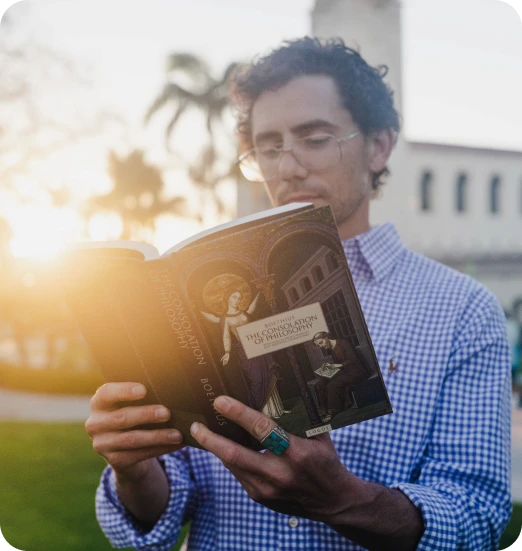

This is more than a subscription. It is a commitment to restoring philosophy as a disciplined and living tradition.

This is more than a subscription. It is a commitment to restoring philosophy as a disciplined and living tradition.

How Does It Work?

How Does It Work?

Heres how your subscription

works, step by step:

Heres how your subscription

works, step by step:

Heres how your subscription

works, step by step:

01

Choose your membership

Choose the plan that fits you best, monthly or annual. Past editions are available for purchase as well. Subscribers can purchase past editions at a discounted rate in the members area.

02

How shipping works

Each month we announce a new edition. Your first shipment arrives around the 15th of the following month.

03

Monthly shipping

Monthly shipping

From that point on, as a member, a new philosophy box is shipped each month. All boxes are dispatched during the month following the release cycle.

03

Monthly shipping

From that point on, as a member, a new philosophy box is shipped each month. All boxes are dispatched during the month following the release cycle.

Is this for me?

Is this for me?

So, who is the

Philosophy Club for?

So, who is the

Philosophy Club for?

So, who is the

Philosophy Club for?

For those who want to engage deeply with the legacy of the greatest thinkers in history.

For readers who want to build a solid, lasting philosophy library.

For students engaged in higher education or simply interesting in the great books of our shared history.

For professionals who understand that serious work requires a broad and rigorous intellectual formation.

Our BOOKS

Our BOOKS

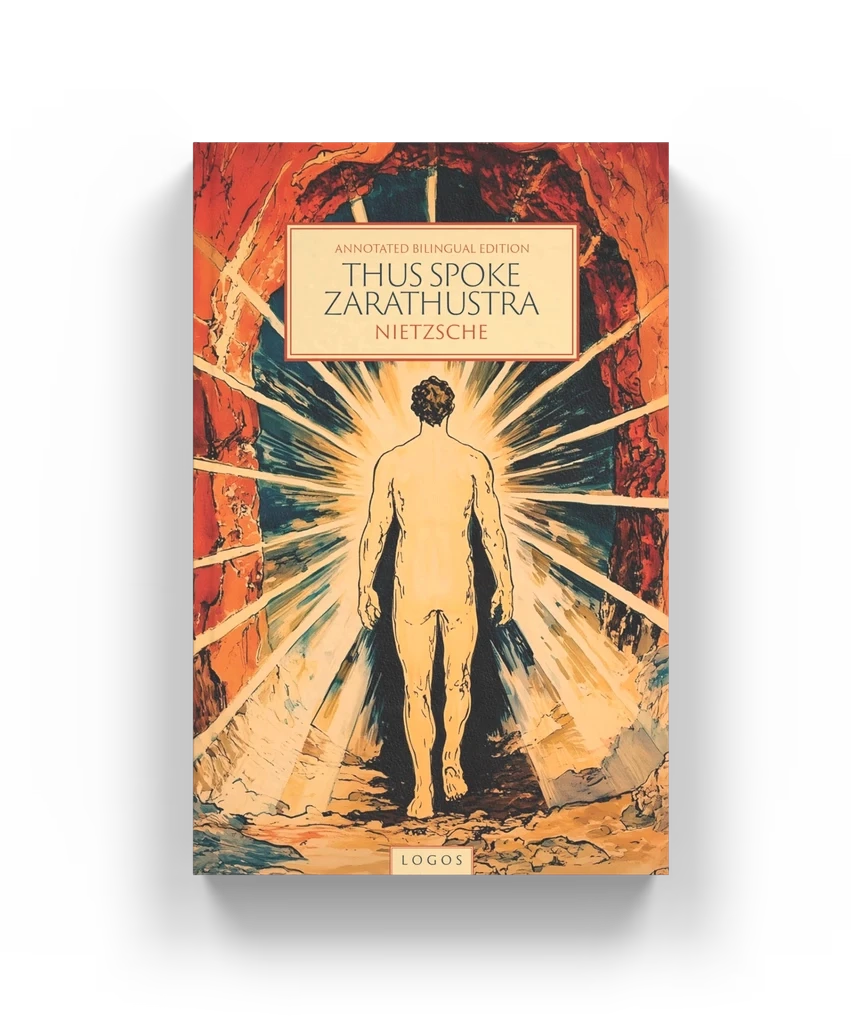
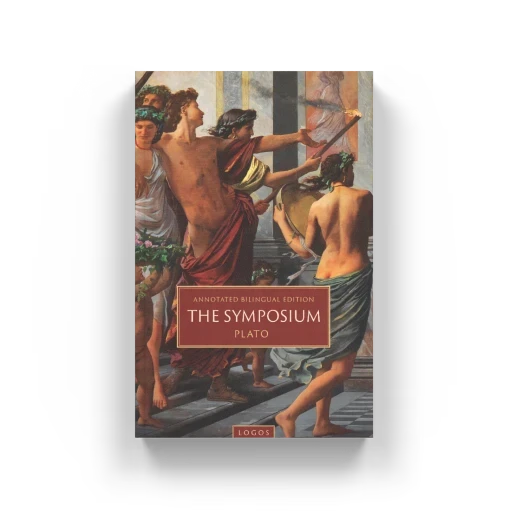
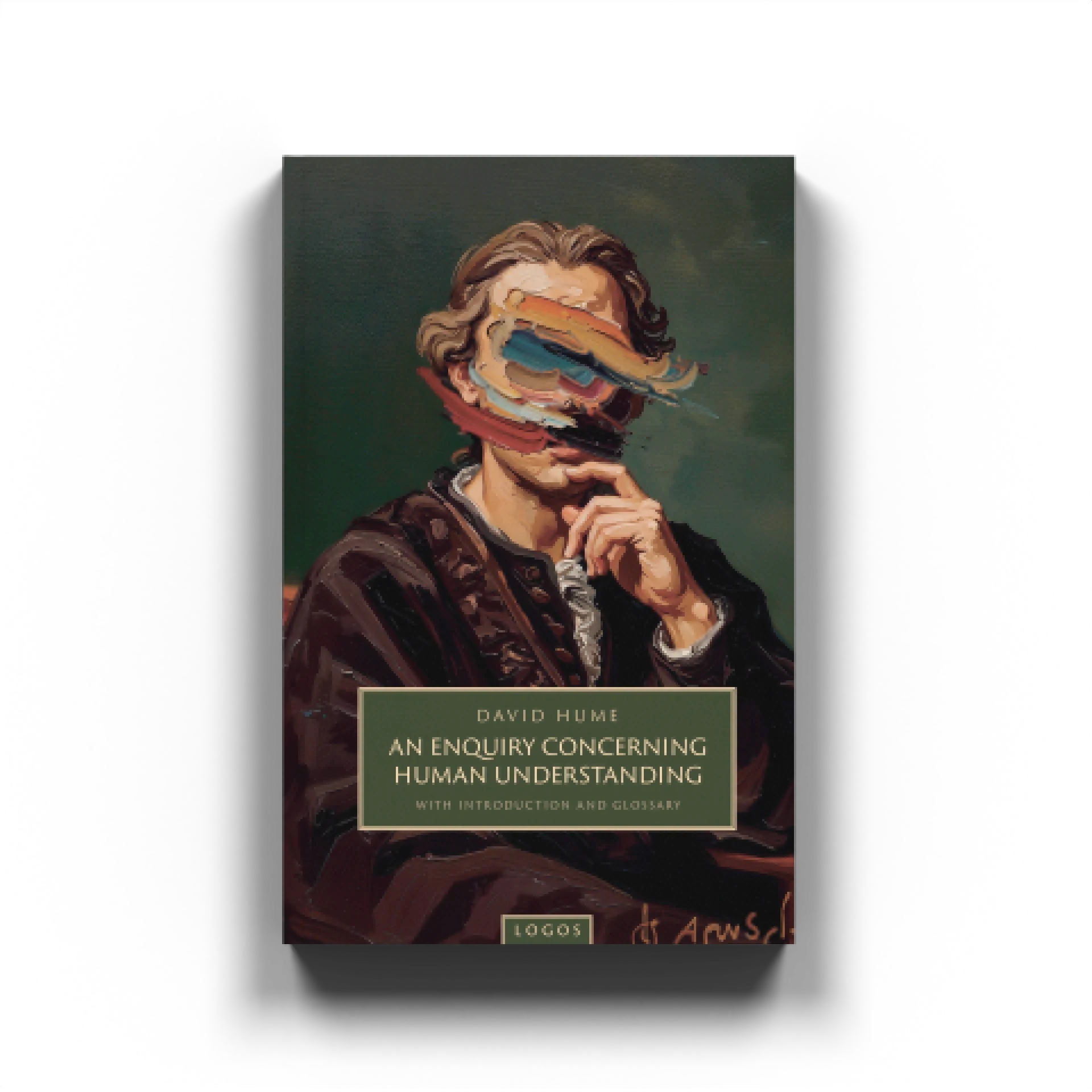
Explore the works weve released so far

Explore the works weve released so far

Explore the works weve released so far

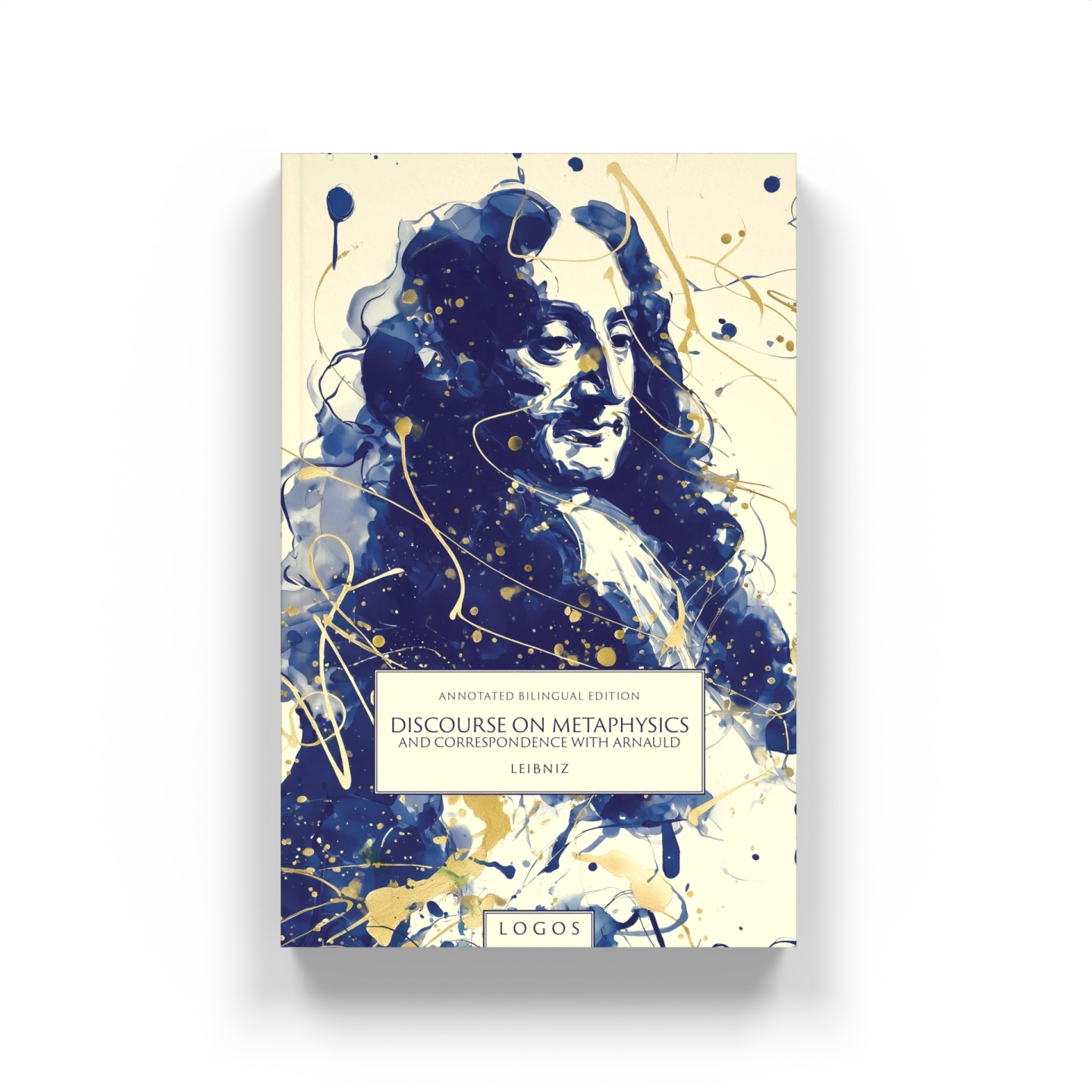
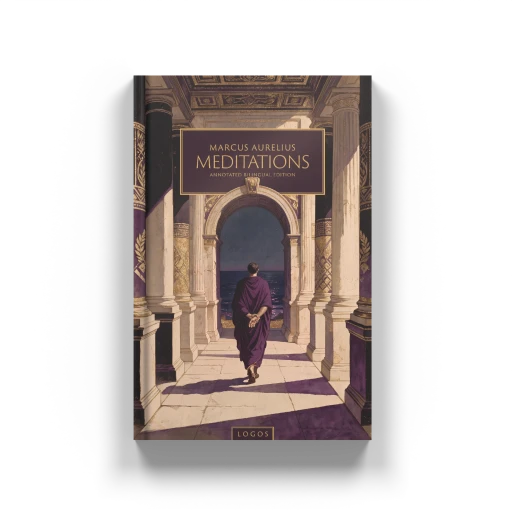
The Logos Philosophy Club publishes major philosophical works, carefully edited and presented in bilingual editions designed for serious study.
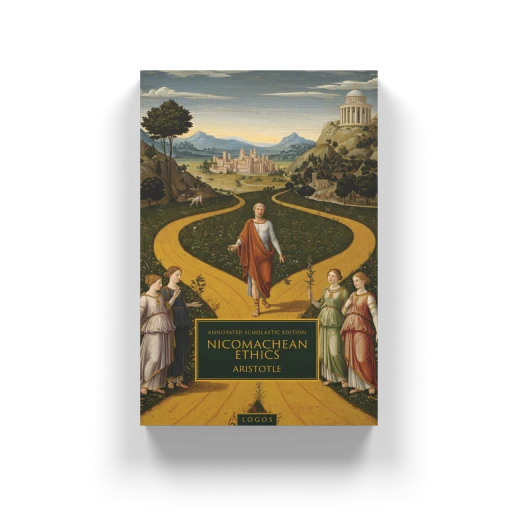
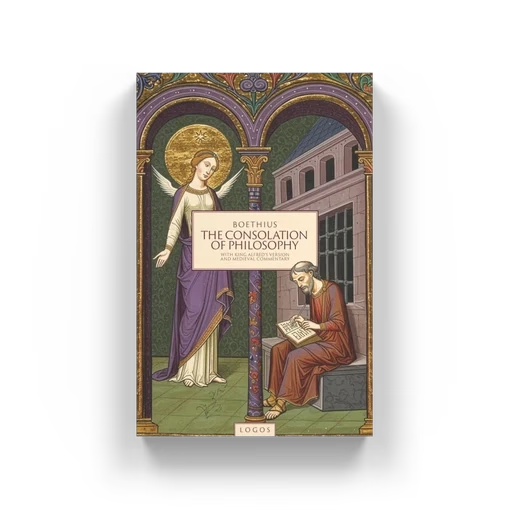
With an Annual Membership, you receive the current release, gain access to all future editions while your plan remains active, and can purchase past releases at exclusive member pricing.


Why join the Club?

Why join the Club?

See what our members have to say

See what our members have to say

John Roche

I love my copy. The book is sturdy and very well bound, but so far the scholastic commentary is the real gem. I laminated the poster and hung it in my classroom. I hope Consolation of Philosophy comes with a poster too!

John Roche

I love my copy. The book is sturdy and very well bound, but so far the scholastic commentary is the real gem. I laminated the poster and hung it in my classroom. I hope Consolation of Philosophy comes with a poster too!

Nicolás Carreño Román

Wow! This looks like the kind of book subscription that's worth it!

Nicolás Carreño Román

Wow! This looks like the kind of book subscription that's worth it!

Spencer Simons

Got mine. Love it already. The poster is a nice perk I wasn’t aware of. I’m gonna grab a frame tomorrow and hang it on my bedroom wall.

Spencer Simons

Got mine. Love it already. The poster is a nice perk I wasn’t aware of. I’m gonna grab a frame tomorrow and hang it on my bedroom wall.

FAQ

FAQ

Frequently Asked Questions

Frequently Asked Questions

What am I subscribing to?

When will I receive my books?

When will I receive the next books in the Club?

Is shipping available everywhere in the U.S.?

Will I receive tracking information?

Are taxes and shipping included?

What is the difference between the Monthly and Yearly memberships?

How does billing work for the Yearly Membership?

Will I be charged on the same date every month?

What happens if my payment fails (card declined)?

Can I cancel my subscription?

Can I pause my membership?

Can I switch between Monthly and Yearly?

Do you offer refunds if I forget to cancel?

Can I gift a membership?

How do you choose the monthly books?

Can I skip a month if I already own the book?

What is your returns and damages policy?

Can I change my shipping address after subscribing?

How can I contact support?

What am I subscribing to?

When will I receive my books?

When will I receive the next books in the Club?

Is shipping available everywhere in the U.S.?

Will I receive tracking information?

Are taxes and shipping included?

What is the difference between the Monthly and Yearly memberships?

How does billing work for the Yearly Membership?

Will I be charged on the same date every month?

What happens if my payment fails (card declined)?

Can I cancel my subscription?

Can I pause my membership?

Can I switch between Monthly and Yearly?

Do you offer refunds if I forget to cancel?

Can I gift a membership?

How do you choose the monthly books?

Can I skip a month if I already own the book?

What is your returns and damages policy?

Can I change my shipping address after subscribing?

How can I contact support?

What am I subscribing to?

When will I receive my books?

When will I receive the next books in the Club?

Is shipping available everywhere in the U.S.?

Will I receive tracking information?

Are taxes and shipping included?

What is the difference between the Monthly and Yearly memberships?

How does billing work for the Yearly Membership?

Will I be charged on the same date every month?

What happens if my payment fails (card declined)?

Can I cancel my subscription?

Can I pause my membership?

Can I switch between Monthly and Yearly?

Do you offer refunds if I forget to cancel?

Can I gift a membership?

How do you choose the monthly books?

Can I skip a month if I already own the book?

What is your returns and damages policy?

Can I change my shipping address after subscribing?

How can I contact support?