THOMAS HOBBES

THOMAS HOBBES

Leviathan

Leviathan

The founding text of modern political philosophy

and start receiving a philosophy masterpiece every month.
Discover what’s inside the box

Discover what’s

inside the box

Details that make

the difference:

Details that make

the difference:

Modernized English text

The text of Leviathan is presented in its complete English original, established from the 1651 editio princeps (London: Andrew Crooke) and fully modernized in spelling and punctuation for the contemporary reader, while preserving the rhythm and philosophical vocabulary of Hobbes. Controversial passages have been checked against the revised Latin edition of 1668. Biblical citations follow the King James Version, as Hobbes used them.

Editor's introduction

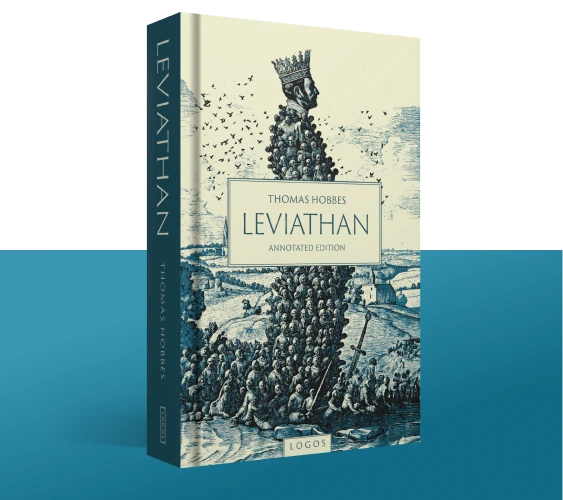
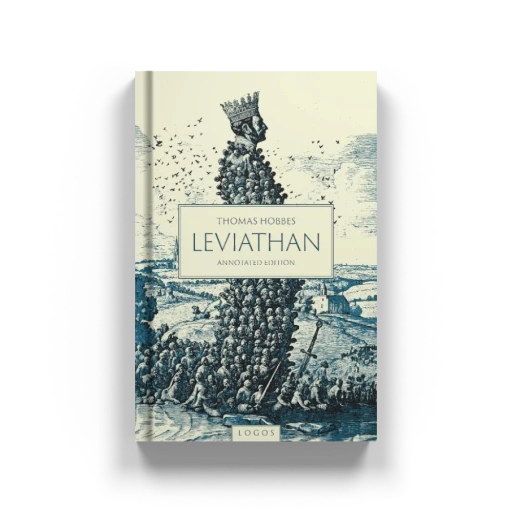
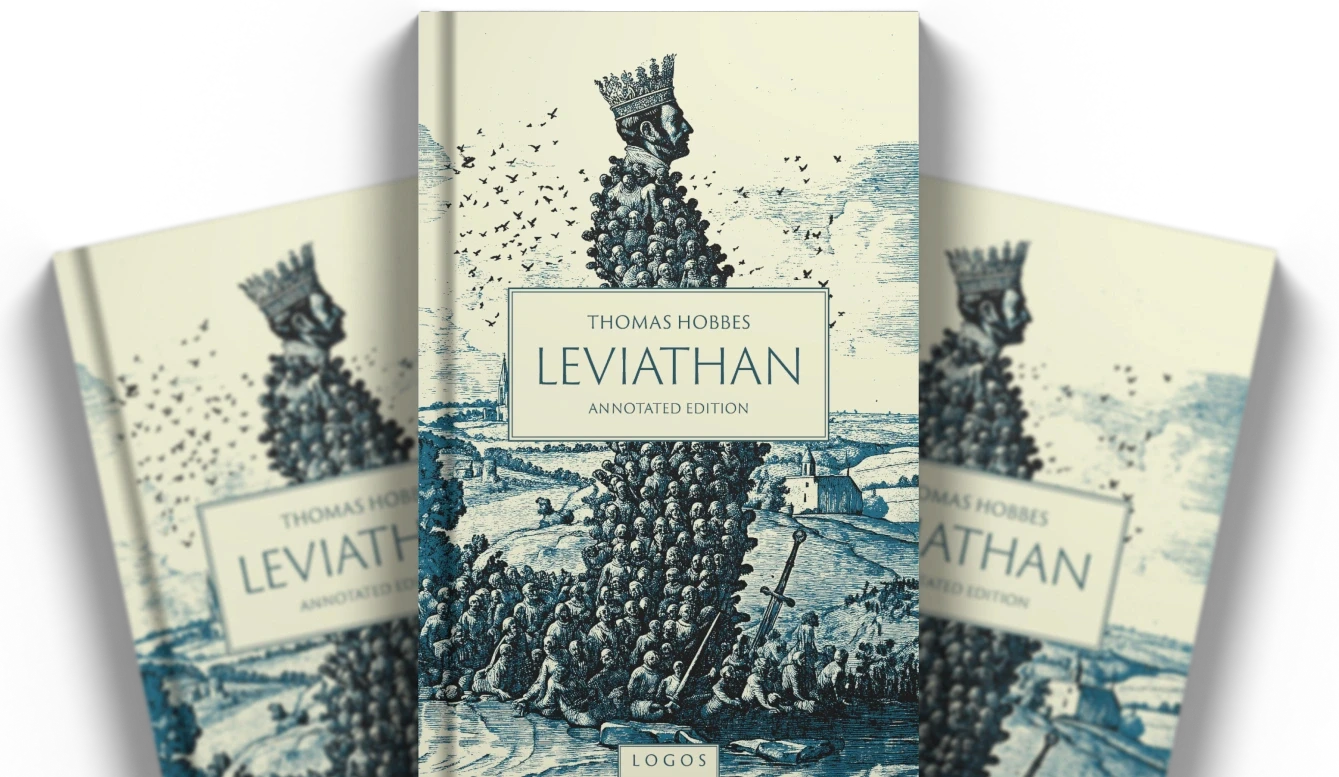
A substantial critical introduction by Marize Schons situating Leviathan as the inaugural text of modern political philosophy, reconstructing the historical context of the English Civil War and the regicide, examining the controversial reception of the work, and offering a detailed analysis of the visual rhetoric of the frontispiece

Marginal glosses

Hobbes's own marginal glosses have been preserved as running headings corresponding to their original locations, guiding the reader through the dense succession of definitions, distinctions, and demonstrations without breaking the flow of the prose.

Editorial notes and Index

Footnotes identifying scriptural and classical citations, glossing archaic vocabulary, recording substantive divergences from the 1668 Latin, and supplying scholarly context where the argument depends on a debate or figure outside the modern reader's range. A complete index covers proper names, biblical references, classical sources, and principal terms of art.

The Vita carmine expressa in bilingual edition

The edition includes Hobbes's autobiographical poem in Latin elegiac couplets, composed in 1672–73 in the manner of Ovid's Epistula ad Posteritatem, presented alongside the anonymous English verse translation of 1680 (Life of Mr. Thomas Hobbes of Malmesbury, London, 1680).

Hardcover binding

Durable, premium hardcover with a ribbon marker, designed for a lifetime on your shelf, and an additional thematic bookmark.

Logos Reader included

Includes a special issue of the Logos Reader dedicated to Hobbes's philosophical system, the doctrine of sovereignty, and the foundations of modern political thought.

A woman with long hair and a black blazer holds a copy of Boethius's "The Consolation of Philosophy" next to her face, published by Logos.

Leviathan

The inaugural work of modern political philosophy, and the most systematic attempt to explain how the modern state comes into being, and why it must.

The inaugural work of modern political philosophy, and the most systematic attempt to explain how the modern state comes into being, and why it must.

Published in London in 1651, written during Hobbes's exile in Paris amid the English Civil War, Leviathan was addressed to a literate English public living through the collapse of political order. In the three and a half centuries since, it has become the decisive break with the classical tradition that conceived man as naturally political, replacing it with the argument that power and political institutions arise from the contingent actions of individuals, not from any preexisting natural order.

Published in London in 1651, written during Hobbes's exile in Paris amid the English Civil War, Leviathan was addressed to a literate English public living through the collapse of political order. In the three and a half centuries since, it has become the decisive break with the classical tradition that conceived man as naturally political, replacing it with the argument that power and political institutions arise from the contingent actions of individuals, not from any preexisting natural order.

In four parts, Hobbes builds his system from the most simple to the most complex: Of Man constructs the mechanistic anthropology of the passions and the state of nature; Of Commonwealth derives the social contract and absolute sovereignty; Of a Christian Commonwealth subordinates religious authority to civil power; and Of the Kingdom of Darkness dismantles the philosophical and theological distortions that undermine sovereign authority. The central argument holds throughout: against the bellum omnium contra omnes of the state of nature, only a single and uncontested sovereign power can secure civil peace.

In four parts, Hobbes builds his system from the most simple to the most complex: Of Man constructs the mechanistic anthropology of the passions and the state of nature; Of Commonwealth derives the social contract and absolute sovereignty; Of a Christian Commonwealth subordinates religious authority to civil power; and Of the Kingdom of Darkness dismantles the philosophical and theological distortions that undermine sovereign authority. The central argument holds throughout: against the bellum omnium contra omnes of the state of nature, only a single and uncontested sovereign power can secure civil peace.

"Solitary, poor, nasty, brutish, and short." Hobbes wrote that as a logical hypothesis — the condition that makes the construction of the state not merely desirable but rational.

"Solitary, poor, nasty, brutish, and short." Hobbes wrote that as a logical hypothesis — the condition that makes the construction of the state not merely desirable but rational.

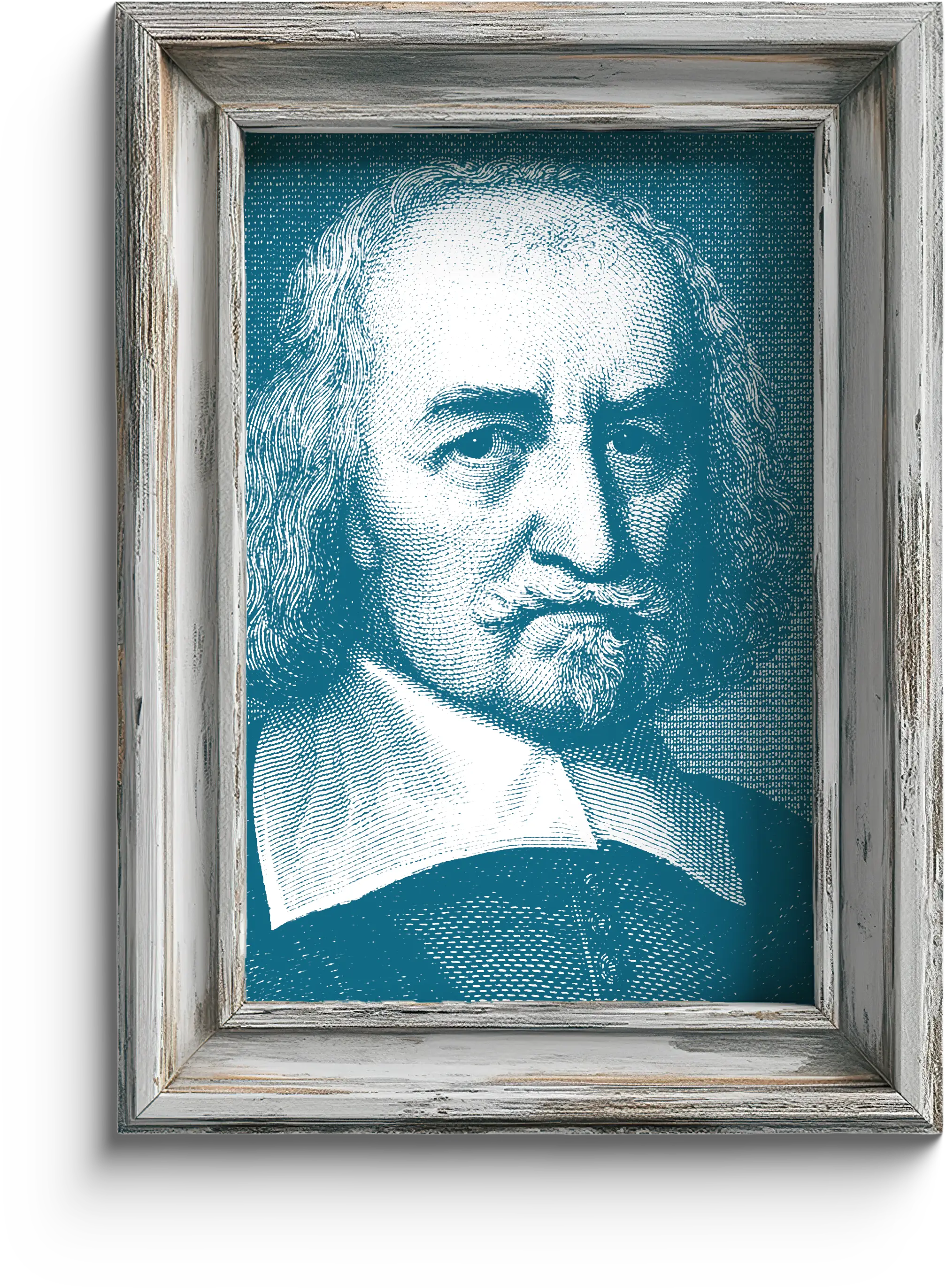
Thomas Hobbes: The man who invented the modern state

Thomas Hobbes: The man who invented the modern state

Born in 1588 in Westport, Wiltshire, Thomas Hobbes was educated at Magdalen Hall, Oxford, and spent most of his adult life in the service of the Cavendish family, which brought him into contact with the leading intellectual figures of his time: Galileo in Florence, Mersenne and Descartes in Paris, Gassendi across the continent. His encounter with Euclid, allegedly at around forty years old, shaped the geometric method he would bring to political philosophy.

Born in 1588 in Westport, Wiltshire, Thomas Hobbes was educated at Magdalen Hall, Oxford, and spent most of his adult life in the service of the Cavendish family, which brought him into contact with the leading intellectual figures of his time: Galileo in Florence, Mersenne and Descartes in Paris, Gassendi across the continent. His encounter with Euclid, allegedly at around forty years old, shaped the geometric method he would bring to political philosophy.

He composed Leviathan in Paris, between 1640 and 1651, in the circle of the exiled royalist court of Charles II. The turbulence of the English Civil War, the execution of Charles I in 1649, and the dissolution of any stable political authority are at the root of the book's central conviction: that civil peace is the supreme practical good and that nothing is more to be feared than the dissolution of the commonwealth.

He composed Leviathan in Paris, between 1640 and 1651, in the circle of the exiled royalist court of Charles II. The turbulence of the English Civil War, the execution of Charles I in 1649, and the dissolution of any stable political authority are at the root of the book's central conviction: that civil peace is the supreme practical good and that nothing is more to be feared than the dissolution of the commonwealth.

He composed Leviathan in Paris, between 1640 and 1651, in the circle of the exiled royalist court of Charles II. The turbulence of the English Civil War, the execution of Charles I in 1649, and the dissolution of any stable political authority are at the root of the book's central conviction: that civil peace is the supreme practical good and that nothing is more to be feared than the dissolution of the commonwealth.

His influence has no simple boundary. Locke, Rousseau, Hume, and Kant all entered a territory that Hobbes had cleared. Carl Schmitt returned to him as the theorist of sovereignty in the twentieth century. Rawls and his successors still argue within a contractualist framework that Hobbes inaugurated. The vocabulary of the modern state carries his mark throughout.

His influence has no simple boundary. Locke, Rousseau, Hume, and Kant all entered a territory that Hobbes had cleared. Carl Schmitt returned to him as the theorist of sovereignty in the twentieth century. Rawls and his successors still argue within a contractualist framework that Hobbes inaugurated. The vocabulary of the modern state carries his mark throughout.

Inside the Logos ReadeR

Inside the Logos ReadeR

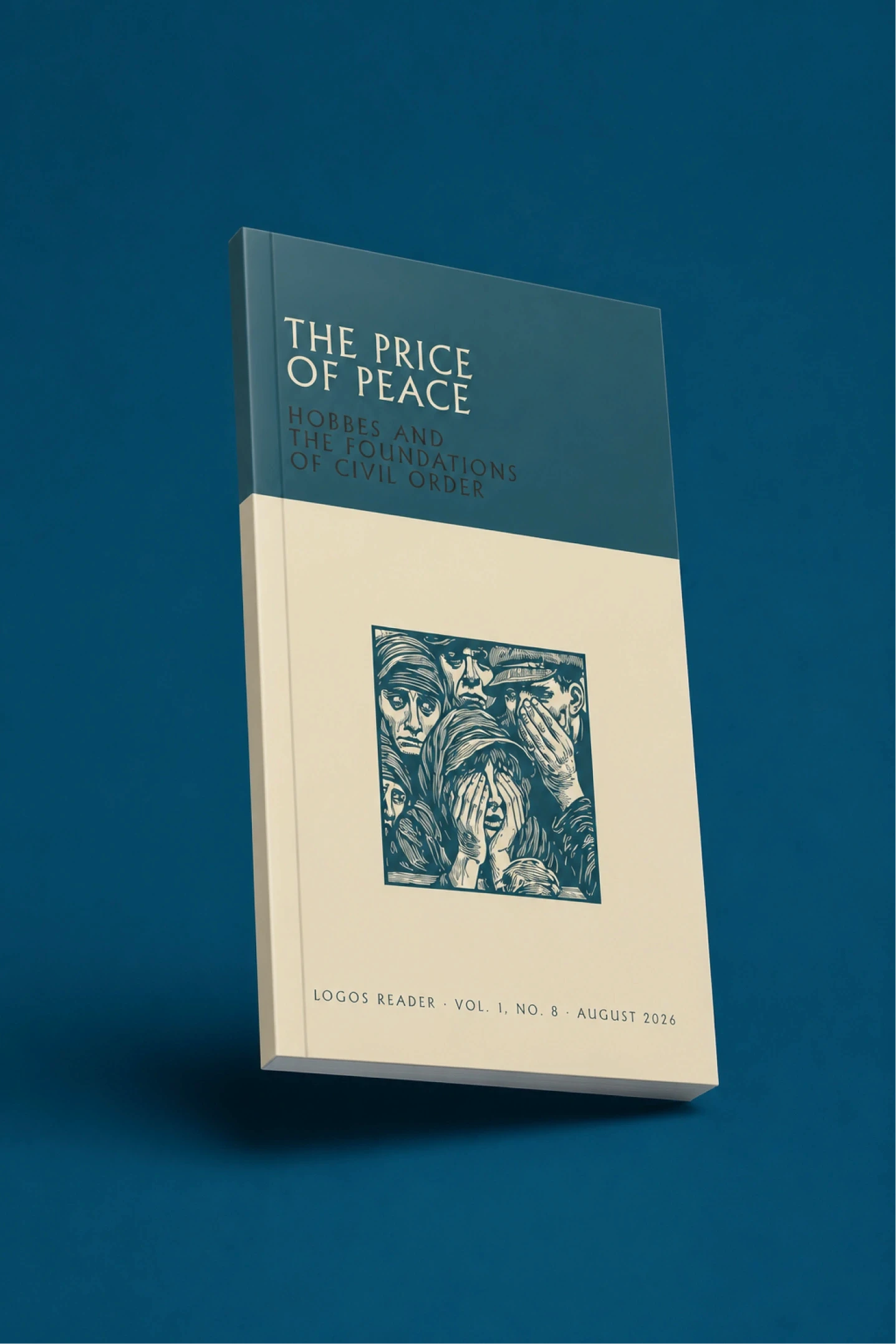
The Price of Peace: Hobbes and

the Foundations of Civil Order

The Price of Peace: Hobbes and

the Foundations of Civil Order

This issue accompanies Leviathan with three texts

that approach Hobbes from distinct but converging angles:

This issue accompanies the Confessions with four texts that illuminate Augustine from distinct but converging angles:

Hobbes and the Foundations of Modern Political Philosophy — A Logos Reader original covering Hobbes's intellectual formation, geometric method, doctrine of the body, the state of nature and the laws of nature, the social contract and the "mortal god," the indivisibility of sovereignty, and the subordination of religious to civil authority.

Hobbes and the Foundations of Modern Political Philosophy — A Logos Reader original covering Hobbes's intellectual formation, geometric method, doctrine of the body, the state of nature and the laws of nature, the social contract and the "mortal god," the indivisibility of sovereignty, and the subordination of religious to civil authority.

"The Philosophy of Hobbes: An Essay," by W. G. Pogson Smith, Originally prefaced to the Clarendon Press reprint of Leviathan (1909), this essay surveys the whole of Hobbes's thought, situating him among his contemporaries, Descartes, Bacon, Gassendi, and weighing the cost of his materialism for the moral and religious order.

"The Philosophy of Hobbes: An Essay," by W. G. Pogson Smith, Originally prefaced to the Clarendon Press reprint of Leviathan (1909), this essay surveys the whole of Hobbes's thought, situating him among his contemporaries, Descartes, Bacon, Gassendi, and weighing the cost of his materialism for the moral and religious order.

"The Motivation of Hobbes's Political Philosophy," by John Dewey, An early and influential historicist reading that anticipates the contextualist turn in twentieth-century Hobbes scholarship. Dewey locates the motivation of Hobbes's political doctrine in the seventeenth-century conflict between church and state, arguing that the theory of unified sovereignty serves chiefly to subordinate ecclesiastical claims to civil authority.

The Future of Augustinian Metaphysics, by Étienne Gilson
Written by one of the great historians of medieval philosophy, this essay examines the enduring philosophical relevance of Augustine's metaphysics and its relationship to the subsequent tradition.

Further Reading Academic references for deeper study.

Further Reading Academic references for deeper study.

What is the Philosophy Club?

What is the Philosophy Club?

A philosophy box delivered

to your door every month.

A philosophy box delivered to your door every month.

A philosophy box delivered

to your door every month.

When you join the Logos Philosophy Club, you receive one essential work of philosophy at home each month. Over time, you build a personal philosophical library with high-quality editions—translated directly from the original language and, when possible, presented in bilingual format.

Our community

Our community

Growing a global movement

Growing a global movement

Growing a global movement

The Logos Philosophy Book Club is intellectual community dedicated exclusively to foundational philosophical works.

Built on the experience of our publishing group in Brazil, where readers, translators, scholars, and publishers now share a common mission: to produce high-quality philosophical editions faithfully translated, carefully edited, designed for serious reading.


This is more than a subscription. It is a commitment to restoring philosophy as a disciplined and living tradition.

This is more than a subscription. It is a commitment to restoring philosophy as a disciplined and living tradition.

How Does It Work?

How Does It Work?

Heres how your subscription

works, step by step:

Heres how your subscription

works, step by step:

Heres how your subscription

works, step by step:

01

Choose your membership

Choose the plan that fits you best, monthly or annual. Past editions are available for purchase as well. Subscribers can purchase past editions at a discounted rate in the members area.

02

How shipping works

Each month we announce a new edition. Your first shipment arrives around the 15th of the following month.

03

Monthly shipping

Monthly shipping

From that point on, as a member, a new philosophy box is shipped each month. All boxes are dispatched during the month following the release cycle.

03

Monthly shipping

From that point on, as a member, a new philosophy box is shipped each month. All boxes are dispatched during the month following the release cycle.

Is this for me?

Is this for me?

So, who is the

Philosophy Club for?

So, who is the

Philosophy Club for?

So, who is the

Philosophy Club for?

For those who want to engage deeply with the legacy of the greatest thinkers in history.

For readers who want to build a solid, lasting philosophy library.

For students engaged in higher education or simply interesting in the great books of our shared history.

For professionals who understand that serious work requires a broad and rigorous intellectual formation.

Our BOOKS

Our BOOKS

Explore the works weve released so far

Explore the works weve released so far

Explore the works weve released so far

The Logos Philosophy Club publishes major philosophical works, carefully edited and presented in bilingual editions designed for serious study.
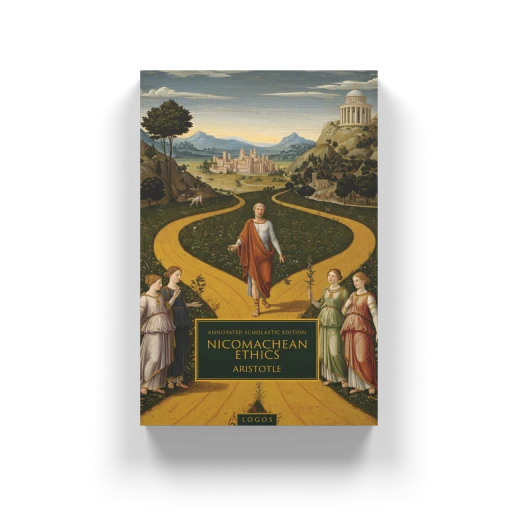
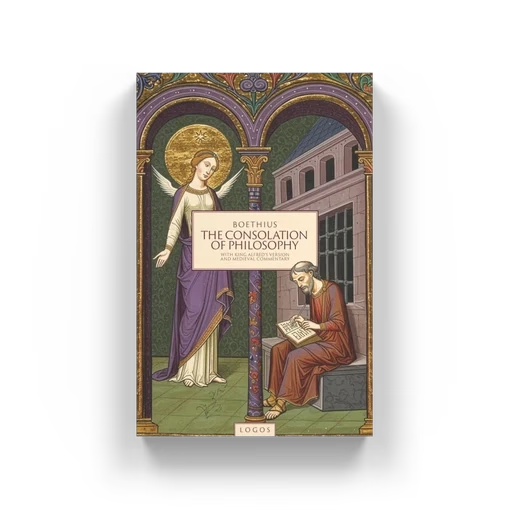
With an Annual Membership, you receive the current release, gain access to all future editions while your plan remains active, and can purchase past releases at exclusive member pricing.


Why join the Club?

Why join the Club?

See what our members have to say

See what our members have to say

John Roche

I love my copy. The book is sturdy and very well bound, but so far the scholastic commentary is the real gem. I laminated the poster and hung it in my classroom. I hope Consolation of Philosophy comes with a poster too!

John Roche

I love my copy. The book is sturdy and very well bound, but so far the scholastic commentary is the real gem. I laminated the poster and hung it in my classroom. I hope Consolation of Philosophy comes with a poster too!

Nicolás Carreño Román

Wow! This looks like the kind of book subscription that's worth it!

Nicolás Carreño Román

Wow! This looks like the kind of book subscription that's worth it!

Spencer Simons

Got mine. Love it already. The poster is a nice perk I wasn’t aware of. I’m gonna grab a frame tomorrow and hang it on my bedroom wall.

Spencer Simons

Got mine. Love it already. The poster is a nice perk I wasn’t aware of. I’m gonna grab a frame tomorrow and hang it on my bedroom wall.

FAQ

FAQ

Frequently Asked Questions

Frequently Asked Questions

What am I subscribing to?

When will I receive my books?

When will I receive the next books in the Club?

Is shipping available everywhere in the U.S.?

Will I receive tracking information?

Are taxes and shipping included?

What is the difference between the Monthly and Yearly memberships?

How does billing work for the Yearly Membership?

Will I be charged on the same date every month?

What happens if my payment fails (card declined)?

Can I cancel my subscription?

Can I pause my membership?

Can I switch between Monthly and Yearly?

Do you offer refunds if I forget to cancel?

Can I gift a membership?

How do you choose the monthly books?

Can I skip a month if I already own the book?

What is your returns and damages policy?

Can I change my shipping address after subscribing?

How can I contact support?

What am I subscribing to?

When will I receive my books?

When will I receive the next books in the Club?

Is shipping available everywhere in the U.S.?

Will I receive tracking information?

Are taxes and shipping included?

What is the difference between the Monthly and Yearly memberships?

How does billing work for the Yearly Membership?

Will I be charged on the same date every month?

What happens if my payment fails (card declined)?

Can I cancel my subscription?

Can I pause my membership?

Can I switch between Monthly and Yearly?

Do you offer refunds if I forget to cancel?

Can I gift a membership?

How do you choose the monthly books?

Can I skip a month if I already own the book?

What is your returns and damages policy?

Can I change my shipping address after subscribing?

How can I contact support?

What am I subscribing to?

When will I receive my books?

When will I receive the next books in the Club?

Is shipping available everywhere in the U.S.?

Will I receive tracking information?

Are taxes and shipping included?

What is the difference between the Monthly and Yearly memberships?

How does billing work for the Yearly Membership?

Will I be charged on the same date every month?

What happens if my payment fails (card declined)?

Can I cancel my subscription?

Can I pause my membership?

Can I switch between Monthly and Yearly?

Do you offer refunds if I forget to cancel?

Can I gift a membership?

How do you choose the monthly books?

Can I skip a month if I already own the book?

What is your returns and damages policy?

Can I change my shipping address after subscribing?

How can I contact support?