Studies in Hegel: Tagging or Graffiti? Urban Art as a Struggle of Recognition
Studies in Hegel: Tagging or Graffiti? Urban Art as a Struggle of Recognition

Logos Publishing
Logos Publishing
Aesthetics
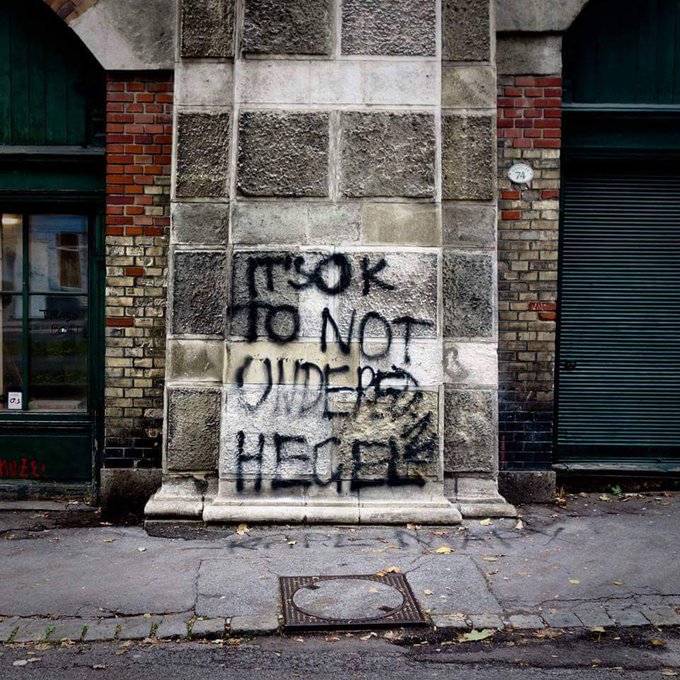
The city is the materialization of a people's ethical life; its streets, walls, and squares form an image that narrates the power relations and values of a society. Beyond its buildings and walls, the city is the stage where individual consciousness seeks to find and affirm itself. In the middle of an urban landscape, often anonymous and dominated by commercial logic and exclusion, the street artist begins a fundamental process: the search for their own self-consciousness. In that case, graffiti and even the tagging emerge not as vandalism, but as a philosophical act of recognition, a struggle for the right to participate in the construction of public space. We will analyze how street art, in Hegelian philosophy, represents a practical manifestation of the human need to recognize oneself in the external world, transforming the city's walls into a battleground between advertisements, commercials, paintings, and amorphous symbols.
Self-Consciousness
For Hegel, self-consciousness is not born ready; it needs a mirror. The modern city is where self-consciousness seeks its reflection. For Hegel, the need to create art arises from a fundamental impulse of externalization, of imprinting one's own mark on the world in order to contemplate oneself within it. He describes this need universally: "The universal need for art is, therefore, the rational need of man to elevate the inner and outer world to a spiritual consciousness, as an object in which he recognizes his own self…” (Courses on Aesthetics I, Hegel, p. 53)
Hegel uses the example of a boy who throws stones into the water to admire the circles he himself has created and to awaken his self-consciousness. This metaphor can be revisited in a graffiti artist who paints a wall. In a city whose surfaces are dominated by messages that exclude them or address them only as consumers, the act of creating graffiti and tagging is an attempt to reclaim a piece of that world for oneself. The artist, feeling invisible in an urban environment that repels them or addresses them only as a consumer, casts their "stone"—the spray can. In the mark they leave, they do not just see paint; they see themselves. They find proof of their existence, the objective form of their self-consciousness.
This act of self-recognition is, in its essence, a democratic act. Why? Because it challenges the narrative of who has the right to be perceived and to act in public space. Advertising tells us what to buy; the state tells us how to behave. As the artist Banksy ironically notes, it is these forces that pollute our field of vision: "Who really spoils our city are the companies that scrawl their gigantic slogans on buildings and buses trying to make us feel inadequate unless we buy their products?" (Banksy, free quote). This dispute is not merely aesthetic but profoundly political and existential. By inscribing themselves in this same space without asking for permission, the artist practices an act of radical citizenship. They assert that their voice, their identity, and their art or symbol have as much right to exist as a billboard. Often coming from a social margin, their action is a refusal of invisibility. It is an "I exist" that, when publicly displayed, invites others to recognize themselves as well, becoming a collective political statement.
Tagging or Graffiti?
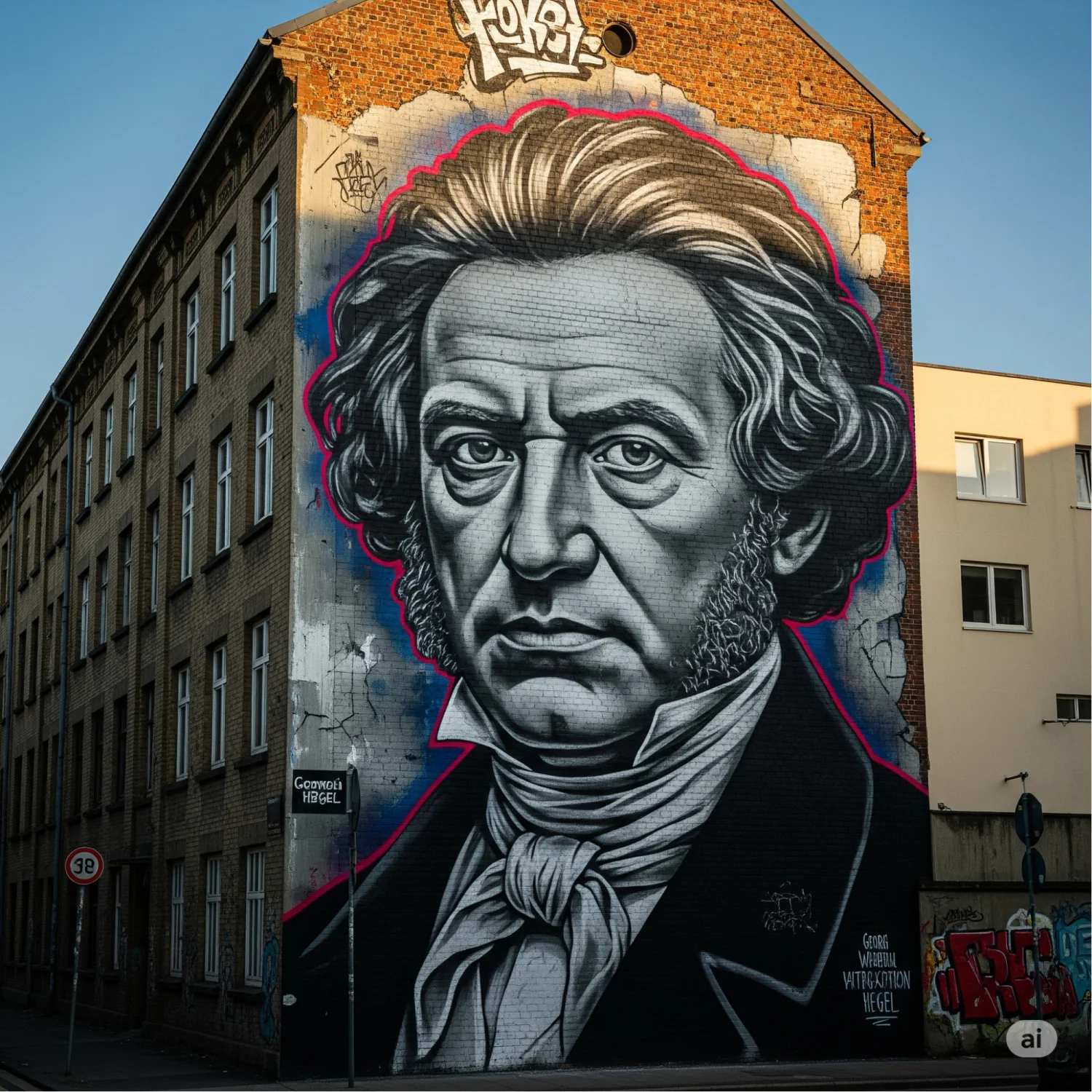
Urban art, seen through this lens, is the expression of a struggle of self-consciousness not to be erased by the masses. The artist, by politicizing the walls, is not just affirming their identity but claiming their place in the democratic process. They transform a property line into a canvas for debate. But a distinction must be made. Graffiti, with its colors and forms, sometimes negotiates with the system, being absorbed as "art" in authorized murals, which also opens space for its commercialization. Tagging, on the other hand, refuses this negotiation; its aesthetic is that of pure transgression. The basic difference between the two forms of expression consists in their authorization to exist. The point is not to judge what is beautiful or not—often the visual pollution of an environment is so great that it can make us anxious and insecure—but to explain that both practices are born from the same Hegelian concept, seeking to affirm the existence of those who practice them. And, if graffiti can serve as a dialogue between an artist and society, tagging is a scream.
"Graffiti is not the lowest form of art. Even though you have to creep around at night and lie to your mum, it's the most honest art form there is. There is no elitism or hype, it is an art show for the best spots a city has to offer and nobody is turned away for the price of admission. A wall has always been the best place to publish your work. The people who run our cities don't understand graffiti because they think that nothing has a right to exist unless it makes a profit." (Banksy, free quote)
This leads us directly to the heart of the conflict: what is the limit between the expression of one's art and another's property rights? The artist, by politicizing the walls, is often not only affirming their identity but also vandalizing something that does not belong to them. The objection is strong and valid: public or private space should not be altered by the unilateral imposition of an individual, but by consensus. Paradoxically, protest art can generate more conflict than recognition, or even hasten the gentrification that displaces the very community it sought to represent.
Street art can leave us with more questions than answers. Born from an individual's most intimate need for self-recognition, it forces a reflection on who has the right to shape the city. It is not a simple choice between what is art and what is crime. The invitation, in the end, is for us to adopt a philosophical look towards the tagged wall or the graffiti on the overpass — and we can also extend it to the music emanating from a neighborhood — and ask ourselves: what does this symbol, this sound, beautiful or not, legal or not, tell us about the health of our city and our democracy?
by Peter Webster - Logos Publishing Editor
Bibliographical References:
Banksy. n.d. "Personal Website." http://banksy.co.uk/.
Hegel, Georg Wilhelm Friedrich. 2018. The Phenomenology of Spirit. Translated and edited by Terry Pinkard. Cambridge: Cambridge University Press.
Hegel, Georg Wilhelm Friedrich. 1998. Aesthetics: Lectures on Fine Art. Vol. 1. Translated by T. M. Knox. Oxford: Clarendon Press.
Honneth, Axel. 1995. The Struggle for Recognition: The Moral Grammar of Social Conflicts. Translated by Joel Anderson. Cambridge, MA: MIT Press.
Marcuse, Herbert. 2009. Negations: Essays in Critical Theory. Translated by Jeremy J. Shapiro. London: MayFlyBooks.
The city is the materialization of a people's ethical life; its streets, walls, and squares form an image that narrates the power relations and values of a society. Beyond its buildings and walls, the city is the stage where individual consciousness seeks to find and affirm itself. In the middle of an urban landscape, often anonymous and dominated by commercial logic and exclusion, the street artist begins a fundamental process: the search for their own self-consciousness. In that case, graffiti and even the tagging emerge not as vandalism, but as a philosophical act of recognition, a struggle for the right to participate in the construction of public space. We will analyze how street art, in Hegelian philosophy, represents a practical manifestation of the human need to recognize oneself in the external world, transforming the city's walls into a battleground between advertisements, commercials, paintings, and amorphous symbols.
Self-Consciousness
For Hegel, self-consciousness is not born ready; it needs a mirror. The modern city is where self-consciousness seeks its reflection. For Hegel, the need to create art arises from a fundamental impulse of externalization, of imprinting one's own mark on the world in order to contemplate oneself within it. He describes this need universally: "The universal need for art is, therefore, the rational need of man to elevate the inner and outer world to a spiritual consciousness, as an object in which he recognizes his own self…” (Courses on Aesthetics I, Hegel, p. 53)
Hegel uses the example of a boy who throws stones into the water to admire the circles he himself has created and to awaken his self-consciousness. This metaphor can be revisited in a graffiti artist who paints a wall. In a city whose surfaces are dominated by messages that exclude them or address them only as consumers, the act of creating graffiti and tagging is an attempt to reclaim a piece of that world for oneself. The artist, feeling invisible in an urban environment that repels them or addresses them only as a consumer, casts their "stone"—the spray can. In the mark they leave, they do not just see paint; they see themselves. They find proof of their existence, the objective form of their self-consciousness.
This act of self-recognition is, in its essence, a democratic act. Why? Because it challenges the narrative of who has the right to be perceived and to act in public space. Advertising tells us what to buy; the state tells us how to behave. As the artist Banksy ironically notes, it is these forces that pollute our field of vision: "Who really spoils our city are the companies that scrawl their gigantic slogans on buildings and buses trying to make us feel inadequate unless we buy their products?" (Banksy, free quote). This dispute is not merely aesthetic but profoundly political and existential. By inscribing themselves in this same space without asking for permission, the artist practices an act of radical citizenship. They assert that their voice, their identity, and their art or symbol have as much right to exist as a billboard. Often coming from a social margin, their action is a refusal of invisibility. It is an "I exist" that, when publicly displayed, invites others to recognize themselves as well, becoming a collective political statement.
Tagging or Graffiti?
Urban art, seen through this lens, is the expression of a struggle of self-consciousness not to be erased by the masses. The artist, by politicizing the walls, is not just affirming their identity but claiming their place in the democratic process. They transform a property line into a canvas for debate. But a distinction must be made. Graffiti, with its colors and forms, sometimes negotiates with the system, being absorbed as "art" in authorized murals, which also opens space for its commercialization. Tagging, on the other hand, refuses this negotiation; its aesthetic is that of pure transgression. The basic difference between the two forms of expression consists in their authorization to exist. The point is not to judge what is beautiful or not—often the visual pollution of an environment is so great that it can make us anxious and insecure—but to explain that both practices are born from the same Hegelian concept, seeking to affirm the existence of those who practice them. And, if graffiti can serve as a dialogue between an artist and society, tagging is a scream.
"Graffiti is not the lowest form of art. Even though you have to creep around at night and lie to your mum, it's the most honest art form there is. There is no elitism or hype, it is an art show for the best spots a city has to offer and nobody is turned away for the price of admission. A wall has always been the best place to publish your work. The people who run our cities don't understand graffiti because they think that nothing has a right to exist unless it makes a profit." (Banksy, free quote)
This leads us directly to the heart of the conflict: what is the limit between the expression of one's art and another's property rights? The artist, by politicizing the walls, is often not only affirming their identity but also vandalizing something that does not belong to them. The objection is strong and valid: public or private space should not be altered by the unilateral imposition of an individual, but by consensus. Paradoxically, protest art can generate more conflict than recognition, or even hasten the gentrification that displaces the very community it sought to represent.
Street art can leave us with more questions than answers. Born from an individual's most intimate need for self-recognition, it forces a reflection on who has the right to shape the city. It is not a simple choice between what is art and what is crime. The invitation, in the end, is for us to adopt a philosophical look towards the tagged wall or the graffiti on the overpass — and we can also extend it to the music emanating from a neighborhood — and ask ourselves: what does this symbol, this sound, beautiful or not, legal or not, tell us about the health of our city and our democracy?
by Peter Webster - Logos Publishing Editor
Bibliographical References:
Banksy. n.d. "Personal Website." http://banksy.co.uk/.
Hegel, Georg Wilhelm Friedrich. 2018. The Phenomenology of Spirit. Translated and edited by Terry Pinkard. Cambridge: Cambridge University Press.
Hegel, Georg Wilhelm Friedrich. 1998. Aesthetics: Lectures on Fine Art. Vol. 1. Translated by T. M. Knox. Oxford: Clarendon Press.
Honneth, Axel. 1995. The Struggle for Recognition: The Moral Grammar of Social Conflicts. Translated by Joel Anderson. Cambridge, MA: MIT Press.
Marcuse, Herbert. 2009. Negations: Essays in Critical Theory. Translated by Jeremy J. Shapiro. London: MayFlyBooks.
How Logos Philosophy Club Supports Your Reading
How Logos Philosophy Club Supports Your Reading

Diving into philosophy on your own can feel like navigating a maze - dense arguments, unfamiliar terms, and complex ideas can leave you feeling stuck. That’s where Logos Philosophy Club steps in, transforming solitary study into a guided and enriched journey. As the first philosophy subscription book club in the U.S. focused exclusively on foundational works, it’s backed by a parent publishing group in Brazil with over 20,000 monthly subscribers.
Each month, members receive bilingual editions of foundational texts, meticulously translated from their original languages. These side-by-side editions allow you to compare the translation with the source text, which is especially helpful when tackling works like Plato’s The Symposium (set for March 2026) or Aristotle’s Nicomachean Ethics (coming December 2025). This format not only enhances understanding but also reflects the club’s dedication to providing high-quality materials.
Tags
Recent Blogs
Biographies
Socrates: the incarnation of philosophy

Metaphysics Logic
How myth made philosophy possible
Subscribe to our newsletter
Subscribe to our newsletter
New editions, new authors, new releases.
Subscribe to our newsletter and be the first to know what’s coming next from Logos Publishing.
Biographies
Socrates: the incarnation of philosophy
Metaphysics Logic
How myth made philosophy possible
In Book XI of the Odyssey, Odysseus descends to the underworld...
Logos Publishing
Metaphysics Logic
How myth made philosophy possible
VIEW ALL ARTICLES