What is philosophy?
What is philosophy?

Logos Publishing
Logos Publishing
Epistemology
Philosophy is the only discipline that cannot define itself.
Ask a mathematician what mathematics is and they will tell you: the study of number, structure, quantity, and change. Ask a philosopher what philosophy is, and you will get, at best, an argument.
This is the first philosophical problem: what is, after all, philosophy?
The problem of the name
The word itself offers a starting point. Philosophia — from the Greek philein, to love, and sophia, wisdom. The name of philosophy suggests it is the love of wisdom, which is different from the possession of it.
Pythagoras, the tradition tells us, was the first to call himself a philosophos — a lover of wisdom — rather than a sophos, a wise man. The modesty was deliberate and philosophically loaded: the moment you claim to possess wisdom, you have stopped seeking it.
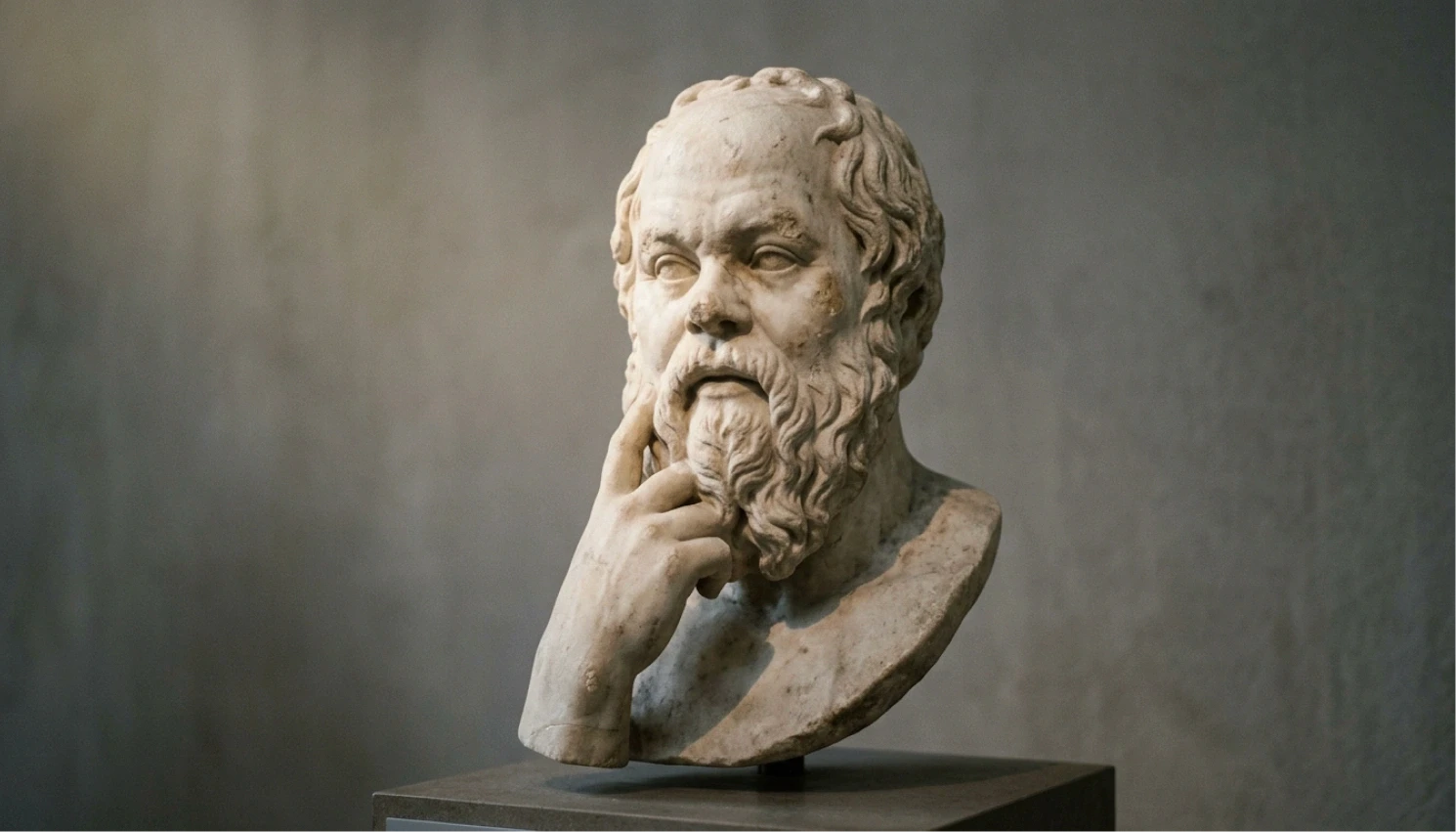
That's why Socrates said again and again that he was the wisest man in Athens precisely by proclaiming he knew nothing — because the philosopher is defined by the search, and to search is first to acknowledge you lack it.
The creation of philosophy
In his History of Ancient Philosophy, the Italian scholar Giovanni Reale argues that philosophy is a uniquely Greek creation. Not just historically but structurally — nothing quite equivalent to it emerged anywhere else.
This requires careful handling. Every great civilization produced wisdom traditions: India produced the Upanishads and the Bhagavad Gita, China produced Confucius and Laozi, Egypt accumulated millennia of religious and cosmological knowledge.
These are profound achievements — and they do ask why. But they answer within a framework that cannot be publicly challenged.
The Greek innovation was not the question. It was the method: the demand that any answer be submitted to open argument, that no tradition and no authority be exempt from scrutiny, that the only thing capable of settling a question be the force of reason itself.
When Thales proposed that the principle of all things is water or humidity, he was doing something unprecedented: proposing a rational account of the cosmos that invited disagreement, that could in principle be refuted by argument and observation.
Wonder — and a way of living
What is philosophy, then? Aristotle, in the Metaphysics, identifies its origin in thaumazein — wonder. "It is through wonder that men began to philosophize, both in the beginning and now."
Philosophy is not born out of practical need. In fact, it requires the absence of it. Plato and Aristotle both understood that wonder arises only in skholé — leisure, freedom from necessity.
The person consumed by a-skholia, by the pressures of work and survival, has no space for the kind of useless, urgent questioning that philosophy demands.
This is why philosophy emerged in the polis, in a society that had, for the first time, carved out space for citizens to think without immediate practical purpose.
But wonder alone is not enough. Pierre Hadot, in Philosophy as a Way of Life, argued that modern readers have fundamentally misunderstood what the Greeks meant by philosophy. We read Plato and Aristotle as theoretical texts — systems of ideas to be analyzed. But the ancients lived by them.
For the Stoics, for the Epicureans, for the Platonists, philosophy was not primarily a body of doctrine. It was a set of practices — ways of attending to experience, of examining oneself, of transforming how one lives. The philosophical school was not a lecture hall. It was a community oriented toward a specific way of being in the world.
Why the question doesn't end
We began by saying that philosophy cannot define itself. We are now in a better position to say why this is not a failure but a feature.
Philosophy is the discipline that examines its own foundations. The moment it stops being able to question what it is, it has become something else — dogma, ideology, orthodoxy. To wonder about philosophy is already to philosophize.
Next week, we turn to the world that made it possible: the world of Greek myth, and the strange way in which Homer prepared the ground for Socrates.
Philosophy is the only discipline that cannot define itself.
Ask a mathematician what mathematics is and they will tell you: the study of number, structure, quantity, and change. Ask a philosopher what philosophy is, and you will get, at best, an argument.
This is the first philosophical problem: what is, after all, philosophy?
The problem of the name
The word itself offers a starting point. Philosophia — from the Greek philein, to love, and sophia, wisdom. The name of philosophy suggests it is the love of wisdom, which is different from the possession of it.
Pythagoras, the tradition tells us, was the first to call himself a philosophos — a lover of wisdom — rather than a sophos, a wise man. The modesty was deliberate and philosophically loaded: the moment you claim to possess wisdom, you have stopped seeking it.
That's why Socrates said again and again that he was the wisest man in Athens precisely by proclaiming he knew nothing — because the philosopher is defined by the search, and to search is first to acknowledge you lack it.
The creation of philosophy
In his History of Ancient Philosophy, the Italian scholar Giovanni Reale argues that philosophy is a uniquely Greek creation. Not just historically but structurally — nothing quite equivalent to it emerged anywhere else.
This requires careful handling. Every great civilization produced wisdom traditions: India produced the Upanishads and the Bhagavad Gita, China produced Confucius and Laozi, Egypt accumulated millennia of religious and cosmological knowledge.
These are profound achievements — and they do ask why. But they answer within a framework that cannot be publicly challenged.
The Greek innovation was not the question. It was the method: the demand that any answer be submitted to open argument, that no tradition and no authority be exempt from scrutiny, that the only thing capable of settling a question be the force of reason itself.
When Thales proposed that the principle of all things is water or humidity, he was doing something unprecedented: proposing a rational account of the cosmos that invited disagreement, that could in principle be refuted by argument and observation.
Wonder — and a way of living
What is philosophy, then? Aristotle, in the Metaphysics, identifies its origin in thaumazein — wonder. "It is through wonder that men began to philosophize, both in the beginning and now."
Philosophy is not born out of practical need. In fact, it requires the absence of it. Plato and Aristotle both understood that wonder arises only in skholé — leisure, freedom from necessity.
The person consumed by a-skholia, by the pressures of work and survival, has no space for the kind of useless, urgent questioning that philosophy demands.
This is why philosophy emerged in the polis, in a society that had, for the first time, carved out space for citizens to think without immediate practical purpose.
But wonder alone is not enough. Pierre Hadot, in Philosophy as a Way of Life, argued that modern readers have fundamentally misunderstood what the Greeks meant by philosophy. We read Plato and Aristotle as theoretical texts — systems of ideas to be analyzed. But the ancients lived by them.
For the Stoics, for the Epicureans, for the Platonists, philosophy was not primarily a body of doctrine. It was a set of practices — ways of attending to experience, of examining oneself, of transforming how one lives. The philosophical school was not a lecture hall. It was a community oriented toward a specific way of being in the world.
Why the question doesn't end
We began by saying that philosophy cannot define itself. We are now in a better position to say why this is not a failure but a feature.
Philosophy is the discipline that examines its own foundations. The moment it stops being able to question what it is, it has become something else — dogma, ideology, orthodoxy. To wonder about philosophy is already to philosophize.
Next week, we turn to the world that made it possible: the world of Greek myth, and the strange way in which Homer prepared the ground for Socrates.
How Logos Philosophy Club Supports Your Reading
How Logos Philosophy Club Supports Your Reading

Diving into philosophy on your own can feel like navigating a maze - dense arguments, unfamiliar terms, and complex ideas can leave you feeling stuck. That’s where Logos Philosophy Club steps in, transforming solitary study into a guided and enriched journey. As the first philosophy subscription book club in the U.S. focused exclusively on foundational works, it’s backed by a parent publishing group in Brazil with over 20,000 monthly subscribers.
Each month, members receive bilingual editions of foundational texts, meticulously translated from their original languages. These side-by-side editions allow you to compare the translation with the source text, which is especially helpful when tackling works like Plato’s The Symposium (set for March 2026) or Aristotle’s Nicomachean Ethics (coming December 2025). This format not only enhances understanding but also reflects the club’s dedication to providing high-quality materials.
Tags
Recent Blogs
Biographies
Socrates: the incarnation of philosophy

Metaphysics Logic
How myth made philosophy possible
Subscribe to our newsletter
Subscribe to our newsletter
New editions, new authors, new releases.
Subscribe to our newsletter and be the first to know what’s coming next from Logos Publishing.
Biographies
Socrates: the incarnation of philosophy
Metaphysics Logic
How myth made philosophy possible
In Book XI of the Odyssey, Odysseus descends to the underworld...
Logos Publishing
Metaphysics Logic
How myth made philosophy possible
VIEW ALL ARTICLES