Socrates: the incarnation of philosophy
Socrates: the incarnation of philosophy

Logos Publishing
Logos Publishing
Biographies
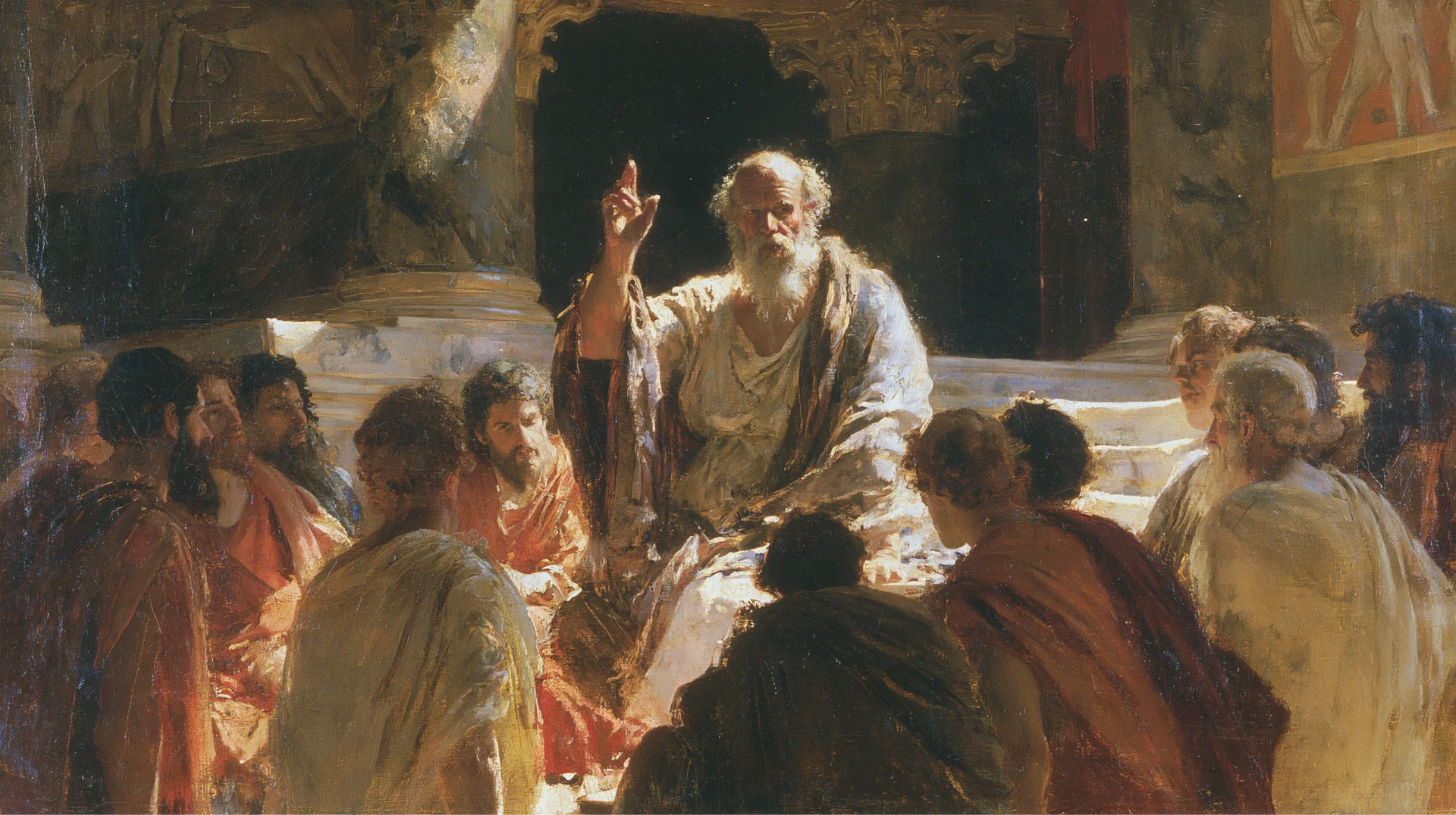
Socrates didn't write a single word.
Every word attributed to him comes from someone else — from Plato, who spent his life building a philosophical monument out of his teacher's memory; from Aristophanes, who made him the target of a comedy. No manuscripts, no letters, no treatises. Socrates is a philosopher who left no text.
And yet we know him better than almost any figure of the ancient world.
Did Socrates really exist?
The question sounds absurd, but there are many who debate it and there are fierce defenses of both sides. The answer, in this case, is almost certainly yes — and the reason is what historians call cross-reference.
Socrates appears not only in Plato's dialogues but in The Clouds, a comedy by Aristophanes performed in 423 BC, during Socrates's own lifetime, in a theater where Socrates himself may have been sitting.
A fictional character does not get mocked in a comedy performed before a living audience that knows him personally. The historical Socrates existed.
But knowing he existed is only the beginning of the problem. Because the Socrates we read — the one who defines philosophy in the Apology, who argues for the immortality of the soul in the Phaedo, who is compared to a divine statue in the Symposium — is already a literary construction.
He is a character that Plato built across decades of writing, and the question of where the historical man ends and the philosophical archetype begins is one that scholars have never fully resolved.
The Socratic problem
Plato's dialogues are conventionally divided into three periods: early, middle, and late. In the early dialogues — the Apology, the Euthyphro, the Crito — Socrates asks questions and reaches no conclusions. He claims to know nothing. He interrogates everyone he meets and finds, consistently, that they know nothing either.
The arguments are inconclusive, the interlocutors leave frustrated, and the reader leaves with the distinct sense of having encountered a real person doing something genuinely strange and unsettling in the streets of Athens.
In the middle and later dialogues something changes. Socrates begins to speak with confidence about the immortality of the soul, about the Forms, about the structure of the ideal city.
The questions give way to arguments, and the arguments are Plato's. Most scholars believe that the early Socrates is closer to the historical man, and that the middle Socrates is Plato using his teacher's voice to develop his own philosophy.
This distinction matters for what comes next.
The myth
In the Apology, Socrates stands trial and faces a death sentence. His friends arrange for him to escape — he refuses. His reason is the sentence that defines, more precisely than any other in the Western tradition, what philosophy actually means:
"The unexamined life is not worth living."
Socrates in the Apology is a man who has organized his entire existence around a single commitment — and who chose death rather than abandon it. Instead of being a character making a philosophical point, he is a philosophical point made flesh
The Symposium goes further. At the end of the dialogue, Alcibiades delivers a speech in which he describes Socrates not as a philosopher but as something inhuman.
He compares him to a Silenus statue: ugly and ridiculous on the outside, but concealing, inside, images of the gods.
A man who does not feel cold, who does not get drunk, who once stood in contemplation for twenty-four hours without moving while the other soldiers gathered around him in curiosity and wonder.
This is no longer history. This is myth — a figure whose significance exceeds what biography can contain.
The Phaedo completes the picture. Socrates spends his last day arguing for the immortality of the soul. His friends weep. But he remains calm.
He drinks the hemlock, lies down, and waits for his last breath. His last words are "Crito, we owe a cock to Asclepius" — a reminder to pay his debt to the gods after being condemned for impiety.
At the moment of death, his mind is not on dying. It is on whether he has lived rightly.
Conclusion
Plato built the Socratic figure across a lifetime of writing. And the figure he built is so philosophically perfect, so precisely constructed around the question of what philosophy means and what it demands of a life, that he ceased to be merely a person and became something else: the myth of philosophy itself.
Next week
In the next newsletter, we will ask what philosophy was actually for — not as doctrine, not as myth, but as a practice: the ancient understanding of philosophy as a complete way of living and a structured account of reality in all its dimensions.
Socrates didn't write a single word.
Every word attributed to him comes from someone else — from Plato, who spent his life building a philosophical monument out of his teacher's memory; from Aristophanes, who made him the target of a comedy. No manuscripts, no letters, no treatises. Socrates is a philosopher who left no text.
And yet we know him better than almost any figure of the ancient world.
Did Socrates really exist?
The question sounds absurd, but there are many who debate it and there are fierce defenses of both sides. The answer, in this case, is almost certainly yes — and the reason is what historians call cross-reference.
Socrates appears not only in Plato's dialogues but in The Clouds, a comedy by Aristophanes performed in 423 BC, during Socrates's own lifetime, in a theater where Socrates himself may have been sitting.
A fictional character does not get mocked in a comedy performed before a living audience that knows him personally. The historical Socrates existed.
But knowing he existed is only the beginning of the problem. Because the Socrates we read — the one who defines philosophy in the Apology, who argues for the immortality of the soul in the Phaedo, who is compared to a divine statue in the Symposium — is already a literary construction.
He is a character that Plato built across decades of writing, and the question of where the historical man ends and the philosophical archetype begins is one that scholars have never fully resolved.
The Socratic problem
Plato's dialogues are conventionally divided into three periods: early, middle, and late. In the early dialogues — the Apology, the Euthyphro, the Crito — Socrates asks questions and reaches no conclusions. He claims to know nothing. He interrogates everyone he meets and finds, consistently, that they know nothing either.
The arguments are inconclusive, the interlocutors leave frustrated, and the reader leaves with the distinct sense of having encountered a real person doing something genuinely strange and unsettling in the streets of Athens.
In the middle and later dialogues something changes. Socrates begins to speak with confidence about the immortality of the soul, about the Forms, about the structure of the ideal city.
The questions give way to arguments, and the arguments are Plato's. Most scholars believe that the early Socrates is closer to the historical man, and that the middle Socrates is Plato using his teacher's voice to develop his own philosophy.
This distinction matters for what comes next.
The myth
In the Apology, Socrates stands trial and faces a death sentence. His friends arrange for him to escape — he refuses. His reason is the sentence that defines, more precisely than any other in the Western tradition, what philosophy actually means:
"The unexamined life is not worth living."
Socrates in the Apology is a man who has organized his entire existence around a single commitment — and who chose death rather than abandon it. Instead of being a character making a philosophical point, he is a philosophical point made flesh
The Symposium goes further. At the end of the dialogue, Alcibiades delivers a speech in which he describes Socrates not as a philosopher but as something inhuman.
He compares him to a Silenus statue: ugly and ridiculous on the outside, but concealing, inside, images of the gods.
A man who does not feel cold, who does not get drunk, who once stood in contemplation for twenty-four hours without moving while the other soldiers gathered around him in curiosity and wonder.
This is no longer history. This is myth — a figure whose significance exceeds what biography can contain.
The Phaedo completes the picture. Socrates spends his last day arguing for the immortality of the soul. His friends weep. But he remains calm.
He drinks the hemlock, lies down, and waits for his last breath. His last words are "Crito, we owe a cock to Asclepius" — a reminder to pay his debt to the gods after being condemned for impiety.
At the moment of death, his mind is not on dying. It is on whether he has lived rightly.
Conclusion
Plato built the Socratic figure across a lifetime of writing. And the figure he built is so philosophically perfect, so precisely constructed around the question of what philosophy means and what it demands of a life, that he ceased to be merely a person and became something else: the myth of philosophy itself.
Next week
In the next newsletter, we will ask what philosophy was actually for — not as doctrine, not as myth, but as a practice: the ancient understanding of philosophy as a complete way of living and a structured account of reality in all its dimensions.
How Logos Philosophy Club Supports Your Reading
How Logos Philosophy Club Supports Your Reading

Diving into philosophy on your own can feel like navigating a maze - dense arguments, unfamiliar terms, and complex ideas can leave you feeling stuck. That’s where Logos Philosophy Club steps in, transforming solitary study into a guided and enriched journey. As the first philosophy subscription book club in the U.S. focused exclusively on foundational works, it’s backed by a parent publishing group in Brazil with over 20,000 monthly subscribers.
Each month, members receive bilingual editions of foundational texts, meticulously translated from their original languages. These side-by-side editions allow you to compare the translation with the source text, which is especially helpful when tackling works like Plato’s The Symposium (set for March 2026) or Aristotle’s Nicomachean Ethics (coming December 2025). This format not only enhances understanding but also reflects the club’s dedication to providing high-quality materials.
Tags
Recent Blogs

Metaphysics Logic
How myth made philosophy possible
Epistemology
What is philosophy?
Subscribe to our newsletter
Subscribe to our newsletter
New editions, new authors, new releases.
Subscribe to our newsletter and be the first to know what’s coming next from Logos Publishing.
Metaphysics Logic
How myth made philosophy possible
In Book XI of the Odyssey, Odysseus descends to the underworld...
Logos Publishing
Metaphysics Logic
How myth made philosophy possible
Logos Publishing
Epistemology
What is philosophy?
VIEW ALL ARTICLES