The Higher the Rise, The Harder the Fall: The Critique of Fortune in Boethius
The Higher the Rise, The Harder the Fall: The Critique of Fortune in Boethius


Logos Publishing
Logos Publishing
Ethics
Introduction
In the cell where he awaited the end of his life, Anicius Manlius Severinus Boethius confronted a bitter social outcome: a sudden fall from the pinnacle of power to the isolation of imprisonment. His work, The Consolation of Philosophy, begins with this lament but soon transforms into a monumental philosophical treatise of vital importance to the health of the soul in the face of the world's afflictions—and those of the body. Boethius occupies a singular position in Western intellectual history, frequently hailed as 'the last of the Romans and the first of the Scholastics.' His impact on Christian culture was profound; by translating and commenting on Greek authors through a lens of logical rigor, he provided the Church with the conceptual tools necessary for the systematization of Christian doctrine. The Consolation of Philosophy, in particular, offers a model of resilience and faith grounded in reason that became a predominant moral guide for Christianity for nearly a millennium, shaping the theological understanding of Divine Providence and the meaning of human suffering.
The Nature of Fortune and the Rota Fortunae
The personification of truth, Lady Philosophy, upon visiting the prisoner, identifies that the cause of his infirmity is not the loss of worldly goods, but the forgetting of his own nature and the logic that governs the world. The first stage of his 'cure' consists in understanding that Fortune did not betray him, but merely acted in accordance with her inconstant essence. Philosophy’s central argument is that Boethius has no legitimate right to rail against Fortune; if he accepted her favors when she was kind, he must now accept her departure. Fortune is personified as a blind deity whose only constancy is found in mutability itself. To heal Boethius, Philosophy assumes the voice of Fortune herself in a powerful discourse that explains the nature of her 'game.
As transcribed from the original text (James translation):
"I would argue with thee a little in Fortune's own words. Do thou consider whether her demands are just. 'Why, O man,' she might say, 'dost thou pursue me with daily complainings? What wrong have I done thee? What goods of thine have I taken from thee? Argue the matter with me before any judge thou wilt, and if thou canst show that any mortal man hath a property in these things, I will readily admit that what thou askest to have restored was indeed thine. When nature brought thee forth from thy mother's womb, I took thee, naked and destitute of all things; I fed thee with my own resources, and—what makes thee now impatient with me—I brought thee up with a too indulgent hand, and surrounded thee with all the splendor and affluence that was mine to give. Now it pleases me to withdraw my hand. Thou hast had cause for gratitude as one that hath had the use of another's goods; thou hast no right to complain as if thou hadst lost what was thine own. Why dost thou moan? I have done thee no violence. Riches, honors, and all such things are my subjects. They are my handmaids; they come with me, and with me they depart. I may boldly say that if those things of which thou complainest the loss were thine, thou couldst never have lost them. Shall I alone be forbidden to exercise my right? The heavens may bring forth bright days, and then shroud them in dark nights; the year may now deck the earth's face with flowers and fruits, and then again wither them with sleet and cold. The sea may now be calm and smooth, and then again rise in waves and storms. And shall man's insatiable greed bind me to a constancy which is alien to my ways? This is my art, this is my game; I turn my wheel in its ever-changing circle, and I am glad to lift the low and lower the high. Ascend if thou wilt, but only on this condition, that thou must not think it a wrong to descend when the rules of my game require it. Didst thou not know my ways? [...] What else is the cry of tragedy but the lamentation of a man who for a brief space hath been happy, and then is overwhelmed by the stroke of Fortune? [...] Still, do not let thy heart sink; and do not expect to live according to your own laws in a world that is shared by all.'" (Boethius, The Consolation of Philosophy, Bk. II, Pr. II, p. 51).
The Vanity of External Goods
Having established that change is the law of the material world, Philosophy subjects the objects of Boethius’s longing—wealth, rank, power, and fame—to a rigorous examination. Her argument is that these goods are external to the human soul and thus cannot constitute true happiness. Wealth does not grant independence but breeds anxiety; high offices only amplify the vices of the unworthy; and glory is a mere point in the vastness of eternity.
Conclusion
Philosophy concludes that true happiness cannot reside in anything subject to the whims of chance. By asserting that the Supreme Good must be, by definition, imperishable, Boethius manifests foundational Stoic traits integrated into the Christian worldview, particularly the distinction between what is within our power (the inner self) and what is external and indifferent (adiaphora). In stripping away Boethius’s illusions regarding earthly goods, Philosophy facilitates a return to the "inner citadel," where the self-sufficiency of reason and man’s likeness to the divine provide the only unshakable refuge against the storms of fate
Peter Webster - Philosophy Teacher and Logos Publishing Editor
References
Boethius, Severinus. The Consolation of Philosophy. Translated by Henry Rosher James. Coconut Creek, FL: Logos Publishing, 2026.
Introduction
In the cell where he awaited the end of his life, Anicius Manlius Severinus Boethius confronted a bitter social outcome: a sudden fall from the pinnacle of power to the isolation of imprisonment. His work, The Consolation of Philosophy, begins with this lament but soon transforms into a monumental philosophical treatise of vital importance to the health of the soul in the face of the world's afflictions—and those of the body. Boethius occupies a singular position in Western intellectual history, frequently hailed as 'the last of the Romans and the first of the Scholastics.' His impact on Christian culture was profound; by translating and commenting on Greek authors through a lens of logical rigor, he provided the Church with the conceptual tools necessary for the systematization of Christian doctrine. The Consolation of Philosophy, in particular, offers a model of resilience and faith grounded in reason that became a predominant moral guide for Christianity for nearly a millennium, shaping the theological understanding of Divine Providence and the meaning of human suffering.
The Nature of Fortune and the Rota Fortunae
The personification of truth, Lady Philosophy, upon visiting the prisoner, identifies that the cause of his infirmity is not the loss of worldly goods, but the forgetting of his own nature and the logic that governs the world. The first stage of his 'cure' consists in understanding that Fortune did not betray him, but merely acted in accordance with her inconstant essence. Philosophy’s central argument is that Boethius has no legitimate right to rail against Fortune; if he accepted her favors when she was kind, he must now accept her departure. Fortune is personified as a blind deity whose only constancy is found in mutability itself. To heal Boethius, Philosophy assumes the voice of Fortune herself in a powerful discourse that explains the nature of her 'game.
As transcribed from the original text (James translation):
"I would argue with thee a little in Fortune's own words. Do thou consider whether her demands are just. 'Why, O man,' she might say, 'dost thou pursue me with daily complainings? What wrong have I done thee? What goods of thine have I taken from thee? Argue the matter with me before any judge thou wilt, and if thou canst show that any mortal man hath a property in these things, I will readily admit that what thou askest to have restored was indeed thine. When nature brought thee forth from thy mother's womb, I took thee, naked and destitute of all things; I fed thee with my own resources, and—what makes thee now impatient with me—I brought thee up with a too indulgent hand, and surrounded thee with all the splendor and affluence that was mine to give. Now it pleases me to withdraw my hand. Thou hast had cause for gratitude as one that hath had the use of another's goods; thou hast no right to complain as if thou hadst lost what was thine own. Why dost thou moan? I have done thee no violence. Riches, honors, and all such things are my subjects. They are my handmaids; they come with me, and with me they depart. I may boldly say that if those things of which thou complainest the loss were thine, thou couldst never have lost them. Shall I alone be forbidden to exercise my right? The heavens may bring forth bright days, and then shroud them in dark nights; the year may now deck the earth's face with flowers and fruits, and then again wither them with sleet and cold. The sea may now be calm and smooth, and then again rise in waves and storms. And shall man's insatiable greed bind me to a constancy which is alien to my ways? This is my art, this is my game; I turn my wheel in its ever-changing circle, and I am glad to lift the low and lower the high. Ascend if thou wilt, but only on this condition, that thou must not think it a wrong to descend when the rules of my game require it. Didst thou not know my ways? [...] What else is the cry of tragedy but the lamentation of a man who for a brief space hath been happy, and then is overwhelmed by the stroke of Fortune? [...] Still, do not let thy heart sink; and do not expect to live according to your own laws in a world that is shared by all.'" (Boethius, The Consolation of Philosophy, Bk. II, Pr. II, p. 51).
The Vanity of External Goods
Having established that change is the law of the material world, Philosophy subjects the objects of Boethius’s longing—wealth, rank, power, and fame—to a rigorous examination. Her argument is that these goods are external to the human soul and thus cannot constitute true happiness. Wealth does not grant independence but breeds anxiety; high offices only amplify the vices of the unworthy; and glory is a mere point in the vastness of eternity.
Conclusion
Philosophy concludes that true happiness cannot reside in anything subject to the whims of chance. By asserting that the Supreme Good must be, by definition, imperishable, Boethius manifests foundational Stoic traits integrated into the Christian worldview, particularly the distinction between what is within our power (the inner self) and what is external and indifferent (adiaphora). In stripping away Boethius’s illusions regarding earthly goods, Philosophy facilitates a return to the "inner citadel," where the self-sufficiency of reason and man’s likeness to the divine provide the only unshakable refuge against the storms of fate
Peter Webster - Philosophy Teacher and Logos Publishing Editor
References
Boethius, Severinus. The Consolation of Philosophy. Translated by Henry Rosher James. Coconut Creek, FL: Logos Publishing, 2026.
How Logos Philosophy Club Supports Your Reading
How Logos Philosophy Club Supports Your Reading
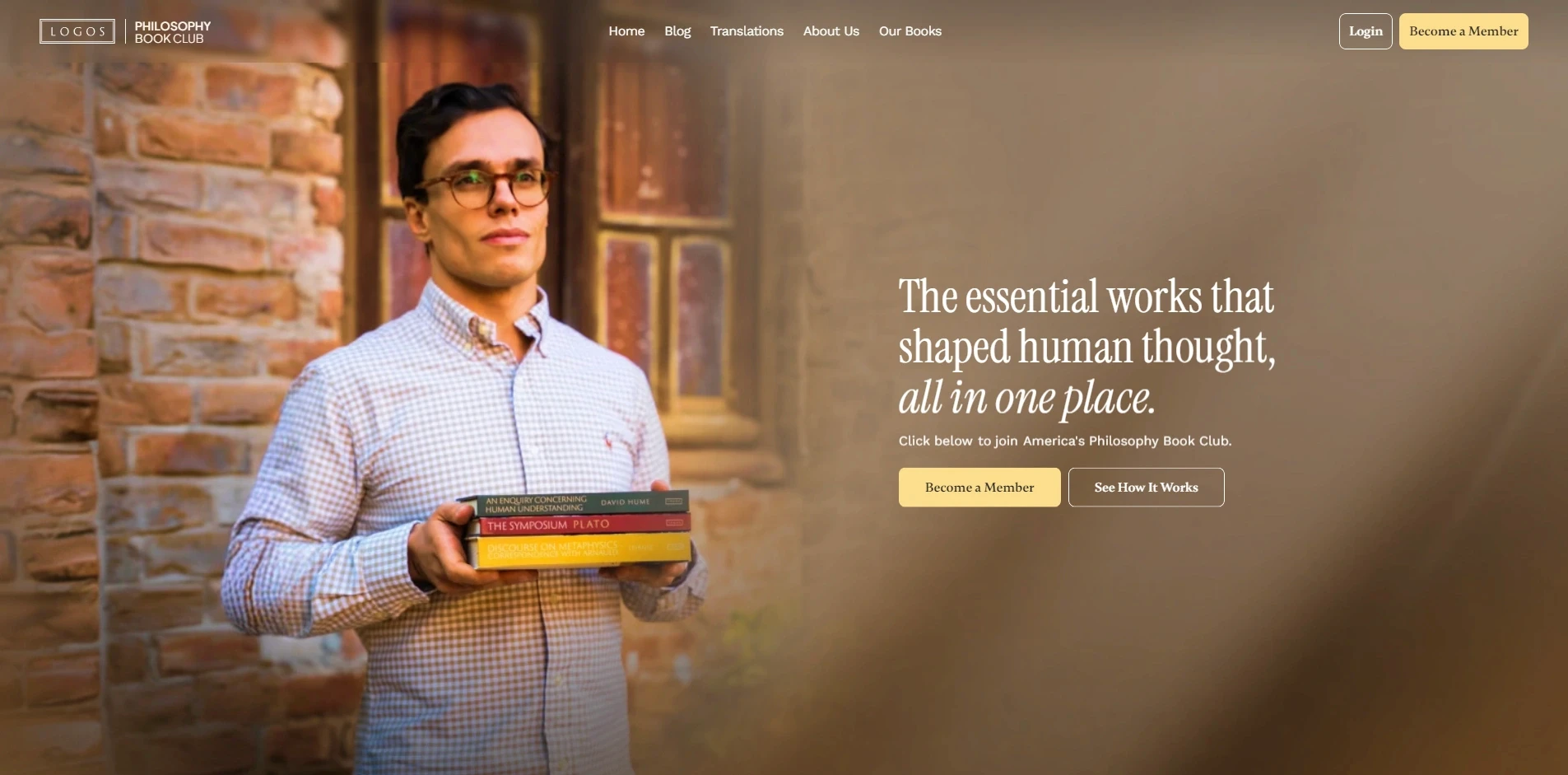
Diving into philosophy on your own can feel like navigating a maze - dense arguments, unfamiliar terms, and complex ideas can leave you feeling stuck. That’s where Logos Philosophy Club steps in, transforming solitary study into a guided and enriched journey. As the first philosophy subscription book club in the U.S. focused exclusively on foundational works, it’s backed by a parent publishing group in Brazil with over 20,000 monthly subscribers.
Each month, members receive bilingual editions of foundational texts, meticulously translated from their original languages. These side-by-side editions allow you to compare the translation with the source text, which is especially helpful when tackling works like Plato’s The Symposium (set for March 2026) or Aristotle’s Nicomachean Ethics (coming December 2025). This format not only enhances understanding but also reflects the club’s dedication to providing high-quality materials.
Tags
Recent Blogs
Biographies
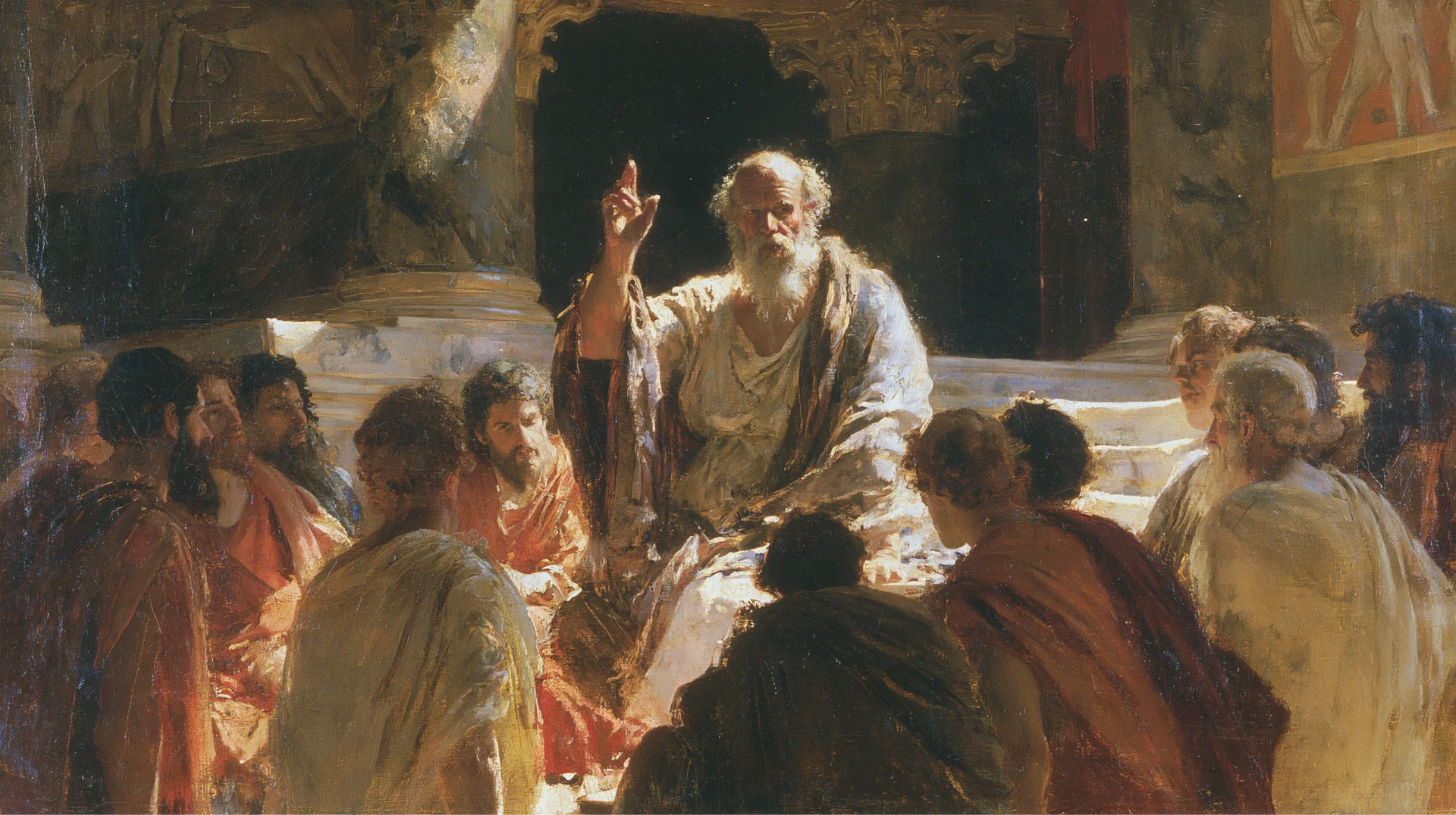
Socrates: the incarnation of philosophy

Metaphysics Logic
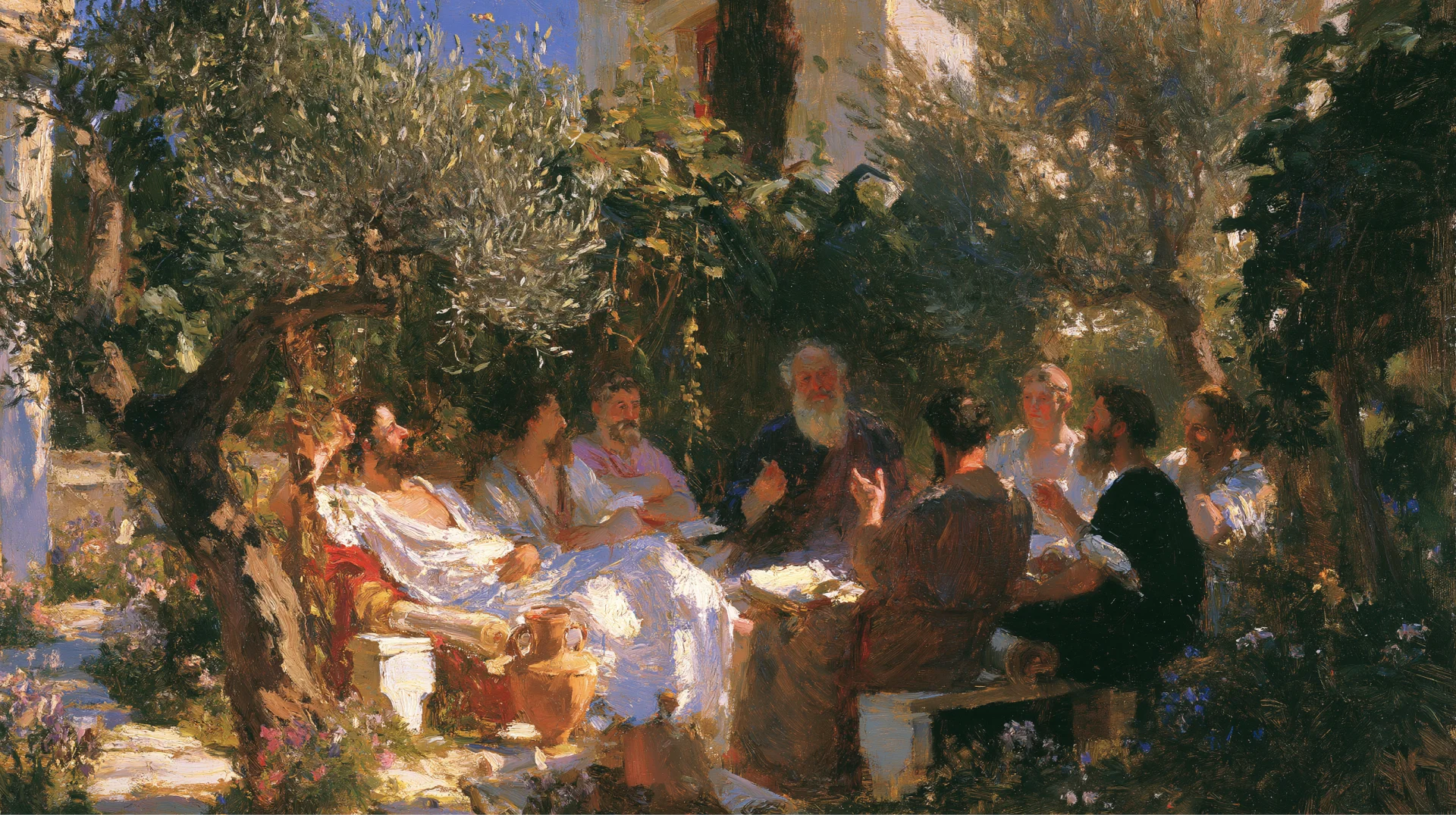
How myth made philosophy possible
Subscribe to our newsletter
Subscribe to our newsletter
New editions, new authors, new releases.
Subscribe to our newsletter and be the first to know what’s coming next from Logos Publishing.
Biographies
Socrates: the incarnation of philosophy
Metaphysics Logic
How myth made philosophy possible
In Book XI of the Odyssey, Odysseus descends to the underworld...
Logos Publishing
Metaphysics Logic
How myth made philosophy possible
VIEW ALL ARTICLES