5 Anime Characters Who Embody Nietzschean Philosophy
5 Anime Characters Who Embody Nietzschean Philosophy

Logos Publishing
Logos Publishing
Aesthetics
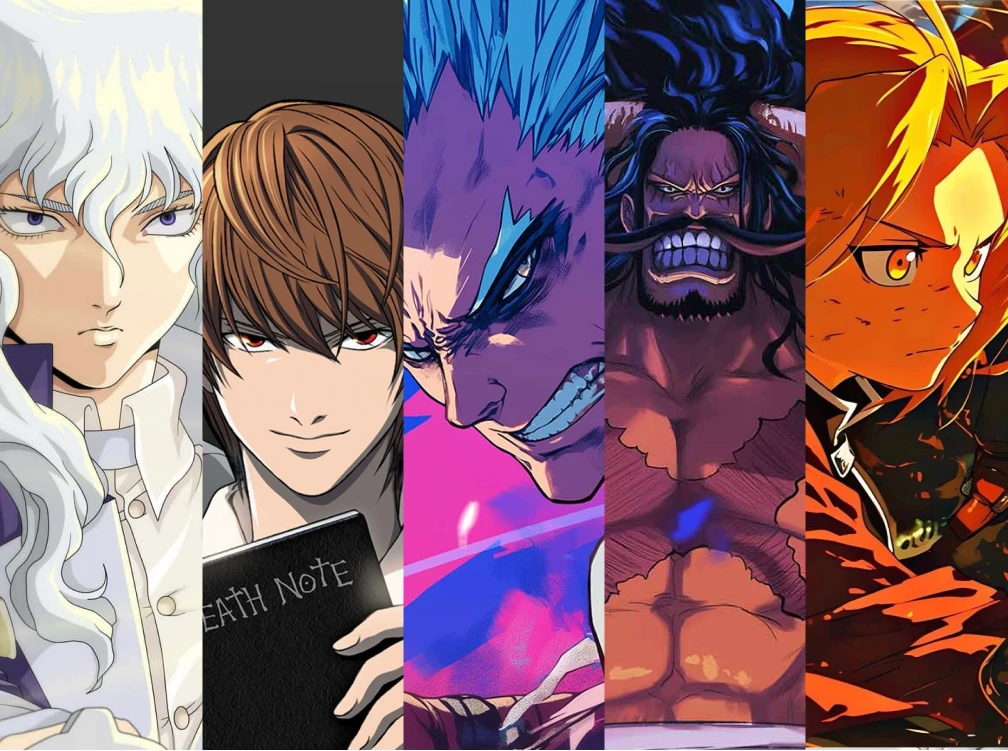
The ideas of Friedrich Nietzsche are an invitation to danger. They are thoughts that demand the destruction of idols and the courage to stare into the abyss without flinching. Contemporary anime masterpieces explore these ideas with expert precision. Mangakas (manga creators) feel liberated to create figures who embody these concepts, living out Nietzsche’s philosophy in its most radical forms. Below, we analyze five characters from celebrated works. In this selection, I have made an effort not to choose only villains—though, admittedly, the most notable examples often fall into that category—to present the breadth of this philosophy, which can also be represented by various heroes.
1. Griffith (Berserk): The Hawk and the Absolute Will to Power
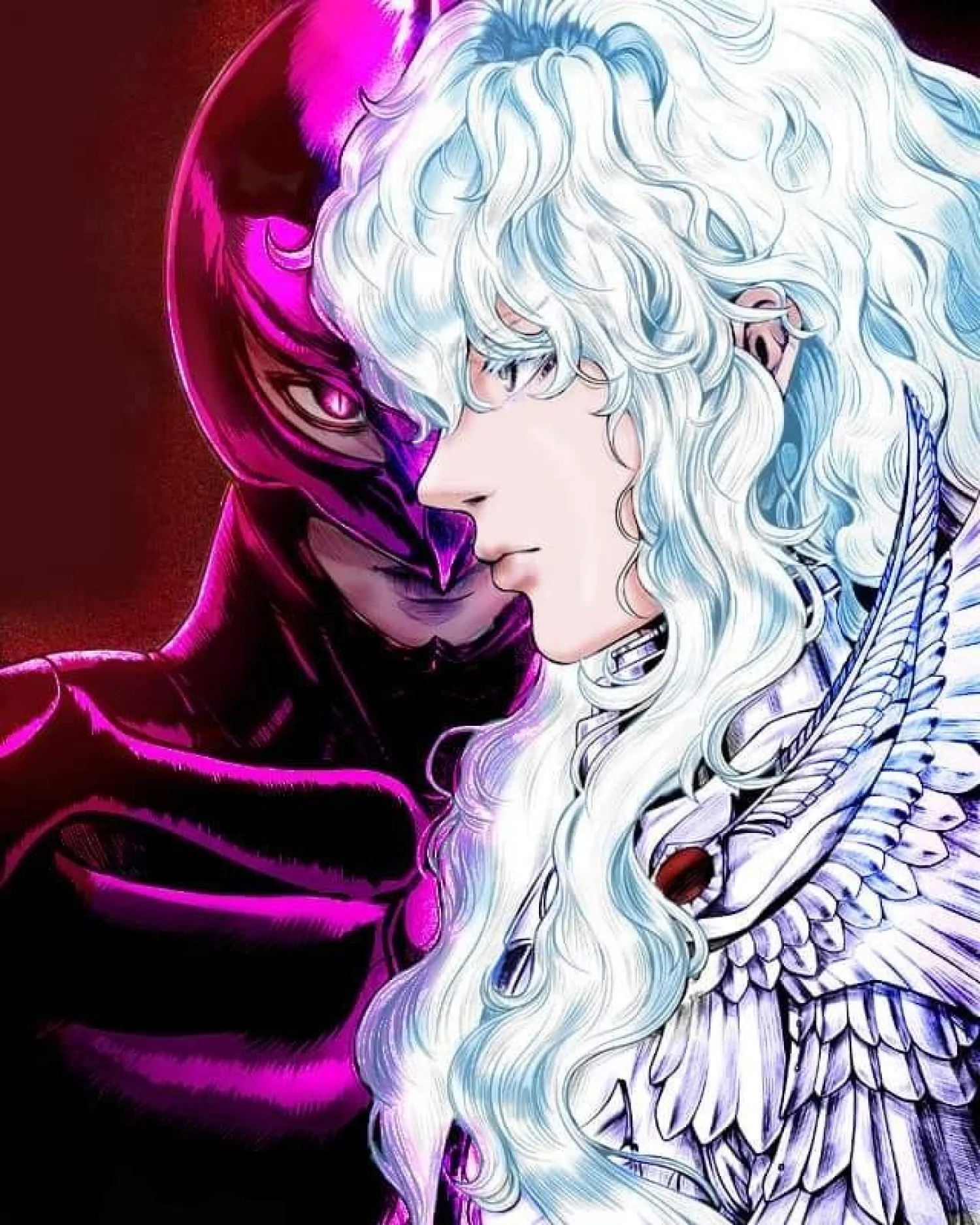
Griffith begins his journey in Berserk as the charismatic leader of the Band of the Hawk. Born in the mud of poverty, he never accepted the limitations imposed by his social class. For Nietzsche, the concept of the Will to Power (Wille zur Macht) is the fundamental engine of life that seeks to expand, overcome obstacles, and assert its own existence. As Nietzsche states in The Will to Power: "Where I found a living creature, there I found will to power; and even in the will of the servant I found the will to be master."
Griffith is the personification of this quest. His "Dream" of possessing his own kingdom is his sole moral guide. When he is tortured and reduced to a useless husk, he faces absolute nihilism. The sacrifice during the Eclipse is the moment Griffith decides to "overcome the human." He discards the morality of the herd—empathy, loyalty, and compassion—to attain a dark sort of divinity within the plot. He becomes the Overman (Übermensch) in a somber sense: one who creates his own values and stands above any human judgment. Nietzsche writes in Thus Spoke Zarathustra: "Man is a rope stretched between the animal and the Overman—a rope over an abyss." Griffith cut the rope and decided to fly across the abyss alone.
2. Light Yagami (Death Note): The Legislator and the Failed Revaluation
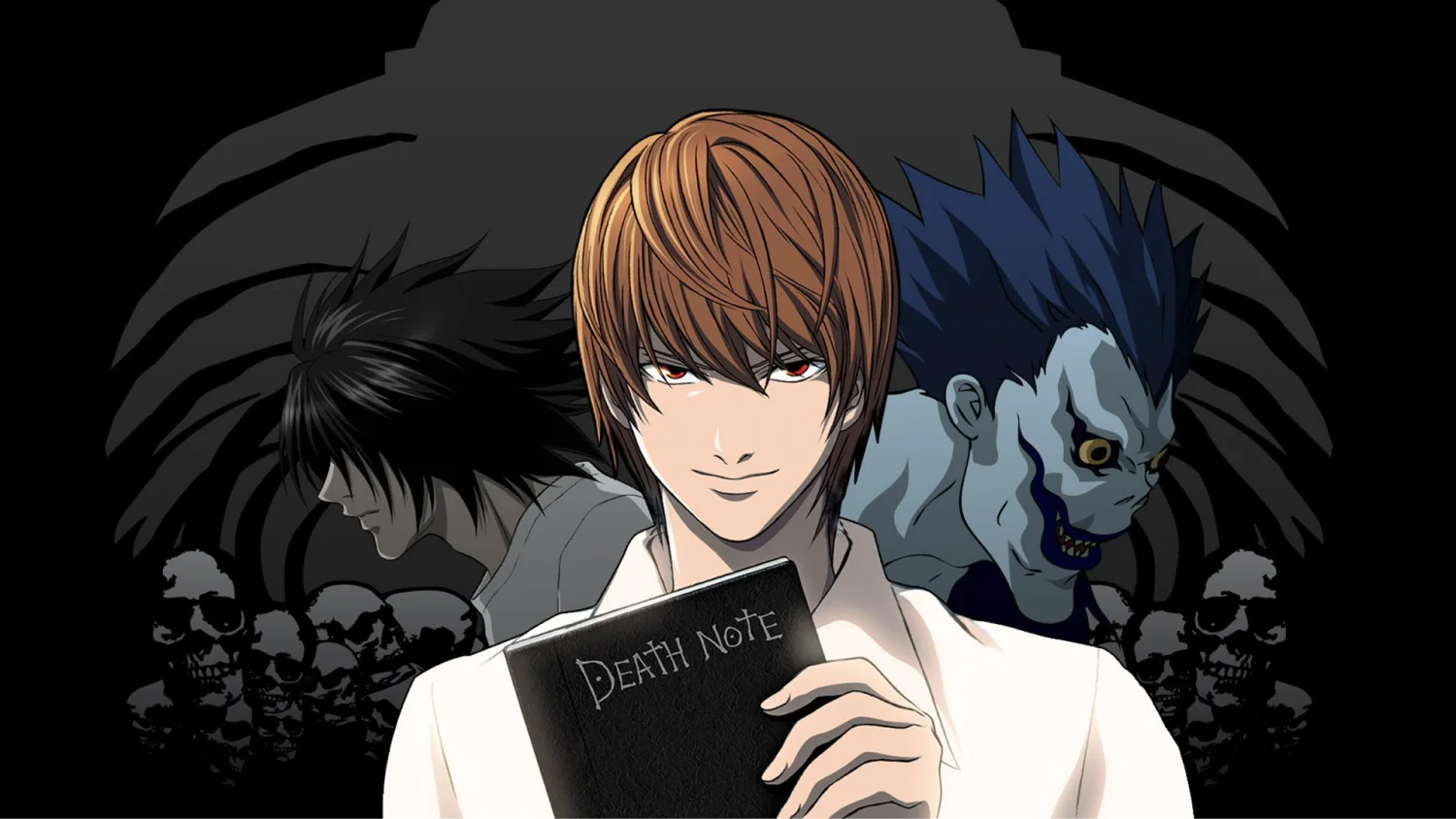
Light Yagami is a brilliant student suffering from the "boredom of the strong." Upon finding the Death Note, he begins the process Nietzsche called the Revaluation of All Values (Umwertung aller Werte). Light perceives that institutionalized justice is a facade that protects the weak and allows evil to prosper. He decides, therefore, to destroy Judeo-Christian/humanist morality to instill his own: the world of Kira.
Nietzsche argued that "the values which have been called 'good' up to now are the opposite of those which should be." Light attempts to be the new legislator of values, but he succumbs to a Master Morality corrupted by vanity. Although he views himself as a god, his constant need for recognition and his paranoia align him with the psychology of the "man of resentment." Nietzsche warns in Beyond Good and Evil: "He who fights with monsters should look to it that he himself does not become a monster. And if you gaze long into an abyss, the abyss also gazes into you." Light became the very abyss he intended to close, proving that revaluation requires a spiritual integrity he lacked in his narcissism.
3. Garou (One Punch Man): The "Hero Hunter" and the Critique of Herd Morality
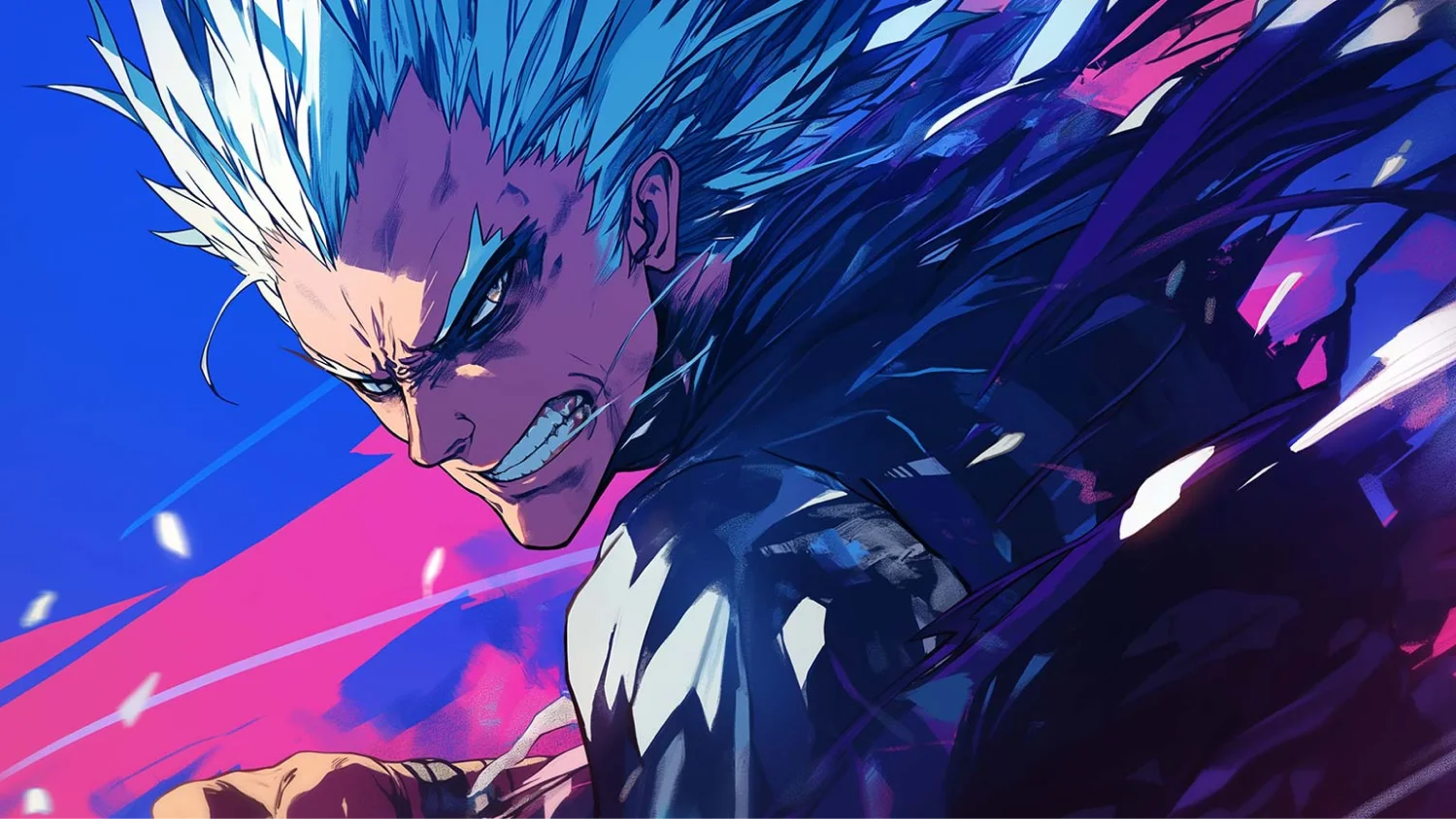
Garou is one of the most compelling characters on this list. He is an authentic dissident, revolted by the society surrounding him. Within the plot, in my view, he fits neither as a hero nor a villain, but rather as an authentic anti-hero—perhaps the most fitting one across all fictional universes. Since childhood, he identified with the monsters in TV shows, realizing that heroes won only because they were popular, not necessarily because they were "just." He views the Hero Association as the personification of Slave Morality, where a mediocre majority unites to oppress those who are different and strong.
Garou’s quest to become "Absolute Evil" is, in truth, a search for a higher truth. He wants to unite humanity through a common fear—a forced peace that does not depend on heroic lies. Nietzsche, in On the Genealogy of Morals, describes how the weak invented "evil" to designate the strong: "That lambs should bear a grudge against the great birds of prey is no cause for surprise: but that is no reason for blaming the great birds of prey for taking the little lambs." Garou assumes the role of the bird of prey to expose the hypocrisy of the lambs dressed as heroes. He seeks self-overcoming through incessant combat, a process of spiritual hardening that Nietzsche saw as essential for growth.
4. Kaidou (One Piece): Nihilism and the Pursuit of War
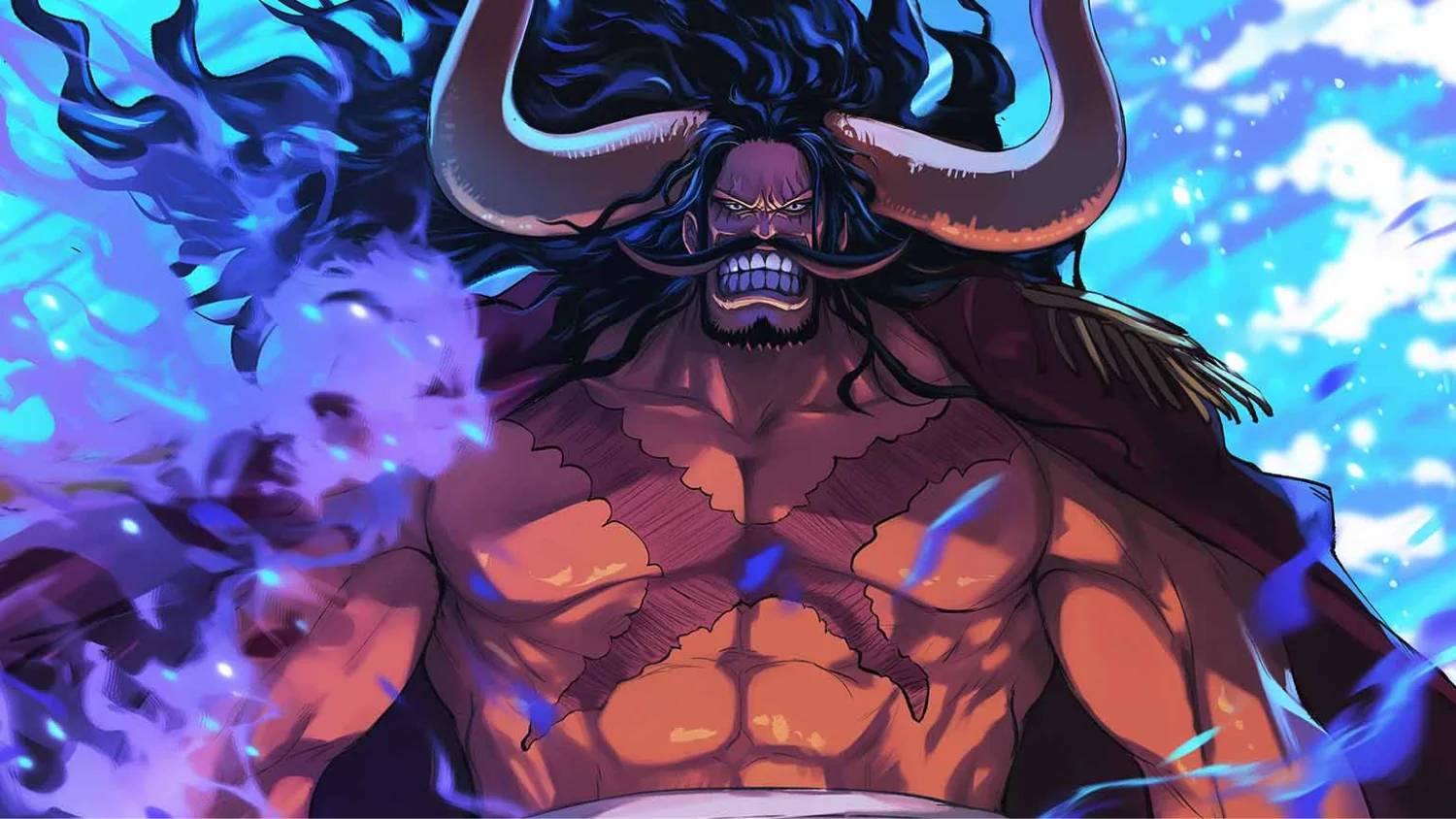
Kaidou of the Beasts is the most nihilistic character in Eiichiro Oda’s work. Despite possessing nearly unlimited power, he lives in a state of profound boredom and depression, repeatedly attempting suicide. This represents Passive Nihilism, where the individual perceives the decomposition of their values and feels the world has no meaning. As Nietzsche observes in his notes: "Nihilism is not only the belief that everything deserves to perish; but one actually puts one's shoulder to the plough; one destroys."
Kaidou seeks the "Final War" as a form of Active Nihilism. He wants to destroy social structures (such as the World Government and the Celestial Dragons) so that only brute force—nature in its purest and most cruel state—remains. He despises the established order and the false promises of a benevolent future. For Kaidou, death is the only thing that "completes" a man, a pessimistic view that clashes with the Nietzschean affirmation of life, yet exemplifies the stage of destruction necessary before any new creation can occur.
5. Edward Elric (Fullmetal Alchemist): The Journey of the Metamorphoses of the Spirit
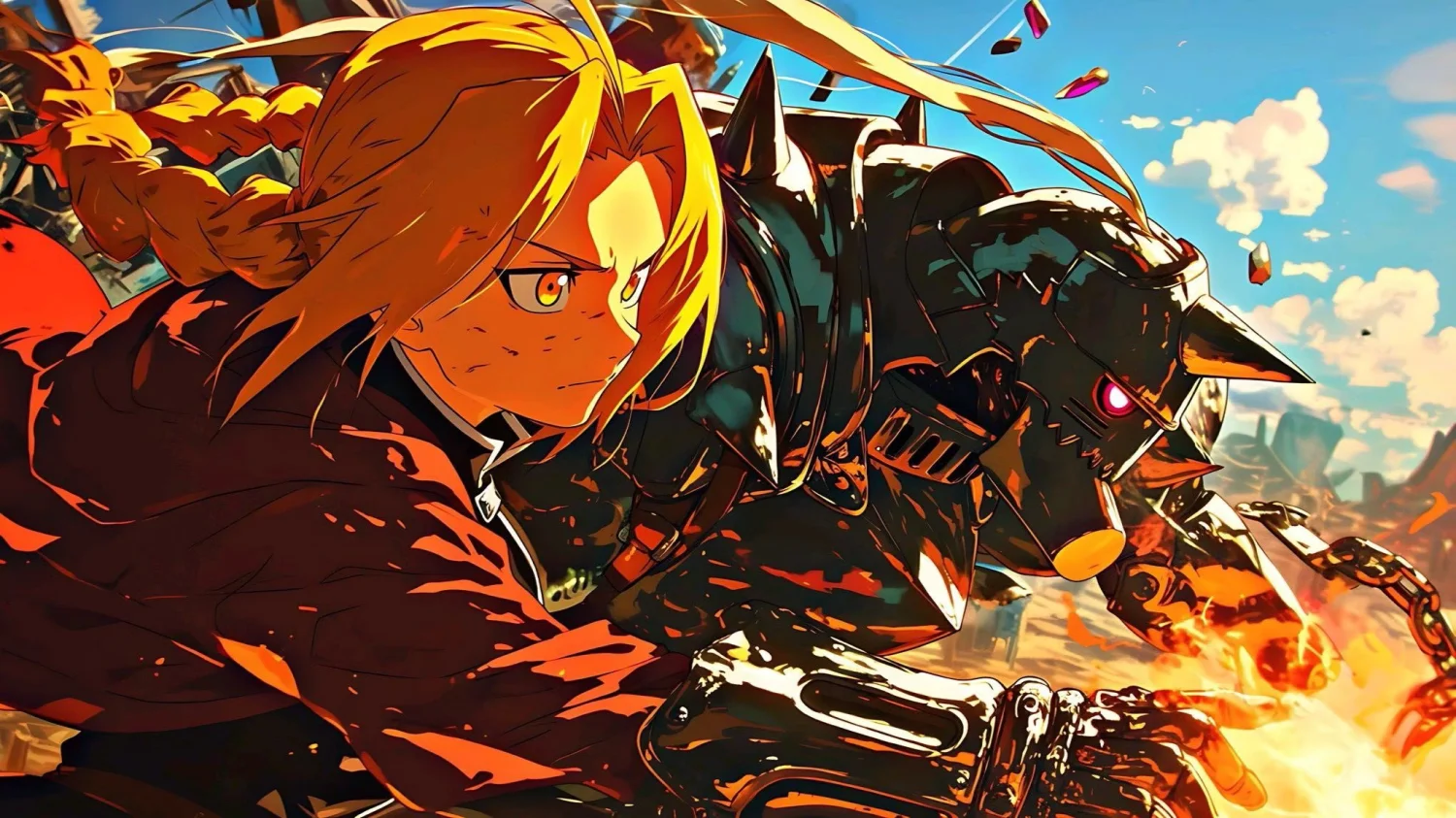
Edward Elric’s trajectory is one of the most beautiful illustrations of the parable of the Three Metamorphoses of the Spirit found in Thus Spoke Zarathustra. First, Ed is the Camel. He carries the crushing weight of guilt for attempting human transmutation and the burden of being a "Dog of the Military." He obeys the laws of Alchemy and seeks the Philosopher's Stone as an external truth to solve his problems.
Subsequently, he becomes the Lion—he begins to question authority, religion, and the very ethics of alchemy. He fights against fate and says "No" to the plans of the homunculi and "Father." The Lion wants to conquer his freedom and be master in his own desert. Finally, at the series' end, Edward reaches the state of the Child. When he sacrifices his Gate of Truth—his ability to perform miracles—to save his brother, he accepts life as it is, without metaphysical crutches. The Child, for Nietzsche, is "innocence and forgetting, a new beginning, a game, a wheel rolling out of through itself, a first movement, a sacred affirmation." Ed ceases to be an alchemist (one who seeks control over matter) to be merely a human who loves, affirming life in its finitude and simplicity.
Conclusion
I must insist: it is imperative to recognize the colossal merit of mangakas—exemplified here by Kentaro Miura, Tsugumi Ohba, ONE, Eiichiro Oda, and Hiromu Arakawa—who elevate mass entertainment to the status of an authentic existential laboratory. Armed with ink, paper, and imagination, these authors translate the density of philosophical treatises into visually arresting narratives that confront the viewer with complex moral problems of the human condition. Concepts such as the Will to Power, Nihilism, and Revaluation, when transposed to the universes of fantasy and fiction, do more than democratize access to complex thought; they offer a safe field for us to experiment with the radical consequences of living "beyond good and evil." In the end, the genius of these artists lies in their ability to demonstrate that, even in worlds populated by gods of death, alchemists, and pirates, the most important and necessary struggle remains the one described by Nietzsche: the overcoming of oneself and the courageous affirmation of life in the face of the void.
By Peter Webster – Professor of Philosophy and Writer at Logos Publishing
Bibliography
Nietzsche, Friedrich. Beyond Good and Evil: Prelude to a Philosophy of the Future. Translated by Walter Kaufmann. New York: Vintage Books, 1989.
———. On the Genealogy of Morals. Translated by Walter Kaufmann and R. J. Hollingdale. New York: Vintage Books, 1967.
———. Thus Spoke Zarathustra: A Book for All and None. Translated by Walter Kaufmann. New York: Penguin Books, 1978.
———. The Will to Power. Translated by Walter Kaufmann and R. J. Hollingdale. New York: Vintage Books, 1968.
The ideas of Friedrich Nietzsche are an invitation to danger. They are thoughts that demand the destruction of idols and the courage to stare into the abyss without flinching. Contemporary anime masterpieces explore these ideas with expert precision. Mangakas (manga creators) feel liberated to create figures who embody these concepts, living out Nietzsche’s philosophy in its most radical forms. Below, we analyze five characters from celebrated works. In this selection, I have made an effort not to choose only villains—though, admittedly, the most notable examples often fall into that category—to present the breadth of this philosophy, which can also be represented by various heroes.
1. Griffith (Berserk): The Hawk and the Absolute Will to Power
Griffith begins his journey in Berserk as the charismatic leader of the Band of the Hawk. Born in the mud of poverty, he never accepted the limitations imposed by his social class. For Nietzsche, the concept of the Will to Power (Wille zur Macht) is the fundamental engine of life that seeks to expand, overcome obstacles, and assert its own existence. As Nietzsche states in The Will to Power: "Where I found a living creature, there I found will to power; and even in the will of the servant I found the will to be master."
Griffith is the personification of this quest. His "Dream" of possessing his own kingdom is his sole moral guide. When he is tortured and reduced to a useless husk, he faces absolute nihilism. The sacrifice during the Eclipse is the moment Griffith decides to "overcome the human." He discards the morality of the herd—empathy, loyalty, and compassion—to attain a dark sort of divinity within the plot. He becomes the Overman (Übermensch) in a somber sense: one who creates his own values and stands above any human judgment. Nietzsche writes in Thus Spoke Zarathustra: "Man is a rope stretched between the animal and the Overman—a rope over an abyss." Griffith cut the rope and decided to fly across the abyss alone.
2. Light Yagami (Death Note): The Legislator and the Failed Revaluation
Light Yagami is a brilliant student suffering from the "boredom of the strong." Upon finding the Death Note, he begins the process Nietzsche called the Revaluation of All Values (Umwertung aller Werte). Light perceives that institutionalized justice is a facade that protects the weak and allows evil to prosper. He decides, therefore, to destroy Judeo-Christian/humanist morality to instill his own: the world of Kira.
Nietzsche argued that "the values which have been called 'good' up to now are the opposite of those which should be." Light attempts to be the new legislator of values, but he succumbs to a Master Morality corrupted by vanity. Although he views himself as a god, his constant need for recognition and his paranoia align him with the psychology of the "man of resentment." Nietzsche warns in Beyond Good and Evil: "He who fights with monsters should look to it that he himself does not become a monster. And if you gaze long into an abyss, the abyss also gazes into you." Light became the very abyss he intended to close, proving that revaluation requires a spiritual integrity he lacked in his narcissism.
3. Garou (One Punch Man): The "Hero Hunter" and the Critique of Herd Morality
Garou is one of the most compelling characters on this list. He is an authentic dissident, revolted by the society surrounding him. Within the plot, in my view, he fits neither as a hero nor a villain, but rather as an authentic anti-hero—perhaps the most fitting one across all fictional universes. Since childhood, he identified with the monsters in TV shows, realizing that heroes won only because they were popular, not necessarily because they were "just." He views the Hero Association as the personification of Slave Morality, where a mediocre majority unites to oppress those who are different and strong.
Garou’s quest to become "Absolute Evil" is, in truth, a search for a higher truth. He wants to unite humanity through a common fear—a forced peace that does not depend on heroic lies. Nietzsche, in On the Genealogy of Morals, describes how the weak invented "evil" to designate the strong: "That lambs should bear a grudge against the great birds of prey is no cause for surprise: but that is no reason for blaming the great birds of prey for taking the little lambs." Garou assumes the role of the bird of prey to expose the hypocrisy of the lambs dressed as heroes. He seeks self-overcoming through incessant combat, a process of spiritual hardening that Nietzsche saw as essential for growth.
4. Kaidou (One Piece): Nihilism and the Pursuit of War
Kaidou of the Beasts is the most nihilistic character in Eiichiro Oda’s work. Despite possessing nearly unlimited power, he lives in a state of profound boredom and depression, repeatedly attempting suicide. This represents Passive Nihilism, where the individual perceives the decomposition of their values and feels the world has no meaning. As Nietzsche observes in his notes: "Nihilism is not only the belief that everything deserves to perish; but one actually puts one's shoulder to the plough; one destroys."
Kaidou seeks the "Final War" as a form of Active Nihilism. He wants to destroy social structures (such as the World Government and the Celestial Dragons) so that only brute force—nature in its purest and most cruel state—remains. He despises the established order and the false promises of a benevolent future. For Kaidou, death is the only thing that "completes" a man, a pessimistic view that clashes with the Nietzschean affirmation of life, yet exemplifies the stage of destruction necessary before any new creation can occur.
5. Edward Elric (Fullmetal Alchemist): The Journey of the Metamorphoses of the Spirit
Edward Elric’s trajectory is one of the most beautiful illustrations of the parable of the Three Metamorphoses of the Spirit found in Thus Spoke Zarathustra. First, Ed is the Camel. He carries the crushing weight of guilt for attempting human transmutation and the burden of being a "Dog of the Military." He obeys the laws of Alchemy and seeks the Philosopher's Stone as an external truth to solve his problems.
Subsequently, he becomes the Lion—he begins to question authority, religion, and the very ethics of alchemy. He fights against fate and says "No" to the plans of the homunculi and "Father." The Lion wants to conquer his freedom and be master in his own desert. Finally, at the series' end, Edward reaches the state of the Child. When he sacrifices his Gate of Truth—his ability to perform miracles—to save his brother, he accepts life as it is, without metaphysical crutches. The Child, for Nietzsche, is "innocence and forgetting, a new beginning, a game, a wheel rolling out of through itself, a first movement, a sacred affirmation." Ed ceases to be an alchemist (one who seeks control over matter) to be merely a human who loves, affirming life in its finitude and simplicity.
Conclusion
I must insist: it is imperative to recognize the colossal merit of mangakas—exemplified here by Kentaro Miura, Tsugumi Ohba, ONE, Eiichiro Oda, and Hiromu Arakawa—who elevate mass entertainment to the status of an authentic existential laboratory. Armed with ink, paper, and imagination, these authors translate the density of philosophical treatises into visually arresting narratives that confront the viewer with complex moral problems of the human condition. Concepts such as the Will to Power, Nihilism, and Revaluation, when transposed to the universes of fantasy and fiction, do more than democratize access to complex thought; they offer a safe field for us to experiment with the radical consequences of living "beyond good and evil." In the end, the genius of these artists lies in their ability to demonstrate that, even in worlds populated by gods of death, alchemists, and pirates, the most important and necessary struggle remains the one described by Nietzsche: the overcoming of oneself and the courageous affirmation of life in the face of the void.
By Peter Webster – Professor of Philosophy and Writer at Logos Publishing
Bibliography
Nietzsche, Friedrich. Beyond Good and Evil: Prelude to a Philosophy of the Future. Translated by Walter Kaufmann. New York: Vintage Books, 1989.
———. On the Genealogy of Morals. Translated by Walter Kaufmann and R. J. Hollingdale. New York: Vintage Books, 1967.
———. Thus Spoke Zarathustra: A Book for All and None. Translated by Walter Kaufmann. New York: Penguin Books, 1978.
———. The Will to Power. Translated by Walter Kaufmann and R. J. Hollingdale. New York: Vintage Books, 1968.
How Logos Philosophy Club Supports Your Reading
How Logos Philosophy Club Supports Your Reading
Diving into philosophy on your own can feel like navigating a maze - dense arguments, unfamiliar terms, and complex ideas can leave you feeling stuck. That’s where Logos Philosophy Club steps in, transforming solitary study into a guided and enriched journey. As the first philosophy subscription book club in the U.S. focused exclusively on foundational works, it’s backed by a parent publishing group in Brazil with over 20,000 monthly subscribers.
Each month, members receive bilingual editions of foundational texts, meticulously translated from their original languages. These side-by-side editions allow you to compare the translation with the source text, which is especially helpful when tackling works like Plato’s The Symposium (set for March 2026) or Aristotle’s Nicomachean Ethics (coming December 2025). This format not only enhances understanding but also reflects the club’s dedication to providing high-quality materials.
Tags
Recent Blogs
Biographies
Socrates: the incarnation of philosophy

Metaphysics Logic
How myth made philosophy possible
Subscribe to our newsletter
Subscribe to our newsletter
New editions, new authors, new releases.
Subscribe to our newsletter and be the first to know what’s coming next from Logos Publishing.
Biographies
Socrates: the incarnation of philosophy
Metaphysics Logic
How myth made philosophy possible
In Book XI of the Odyssey, Odysseus descends to the underworld...
Logos Publishing
Metaphysics Logic
How myth made philosophy possible
VIEW ALL ARTICLES