Physical Activity and the Critiques of Dualist Philosophies
Physical Activity and the Critiques of Dualist Philosophies
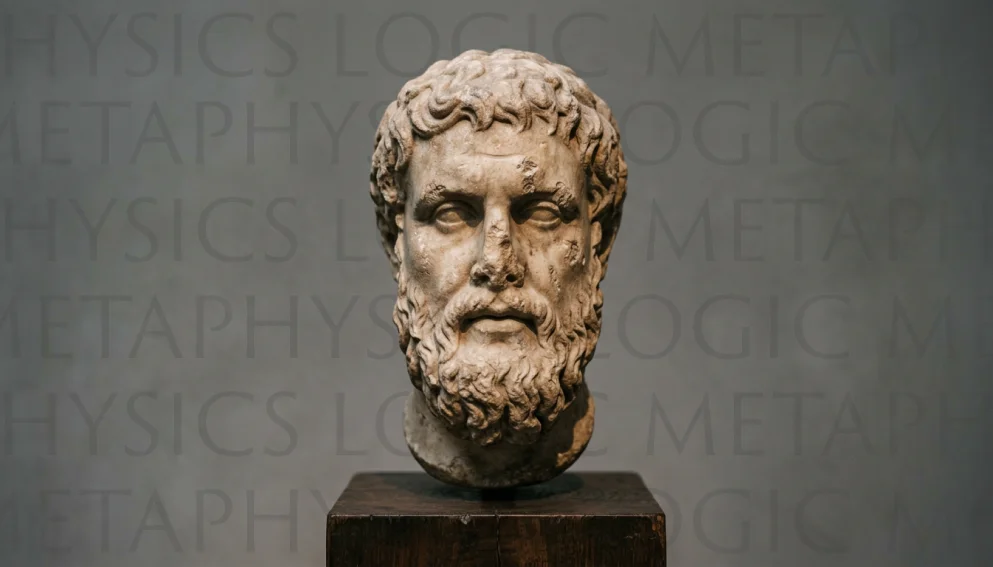

Logos Publishing
Logos Publishing
Metaphysics Logic
The Greek Ideal and the Unity of Being
In Ancient Greece, the concept of the human being was indivisible from the harmony between body, mind, and spirit. Physical activity was not a hobby in daily life, but a fundamental pillar of education (paideia) and human virtue (areté). Gymnasiums were centers of intellectual and physical development, where philosophers like Plato and Aristotle not only taught but also exercised. This integrated worldview found its highest expression in the Olympic Games, which began in 776 B.C. in Olympia. More than an athletic competition, the Games were a religious and cultural festival that celebrated the beauty, strength, and agility of the body as manifestations of an inner perfection. An athlete's victory was an honor for their city-state, a testament that physical discipline was a path to virtue and divine recognition. For the Greeks, to educate a citizen meant to forge both their intellect and their physique; a healthy and trained body was the temple of a sound and virtuous mind.
However, throughout the history of Western thought, this primordial unity was systematically fragmented. The rise of philosophical currents that radically separated the mind from the body bequeathed a profound dilemma to modernity, the implications of which extend to this day, shaping the way we conceive of health, training, and the purpose of physical activity. Let us explore the roots of this conflict, analyze its consequences for the practice of physical activity, and propose a recovery of the complete vision of the human being, arguing that movement is an integral expression of existence, and not merely a mechanical function of a subordinate body.
The Philosophical Roots of the Conflict: From Platonic to Cartesian Dualism
The problem of the mind-body relationship dates back to the dawn of Greek philosophy. On one hand, the idealist tradition, emblematically represented by Plato, proposed a fundamental dichotomy. For him, the world was composed of an eternal and immutable realm of Ideas, accessible only through reason, and a transient and imperfect world of appearances, perceived by the bodily senses. In this perspective, the body was often seen as a "prison" for the immortal soul, an obstacle to be overcome to achieve true knowledge.
In contrast, thinkers like Aristotle, though a disciple of Plato, rejected this ontological dualism, adopting a more empirical stance. Aristotle saw the body not as a hindrance, but as the essential instrument for knowing reality through experience and perception. For him, thinking and perceiving were capabilities of the body, and the soul (psyché) was the form, the organizing principle that gave life to bodily matter.
Despite the depth of Aristotelian thought, it was the dualist strand that gained strength in Western thought, being systematized and defended centuries later by René Descartes. In his works, Descartes established the famous distinction between res cogitans (the thinking substance, the mind) and res extensa (the material substance, the body). He defined the mind as unextended and immaterial, and the body as a complex machine, devoid of thought. Although Descartes admitted an intimate union and interaction between the two substances, his conceptual separation inaugurated an era in which the body came to be seen as an object, an automaton to be studied by the laws of mechanics, while the mind became the exclusive domain of consciousness and reason. As Descartes himself stated, the soul is "entirely and truly distinct from my body, and that it can be or exist without it" (Descartes, 1641).
This Cartesian view exerted such a vast influence that its echo reverberates to this day, including in prominent defenders like Popper and Eccles. However, this separation opened a conceptual chasm that has become one of the most persistent problems in philosophy and science, with profound implications also for the sports we enjoy practicing.
The legacy of Cartesian dualism permeated the theory and practice of Physical Education, often implicitly. The most direct consequence was the objectification of the body, treated as a machine to be trained, measured, and optimized for performance. In this perspective, the body becomes a servant of the mind, an instrument to achieve extrinsic goals. The theorist Paul Weiss exemplifies this view by stating that "to be fully master of his body" (Weiss, 1969) implies making it act in accordance with what the mind dictates. For him, the mind is a "vector" that indicates the direction in which the body should act, and training is the art of adjusting the body so that it follows this route.
This hierarchy creates a fundamental epistemological incompatibility with the idea of an education through the physical. If true knowledge, for Descartes, derives from the mind's reflection upon itself and not from the flawed sensory experiences of the body, then physical activity cannot be a source of genuine knowledge. The body, as a physical substance, cannot be "educated" in the strict sense; it is merely trained.
This mentality contributes to a problematic distinction between the concepts of "health" and "fitness." As C. Balkam points out, health can be understood as a harmonious state and an end in itself, an intelligent realization of the body's potentialities. "Fitness," on the other hand, is often the bodily state necessary to achieve a performance goal, such as winning a competition (Balkam, 1986). The relentless pursuit of "fitness" can lead the athlete to treat their body as a means to an end, introducing disharmony and putting their own health at risk.
Critiques and Alternatives: A Holistic Vision?
Perhaps the most scathing critique of modern dualism comes from the philosopher Gilbert Ryle, who nicknamed it "the dogma of the Ghost in the Machine." Ryle argued that Descartes committed a "category mistake" by treating the mind and body as entities of the same logical category ("things" or "substances"), when in fact they belong to distinct categories. For Ryle, to speak of mental processes is not to describe the operations of a spectral ghost within the body, but rather to describe a person's dispositions and abilities to act intelligently in the world. His analysis shifts the focus from an inner "mind" to observable conduct, paving the way for a non-dualistic understanding of intelligence and action.
This philosophical deconstruction finds an echo in practical approaches that seek to overcome the fragmentation of the human being. Phenomenology, for example, rejects the mind-body separation and proposes the concept of "embodied consciousness." In this view, the human being is a singular unit, a "lived-body" that perceives, acts, and creates meaning in the world through its corporeality. The athlete, therefore, does not "have" a body that they use, but fully "is" their body in motion.
This perspective aligns with the wisdom of Eastern traditions, such as yoga, tai-chi, and the martial arts. These practices do not separate physical training from mental or spiritual development; they cultivate an inner awareness and integration that Westerners have only recently begun to value. Physical education, from a holistic paradigm, should therefore incorporate these practices to provide "new images and new ways to describe our experiences." Language plays a crucial role in maintaining the dualist paradigm. Terms like "mental control over the body" perpetuate the notion of two separate entities in a command relationship. Even theorists who advocate for a "somatic" or "holistic" approach sometimes fall into linguistic traps, resorting to dualistic jargon to criticize dualism itself.
Physical Activity as an Expression of the Integral Being
Today, we are witnessing a growing yearning for a more integrated vision. The convergence of philosophical critique, advances in neuroscience, the wisdom of Eastern traditions, and the phenomenological perspective points to a new paradigm. In this paradigm, physical activity transcends the mere training of the body to become a form of education for the completeness of being. It is a path to self-knowledge, self-expression, and the search for a state of harmony in which mind and body are not two entities in conflict or hierarchy, but two inseparable facets of the same reality: human existence.
The challenge for educators, athletes, and practitioners is, therefore, to overcome the ingrained habits of a fragmented language and way of thinking. We must rediscover the ancient wisdom that movement is not something the body does, but something the human being is. True physical excellence lies not only in victory or in records, but in the manifestation of a human being who is fully conscious, integrated, and alive in their body, the true temple of their existence.
By Peter Webster - Philosophy Teacher and Logos Publishing Editor
Bibliography
Aristotle. "De Anima (On the Soul)." Translated by J. A. Smith. In The Complete Works of Aristotle, edited by Jonathan Barnes. Princeton: Princeton University Press, 1984.
Balkam, C. "Teleology and Fitness: An Aristotelian Analysis." In Mind and Body, edited by S. Kleinman, 31–37. Champaign, IL: Human Kinetics Publishers, 1986.
Descartes, René. Meditations on First Philosophy. Translated and edited by John Cottingham. 1641. Reprint, Cambridge: Cambridge University Press, 1996.
Plato. Republic. Translated by G. M. A. Grube. Revised by C. D. C. Reeve. In Plato: Complete Works, edited by John M. Cooper. Indianapolis: Hackett, 1997.
Ryle, Gilbert. The Concept of Mind. London: Hutchinson, 1949.
Weiss, Paul. Sport: A Philosophic Inquiry. 1969. Reprint, Champaign, IL: Human Kinetics Publishers, 1988.
The Greek Ideal and the Unity of Being
In Ancient Greece, the concept of the human being was indivisible from the harmony between body, mind, and spirit. Physical activity was not a hobby in daily life, but a fundamental pillar of education (paideia) and human virtue (areté). Gymnasiums were centers of intellectual and physical development, where philosophers like Plato and Aristotle not only taught but also exercised. This integrated worldview found its highest expression in the Olympic Games, which began in 776 B.C. in Olympia. More than an athletic competition, the Games were a religious and cultural festival that celebrated the beauty, strength, and agility of the body as manifestations of an inner perfection. An athlete's victory was an honor for their city-state, a testament that physical discipline was a path to virtue and divine recognition. For the Greeks, to educate a citizen meant to forge both their intellect and their physique; a healthy and trained body was the temple of a sound and virtuous mind.
However, throughout the history of Western thought, this primordial unity was systematically fragmented. The rise of philosophical currents that radically separated the mind from the body bequeathed a profound dilemma to modernity, the implications of which extend to this day, shaping the way we conceive of health, training, and the purpose of physical activity. Let us explore the roots of this conflict, analyze its consequences for the practice of physical activity, and propose a recovery of the complete vision of the human being, arguing that movement is an integral expression of existence, and not merely a mechanical function of a subordinate body.
The Philosophical Roots of the Conflict: From Platonic to Cartesian Dualism
The problem of the mind-body relationship dates back to the dawn of Greek philosophy. On one hand, the idealist tradition, emblematically represented by Plato, proposed a fundamental dichotomy. For him, the world was composed of an eternal and immutable realm of Ideas, accessible only through reason, and a transient and imperfect world of appearances, perceived by the bodily senses. In this perspective, the body was often seen as a "prison" for the immortal soul, an obstacle to be overcome to achieve true knowledge.
In contrast, thinkers like Aristotle, though a disciple of Plato, rejected this ontological dualism, adopting a more empirical stance. Aristotle saw the body not as a hindrance, but as the essential instrument for knowing reality through experience and perception. For him, thinking and perceiving were capabilities of the body, and the soul (psyché) was the form, the organizing principle that gave life to bodily matter.
Despite the depth of Aristotelian thought, it was the dualist strand that gained strength in Western thought, being systematized and defended centuries later by René Descartes. In his works, Descartes established the famous distinction between res cogitans (the thinking substance, the mind) and res extensa (the material substance, the body). He defined the mind as unextended and immaterial, and the body as a complex machine, devoid of thought. Although Descartes admitted an intimate union and interaction between the two substances, his conceptual separation inaugurated an era in which the body came to be seen as an object, an automaton to be studied by the laws of mechanics, while the mind became the exclusive domain of consciousness and reason. As Descartes himself stated, the soul is "entirely and truly distinct from my body, and that it can be or exist without it" (Descartes, 1641).
This Cartesian view exerted such a vast influence that its echo reverberates to this day, including in prominent defenders like Popper and Eccles. However, this separation opened a conceptual chasm that has become one of the most persistent problems in philosophy and science, with profound implications also for the sports we enjoy practicing.
The legacy of Cartesian dualism permeated the theory and practice of Physical Education, often implicitly. The most direct consequence was the objectification of the body, treated as a machine to be trained, measured, and optimized for performance. In this perspective, the body becomes a servant of the mind, an instrument to achieve extrinsic goals. The theorist Paul Weiss exemplifies this view by stating that "to be fully master of his body" (Weiss, 1969) implies making it act in accordance with what the mind dictates. For him, the mind is a "vector" that indicates the direction in which the body should act, and training is the art of adjusting the body so that it follows this route.
This hierarchy creates a fundamental epistemological incompatibility with the idea of an education through the physical. If true knowledge, for Descartes, derives from the mind's reflection upon itself and not from the flawed sensory experiences of the body, then physical activity cannot be a source of genuine knowledge. The body, as a physical substance, cannot be "educated" in the strict sense; it is merely trained.
This mentality contributes to a problematic distinction between the concepts of "health" and "fitness." As C. Balkam points out, health can be understood as a harmonious state and an end in itself, an intelligent realization of the body's potentialities. "Fitness," on the other hand, is often the bodily state necessary to achieve a performance goal, such as winning a competition (Balkam, 1986). The relentless pursuit of "fitness" can lead the athlete to treat their body as a means to an end, introducing disharmony and putting their own health at risk.
Critiques and Alternatives: A Holistic Vision?
Perhaps the most scathing critique of modern dualism comes from the philosopher Gilbert Ryle, who nicknamed it "the dogma of the Ghost in the Machine." Ryle argued that Descartes committed a "category mistake" by treating the mind and body as entities of the same logical category ("things" or "substances"), when in fact they belong to distinct categories. For Ryle, to speak of mental processes is not to describe the operations of a spectral ghost within the body, but rather to describe a person's dispositions and abilities to act intelligently in the world. His analysis shifts the focus from an inner "mind" to observable conduct, paving the way for a non-dualistic understanding of intelligence and action.
This philosophical deconstruction finds an echo in practical approaches that seek to overcome the fragmentation of the human being. Phenomenology, for example, rejects the mind-body separation and proposes the concept of "embodied consciousness." In this view, the human being is a singular unit, a "lived-body" that perceives, acts, and creates meaning in the world through its corporeality. The athlete, therefore, does not "have" a body that they use, but fully "is" their body in motion.
This perspective aligns with the wisdom of Eastern traditions, such as yoga, tai-chi, and the martial arts. These practices do not separate physical training from mental or spiritual development; they cultivate an inner awareness and integration that Westerners have only recently begun to value. Physical education, from a holistic paradigm, should therefore incorporate these practices to provide "new images and new ways to describe our experiences." Language plays a crucial role in maintaining the dualist paradigm. Terms like "mental control over the body" perpetuate the notion of two separate entities in a command relationship. Even theorists who advocate for a "somatic" or "holistic" approach sometimes fall into linguistic traps, resorting to dualistic jargon to criticize dualism itself.
Physical Activity as an Expression of the Integral Being
Today, we are witnessing a growing yearning for a more integrated vision. The convergence of philosophical critique, advances in neuroscience, the wisdom of Eastern traditions, and the phenomenological perspective points to a new paradigm. In this paradigm, physical activity transcends the mere training of the body to become a form of education for the completeness of being. It is a path to self-knowledge, self-expression, and the search for a state of harmony in which mind and body are not two entities in conflict or hierarchy, but two inseparable facets of the same reality: human existence.
The challenge for educators, athletes, and practitioners is, therefore, to overcome the ingrained habits of a fragmented language and way of thinking. We must rediscover the ancient wisdom that movement is not something the body does, but something the human being is. True physical excellence lies not only in victory or in records, but in the manifestation of a human being who is fully conscious, integrated, and alive in their body, the true temple of their existence.
By Peter Webster - Philosophy Teacher and Logos Publishing Editor
Bibliography
Aristotle. "De Anima (On the Soul)." Translated by J. A. Smith. In The Complete Works of Aristotle, edited by Jonathan Barnes. Princeton: Princeton University Press, 1984.
Balkam, C. "Teleology and Fitness: An Aristotelian Analysis." In Mind and Body, edited by S. Kleinman, 31–37. Champaign, IL: Human Kinetics Publishers, 1986.
Descartes, René. Meditations on First Philosophy. Translated and edited by John Cottingham. 1641. Reprint, Cambridge: Cambridge University Press, 1996.
Plato. Republic. Translated by G. M. A. Grube. Revised by C. D. C. Reeve. In Plato: Complete Works, edited by John M. Cooper. Indianapolis: Hackett, 1997.
Ryle, Gilbert. The Concept of Mind. London: Hutchinson, 1949.
Weiss, Paul. Sport: A Philosophic Inquiry. 1969. Reprint, Champaign, IL: Human Kinetics Publishers, 1988.
How Logos Philosophy Club Supports Your Reading
How Logos Philosophy Club Supports Your Reading

Diving into philosophy on your own can feel like navigating a maze - dense arguments, unfamiliar terms, and complex ideas can leave you feeling stuck. That’s where Logos Philosophy Club steps in, transforming solitary study into a guided and enriched journey. As the first philosophy subscription book club in the U.S. focused exclusively on foundational works, it’s backed by a parent publishing group in Brazil with over 20,000 monthly subscribers.
Each month, members receive bilingual editions of foundational texts, meticulously translated from their original languages. These side-by-side editions allow you to compare the translation with the source text, which is especially helpful when tackling works like Plato’s The Symposium (set for March 2026) or Aristotle’s Nicomachean Ethics (coming December 2025). This format not only enhances understanding but also reflects the club’s dedication to providing high-quality materials.
Tags
Recent Blogs
Biographies
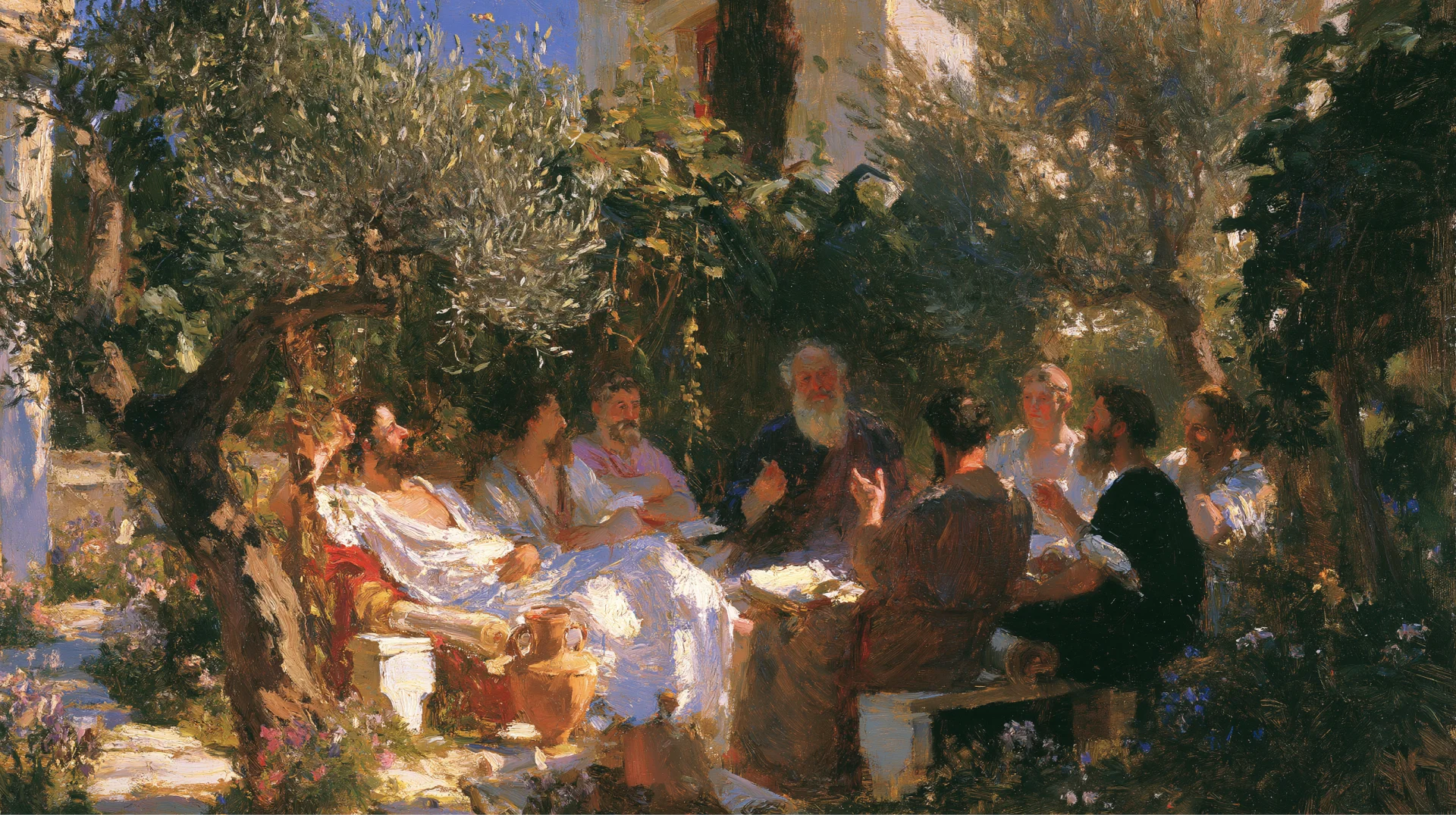
Socrates: the incarnation of philosophy

Metaphysics Logic
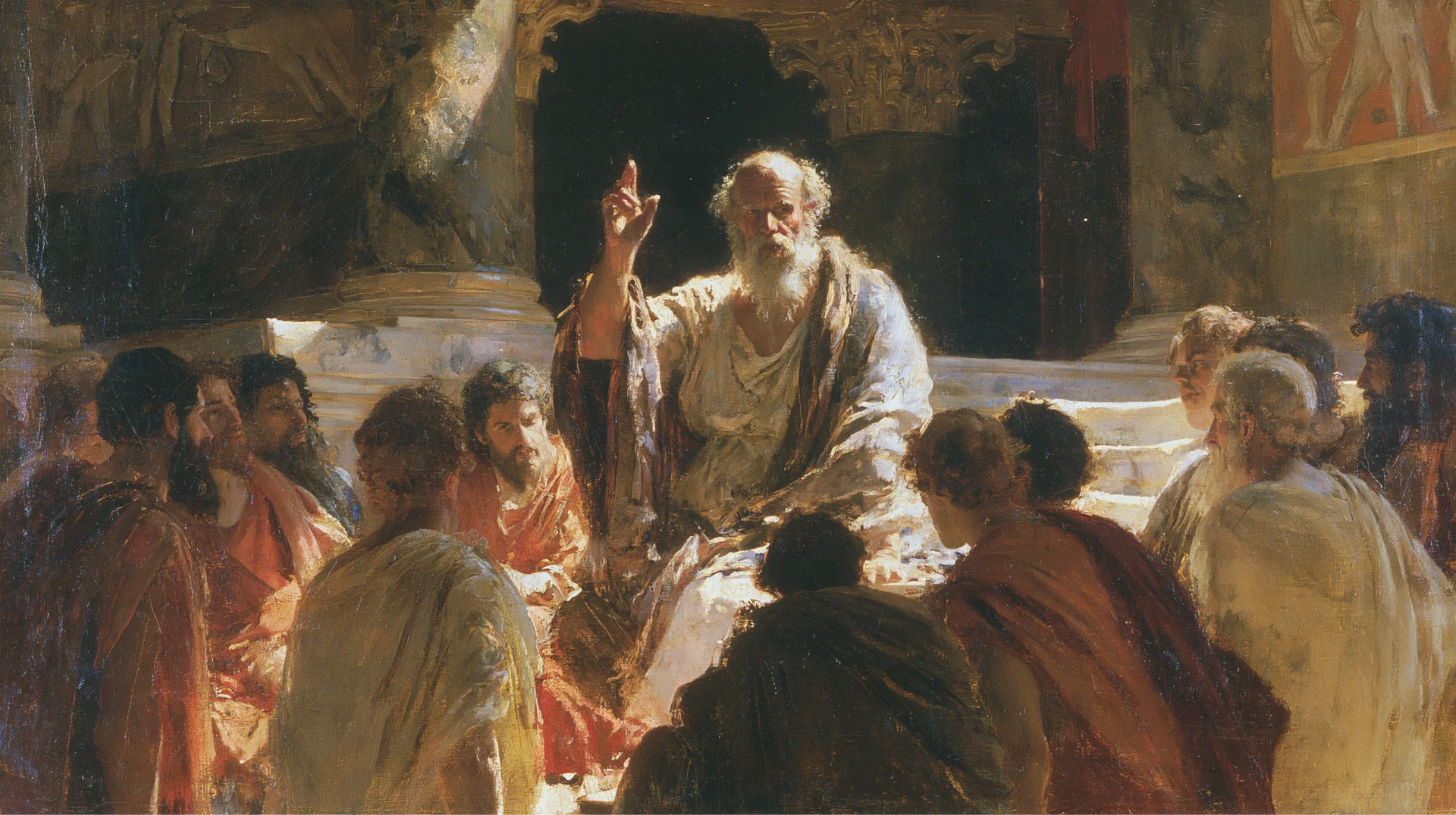
How myth made philosophy possible
Subscribe to our newsletter
Subscribe to our newsletter
New editions, new authors, new releases.
Subscribe to our newsletter and be the first to know what’s coming next from Logos Publishing.
Biographies
Socrates: the incarnation of philosophy
Metaphysics Logic
How myth made philosophy possible
In Book XI of the Odyssey, Odysseus descends to the underworld...
Logos Publishing
Metaphysics Logic
How myth made philosophy possible
VIEW ALL ARTICLES