Logos and Areté: The Logic of Virtue and the Crisis of Reason in Contemporary Politics
Logos and Areté: The Logic of Virtue and the Crisis of Reason in Contemporary Politics

Logos Publishing
Logos Publishing
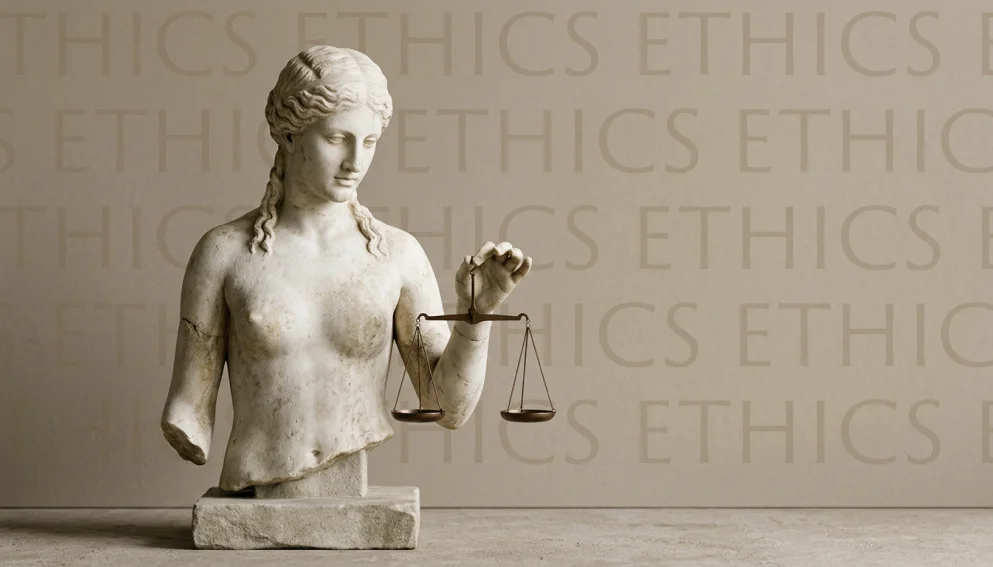
Ethics
Aristotle's logical writings, later compiled under the title Organon, were not conceived to be abstract "instruments" or "tools," but rather to be part of a complete philosophical project and to have their uses applied in practice. Aristotle started from the premise that thought, language, and reality are intrinsically connected; the structure of correct reasoning reflects the structure of reality itself. By defining the human being as a "political animal" (zoon politikon), Aristotle establishes that the full realization of our existence occurs in society within the polis (the city-state). Therefore, the art of governing and that of being a good citizen are not technical skills only, but also the practical reflection of a life guided by reason and virtue. It is here that we conceive the importance of what Aristotle considered regarding ethics, politics, and morality, and here we will briefly see how these concepts are strongly articulated with the Organon.
The final goal of all human action, for Aristotle, is eudaimonia, a concept that can be understood as "happiness" or "satisfaction." This satisfied life is not a passive or contemplative way of living, but rather an activity of the soul in accordance with virtue (aretē). Virtue, in turn, does not arise as an innate gift of the individual, but from a character acquired by habit, by the correct and daily exercise of our actions. It manifests as a balance, or a mean (mesotēs), between two vicious extremes, one of excess and the other of deficiency.
"Virtue, then, is a state of character concerned with choice, lying in a mean, i.e., the mean relative to us, this being determined by a rational principle, and by that principle by which the man of practical wisdom would determine it." (ARISTOTLE, Nicomachean Ethics).
Let us consider the virtue of courage. It is the mean between cowardice (deficiency) and recklessness (excess). The courageous citizen is not one who feels no fear, but one who, guided by reason, acts correctly even in the presence of fear. Likewise, generosity is the mean between avarice and wastefulness. Finding this balance in each situation requires more than good intention; it requires an intellectual faculty that Aristotle calls practical wisdom or prudence (phronesis). It is here that ethics and logic meet inseparably.
Logic as a Tool for Virtue and Political Choice
If virtue is the goal, phronesis (practical wisdom) is the ability to achieve it. And the tool that perfects this wisdom is logic—or logos. In the work Rhetoric, we have the definition of logos as the persuasion achieved through argumentation, by demonstrating a truth, or an apparent truth, in discourse (Aristotle, Rhetoric, Book I, 1356a). Aristotelian logic is the method by which we analyze reality: it teaches us to evaluate our premises—which are the facts or beliefs we use as a starting point—and to structure our thinking so that the conclusion is a valid consequence. The structure that guarantees this connection is the syllogism. At the same time, logic can train us to identify fallacies, which are arguments with errors or traps that invalidate reasoning. Without this capacity, the search for the virtuous mean becomes a matter of chance. In the political context, this connection is even more vital. Both the citizen who chooses their rulers and the ruler who makes decisions that affect the polis need this logical-moral guide.
How can a citizen choose a good leader without the ability to analyze speeches? Logic allows one to discern between a well-structured argument and an emotional fallacy. A candidate who promises easy solutions to complex problems by appealing to fear or prejudice acts viciously (an excess of demagoguery, a lack of moderation) and fallaciously. The virtuous citizen, on the other hand, uses reason to evaluate the candidate's character, the coherence of their proposals, and their demonstration of practical wisdom in the past. Voting becomes an act of phronesis. A ruler without virtue and the capacity for logical reasoning is a danger to the state. Their decisions tend to oscillate between extremes. Pressed by an economic crisis, a ruler without the virtue of temperance and a balanced analysis of the situation may adopt populist and unsustainable measures (excess), which generate immediate relief and long-term ruin. Or, for fear of making unpopular decisions (cowardice), they may paralyze the government, avoiding necessary reforms (deficiency). The virtuous ruler, in contrast, uses logic to diagnose the problem, deliberates with prudence on possible solutions, and acts with the courage to implement the policy that, though perhaps difficult, best serves the common good—the political satisfaction of the citizens. The absence of this union leads to corruption, nepotism, and tyranny, which Aristotle saw as the most degraded forms of government, as they aim for the good of the ruler, not that of the community.
The Good Ruler and the Purpose of Politics
For Aristotle, the purpose of politics is not power, wealth, or territorial expansion, but rather to create the conditions for citizens to live a virtuous life and achieve eudaimonia. The good ruler is, therefore, a facilitator of political satisfaction, an administrator at the service of the common good and civic well-being. Their authority derives from virtue and practical wisdom, not from force and coercion. This idea is made clear in the work Politics, where Aristotle argues that the experience of being governed is a prerequisite for the art of governing. The ideal leader is someone who understands the needs and perspective of the common citizen: "For he who has never learned to obey cannot be a good commander." (ARISTOTLE, Politics, Book III). The legitimacy of this quotation comes from empathy, experience, and a deep understanding that leadership is a service, not a privilege. Aristotle argues that the ruler must be the most virtuous of citizens, capable of using intelligence to navigate the complexities of power and ethics to stay the course toward the common good, rather than becoming a despot or tyrant.
The Erosion of Logos: Fallacy as a Power Strategy
Contemporary political discourse is marked by a systematic abandonment of logical argumentation in favor of the deliberate use of fallacies. Fallacies are not just reasoning errors; they can function as strategic "argumentative maneuvers" that violate the rules of a critical discussion to gain a rhetorical advantage over an opponent. They represent the instrumentalization of language to manipulate debate and seize power. The prevalence of fallacies in public debate is not just a problem of poor communication; it is a symptom of a deeper civic pathology. Aristotle's political project depends on the ability of citizens to deliberate rationally about the common good. The systematic use of fallacies constitutes an explicit rejection of this premise, replacing rational persuasion with psychological coercion. When leaders and citizens become unable to identify or refuse to reject fallacious reasoning, the foundation of the political community—a shared trust in the power of logos to mediate disputes and seek truth—disintegrates. The analysis of fallacies becomes more than an academic exercise; it becomes an assessment of democracy itself.
Below, we will explore some of the most recurrent fallacies in political discourse, analyzing their structure and manipulative purpose.
Argumentum ad Hominem: Attacks the character, circumstances, or personal traits of the opponent instead of refuting their argument. The structure is: "Person X claims Y. Person X has a negative characteristic. Therefore, Y is false." It diverts attention from the merit of the argument, discrediting the messenger to invalidate the message and appealing to the audience's prejudice against the individual or the group they represent. Example: "We cannot take the economic proposal of candidate A seriously, as he is under investigation for corruption." The analysis of the proposal is avoided, and the focus is shifted to a personal accusation, which may or may not be relevant to the quality of the proposal itself.
Straw Man Fallacy: Distorts, simplifies, or caricatures the opponent's argument to create a version ("straw man") that is easier to attack and refute. The structure is: "Person A advocates for X. Person B presents Y (a distortion of X) and refutes Y. Therefore, X is false." This fallacy makes the opponent's argument seem absurd or extreme, avoiding the challenge of confronting its real version. It creates a false sense of intellectual victory for the inattentive audience. Example: Politician A: "We should invest more in social programs to combat poverty." Politician B: "My opponent wants to turn the country into a communist state that takes money from those who work to give to those who want to do nothing." Politician B does not debate the merit of social investment but attacks an extremist caricature that was not proposed.
False Dilemma / False Dichotomy: Presents two options as the only possible alternatives when, in fact, others exist. The structure is: "Either A or B is true. A is false. Therefore, B must be true." (Ignoring possibilities C, D, etc.). This argumentative fallacy tends to deceptively simplify a complex issue, forcing the audience to choose a side and eliminating space for a middle ground, negotiation, or alternative solutions. Example: "Either you are with us in the war on terror, or you are with the terrorists." This statement ignores a vast range of possible positions, such as opposition to the war for strategic or humanitarian reasons, without implying support for the enemy.
The Rhetoric of Anger: Populism and the Demonization of the Other
Beyond the use of individual fallacies, a broader rhetorical strategy dominates the contemporary political scene: populism. Populist rhetoric constructs a conflict narrative that divides society into two homogeneous and antagonistic groups: "the oppressed people" and "the corrupt elite." The success of this strategy lies in its ability to weaken rational deliberation through the mobilization of intense emotions, such as anger, fear, and resentment. A central tactic of this rhetoric is the demonization of opponents. Political adversaries are no longer seen as citizens with different views on the common good, but as existential enemies who threaten the nation and must be fought and eliminated from the body politic. This approach is fundamentally anti-Aristotelian, as it destroys the possibility of "political friendship" (philia politike), which Aristotle considered the glue that holds the polis together. Deliberate polarization, fueled by anger, prevents any form of rational and joint deliberation.
This phenomenon can be understood as a deliberate inversion of Aristotle's rhetorical triad. In his Rhetoric, Aristotle describes three modes of persuasion: logos (the logic and force of the argument), pathos (the ability to evoke emotions in the audience), and ethos (the character and credibility of the speaker). In a virtuous rhetoric, logos is the primary element, with pathos and ethos serving to make the truth more accessible and persuasive. Modern populist rhetoric inverts this hierarchy. Pathos—the appeal to anger against the "elites" and fear of the "other"—becomes the driving force. The leader's ethos is not built on prudence (phronesis) or virtue, but on a combative authenticity and a supposed divine connection with the "will of the people" (FERREIRA, 2025). Logos is demoted to a simplistic and often fallacious form of reasoning, whose only function is to provide a consequentialist rationalization for the passions already incited. Populism is not just non-Aristotelian; it is a systematic corruption of the structure of rational persuasion, transforming a tool of civic deliberation into a weapon of cultural warfare.
The Lack of Ethos: Disinformation and the Crisis of Judgment in the Digital Age
The crisis of reason in politics is dramatically amplified by the information deluge of the digital age. The dizzying speed at which information (and disinformation) spreads undermines the ability of citizens to deliberate with the tranquility necessary to form sound judgments. The proliferation of fake news and organized disinformation campaigns not only introduces incorrect "facts" into the public debate but also attacks the very possibility of evaluating the character (ethos) of a political leader. When citizens are bombarded with false narratives, distorted contexts, and fabricated slander, the basis for rational judgment disintegrates. Disinformation suffocates real debate about projects and ideas, replacing it with "factoids"—lies that polarize and confuse. Coherent and well-informed choice, a pillar of any functional democracy, becomes almost impossible, representing an existential threat to the democratic process. This crisis can be precisely diagnosed using the structure of the practical syllogism. A citizen's deliberation when voting can be modeled as follows:
Major Premise: "I must vote for a candidate who is honest and competent to promote the common good."
Minor Premise: "Candidate X is honest and competent."
Conclusion (Action): "I vote for Candidate X."
The digital age has created a systemic crisis for the minor premise of this political syllogism. Disinformation campaigns directly attack the citizen's ability to perceive reality correctly. They fabricate an alternative reality in which Candidate X can be portrayed as an immaculate hero or a monstrous villain, regardless of their true qualities. Even if the citizen holds a virtuous major premise (a sincere desire for the country's good), if their perception of reality (the minor premise) is systematically distorted, their conclusion (the vote) will, from the perspective of practical rationality, necessarily be flawed. Therefore, combating disinformation is not just a matter of "good digital manners"; it is an indispensable condition for restoring the possibility of rational political deliberation.
The Virtuous Decision
Returning to Aristotle today is not merely an academic exercise; it is an urgent necessity. In a global political landscape often dominated by polarization, disinformation, and emotional appeals that disdain logic, the Aristotelian synthesis of reason and virtue offers a powerful weapon to the citizen. They depend on the capabilities and character of their citizens and leaders. The choice of a ruler is a reflection of society's values, and a just government is the product of prudent and virtuous decisions. Logic, therefore, does not only serve the theoretical field; it is a mechanism that makes ethics practicable and good politics possible. The answer to our crisis lies in recognizing the urgent need to cultivate rationality and good sense. This implies concrete, albeit arduous, tasks: promoting logical and media literacy that empowers citizens to identify fallacies and disinformation; fostering spaces for genuine political deliberation that transcend the rhetoric of anger and polarization; and, above all, valuing and demanding from our leaders not just charisma or rhetorical skill, but the intellectual and character virtues—especially phronesis—that are the mark of the true statesman.
The Aristotelian project reminds us that politics, in its noblest form, is an activity of practical reason aimed at human satisfaction in society. The recovery of a healthy politics requires the recovery of our collective capacity to think, deliberate, and act logically and virtuously.
By Peter Webster - Philosophy Teacher and Logos Publishing Editor
Bibliography
Aristotle. The Art of Rhetoric. Translated by Hugh Lawson-Tancred. London: Penguin Classics, 1991.
Aristotle. The Nicomachean Ethics. Translated by David Ross. Revised by Lesley Brown. Oxford: Oxford University Press, 2009.
Aristotle. Politics. Translated by Ernest Barker. Revised by R. F. Stalley. Oxford: Oxford University Press, 2009.
Fiveable. "Aristotle's Logic and the Organon." Accessed September 8, 2025. https://library.fiveable.me/greek-philosophy/unit-13.
Rawls, John. A Theory of Justice. Cambridge, MA: Harvard University Press, 1971.
Aristotle's logical writings, later compiled under the title Organon, were not conceived to be abstract "instruments" or "tools," but rather to be part of a complete philosophical project and to have their uses applied in practice. Aristotle started from the premise that thought, language, and reality are intrinsically connected; the structure of correct reasoning reflects the structure of reality itself. By defining the human being as a "political animal" (zoon politikon), Aristotle establishes that the full realization of our existence occurs in society within the polis (the city-state). Therefore, the art of governing and that of being a good citizen are not technical skills only, but also the practical reflection of a life guided by reason and virtue. It is here that we conceive the importance of what Aristotle considered regarding ethics, politics, and morality, and here we will briefly see how these concepts are strongly articulated with the Organon.
The final goal of all human action, for Aristotle, is eudaimonia, a concept that can be understood as "happiness" or "satisfaction." This satisfied life is not a passive or contemplative way of living, but rather an activity of the soul in accordance with virtue (aretē). Virtue, in turn, does not arise as an innate gift of the individual, but from a character acquired by habit, by the correct and daily exercise of our actions. It manifests as a balance, or a mean (mesotēs), between two vicious extremes, one of excess and the other of deficiency.
"Virtue, then, is a state of character concerned with choice, lying in a mean, i.e., the mean relative to us, this being determined by a rational principle, and by that principle by which the man of practical wisdom would determine it." (ARISTOTLE, Nicomachean Ethics).
Let us consider the virtue of courage. It is the mean between cowardice (deficiency) and recklessness (excess). The courageous citizen is not one who feels no fear, but one who, guided by reason, acts correctly even in the presence of fear. Likewise, generosity is the mean between avarice and wastefulness. Finding this balance in each situation requires more than good intention; it requires an intellectual faculty that Aristotle calls practical wisdom or prudence (phronesis). It is here that ethics and logic meet inseparably.
Logic as a Tool for Virtue and Political Choice
If virtue is the goal, phronesis (practical wisdom) is the ability to achieve it. And the tool that perfects this wisdom is logic—or logos. In the work Rhetoric, we have the definition of logos as the persuasion achieved through argumentation, by demonstrating a truth, or an apparent truth, in discourse (Aristotle, Rhetoric, Book I, 1356a). Aristotelian logic is the method by which we analyze reality: it teaches us to evaluate our premises—which are the facts or beliefs we use as a starting point—and to structure our thinking so that the conclusion is a valid consequence. The structure that guarantees this connection is the syllogism. At the same time, logic can train us to identify fallacies, which are arguments with errors or traps that invalidate reasoning. Without this capacity, the search for the virtuous mean becomes a matter of chance. In the political context, this connection is even more vital. Both the citizen who chooses their rulers and the ruler who makes decisions that affect the polis need this logical-moral guide.
How can a citizen choose a good leader without the ability to analyze speeches? Logic allows one to discern between a well-structured argument and an emotional fallacy. A candidate who promises easy solutions to complex problems by appealing to fear or prejudice acts viciously (an excess of demagoguery, a lack of moderation) and fallaciously. The virtuous citizen, on the other hand, uses reason to evaluate the candidate's character, the coherence of their proposals, and their demonstration of practical wisdom in the past. Voting becomes an act of phronesis. A ruler without virtue and the capacity for logical reasoning is a danger to the state. Their decisions tend to oscillate between extremes. Pressed by an economic crisis, a ruler without the virtue of temperance and a balanced analysis of the situation may adopt populist and unsustainable measures (excess), which generate immediate relief and long-term ruin. Or, for fear of making unpopular decisions (cowardice), they may paralyze the government, avoiding necessary reforms (deficiency). The virtuous ruler, in contrast, uses logic to diagnose the problem, deliberates with prudence on possible solutions, and acts with the courage to implement the policy that, though perhaps difficult, best serves the common good—the political satisfaction of the citizens. The absence of this union leads to corruption, nepotism, and tyranny, which Aristotle saw as the most degraded forms of government, as they aim for the good of the ruler, not that of the community.
The Good Ruler and the Purpose of Politics
For Aristotle, the purpose of politics is not power, wealth, or territorial expansion, but rather to create the conditions for citizens to live a virtuous life and achieve eudaimonia. The good ruler is, therefore, a facilitator of political satisfaction, an administrator at the service of the common good and civic well-being. Their authority derives from virtue and practical wisdom, not from force and coercion. This idea is made clear in the work Politics, where Aristotle argues that the experience of being governed is a prerequisite for the art of governing. The ideal leader is someone who understands the needs and perspective of the common citizen: "For he who has never learned to obey cannot be a good commander." (ARISTOTLE, Politics, Book III). The legitimacy of this quotation comes from empathy, experience, and a deep understanding that leadership is a service, not a privilege. Aristotle argues that the ruler must be the most virtuous of citizens, capable of using intelligence to navigate the complexities of power and ethics to stay the course toward the common good, rather than becoming a despot or tyrant.
The Erosion of Logos: Fallacy as a Power Strategy
Contemporary political discourse is marked by a systematic abandonment of logical argumentation in favor of the deliberate use of fallacies. Fallacies are not just reasoning errors; they can function as strategic "argumentative maneuvers" that violate the rules of a critical discussion to gain a rhetorical advantage over an opponent. They represent the instrumentalization of language to manipulate debate and seize power. The prevalence of fallacies in public debate is not just a problem of poor communication; it is a symptom of a deeper civic pathology. Aristotle's political project depends on the ability of citizens to deliberate rationally about the common good. The systematic use of fallacies constitutes an explicit rejection of this premise, replacing rational persuasion with psychological coercion. When leaders and citizens become unable to identify or refuse to reject fallacious reasoning, the foundation of the political community—a shared trust in the power of logos to mediate disputes and seek truth—disintegrates. The analysis of fallacies becomes more than an academic exercise; it becomes an assessment of democracy itself.
Below, we will explore some of the most recurrent fallacies in political discourse, analyzing their structure and manipulative purpose.
Argumentum ad Hominem: Attacks the character, circumstances, or personal traits of the opponent instead of refuting their argument. The structure is: "Person X claims Y. Person X has a negative characteristic. Therefore, Y is false." It diverts attention from the merit of the argument, discrediting the messenger to invalidate the message and appealing to the audience's prejudice against the individual or the group they represent. Example: "We cannot take the economic proposal of candidate A seriously, as he is under investigation for corruption." The analysis of the proposal is avoided, and the focus is shifted to a personal accusation, which may or may not be relevant to the quality of the proposal itself.
Straw Man Fallacy: Distorts, simplifies, or caricatures the opponent's argument to create a version ("straw man") that is easier to attack and refute. The structure is: "Person A advocates for X. Person B presents Y (a distortion of X) and refutes Y. Therefore, X is false." This fallacy makes the opponent's argument seem absurd or extreme, avoiding the challenge of confronting its real version. It creates a false sense of intellectual victory for the inattentive audience. Example: Politician A: "We should invest more in social programs to combat poverty." Politician B: "My opponent wants to turn the country into a communist state that takes money from those who work to give to those who want to do nothing." Politician B does not debate the merit of social investment but attacks an extremist caricature that was not proposed.
False Dilemma / False Dichotomy: Presents two options as the only possible alternatives when, in fact, others exist. The structure is: "Either A or B is true. A is false. Therefore, B must be true." (Ignoring possibilities C, D, etc.). This argumentative fallacy tends to deceptively simplify a complex issue, forcing the audience to choose a side and eliminating space for a middle ground, negotiation, or alternative solutions. Example: "Either you are with us in the war on terror, or you are with the terrorists." This statement ignores a vast range of possible positions, such as opposition to the war for strategic or humanitarian reasons, without implying support for the enemy.
The Rhetoric of Anger: Populism and the Demonization of the Other
Beyond the use of individual fallacies, a broader rhetorical strategy dominates the contemporary political scene: populism. Populist rhetoric constructs a conflict narrative that divides society into two homogeneous and antagonistic groups: "the oppressed people" and "the corrupt elite." The success of this strategy lies in its ability to weaken rational deliberation through the mobilization of intense emotions, such as anger, fear, and resentment. A central tactic of this rhetoric is the demonization of opponents. Political adversaries are no longer seen as citizens with different views on the common good, but as existential enemies who threaten the nation and must be fought and eliminated from the body politic. This approach is fundamentally anti-Aristotelian, as it destroys the possibility of "political friendship" (philia politike), which Aristotle considered the glue that holds the polis together. Deliberate polarization, fueled by anger, prevents any form of rational and joint deliberation.
This phenomenon can be understood as a deliberate inversion of Aristotle's rhetorical triad. In his Rhetoric, Aristotle describes three modes of persuasion: logos (the logic and force of the argument), pathos (the ability to evoke emotions in the audience), and ethos (the character and credibility of the speaker). In a virtuous rhetoric, logos is the primary element, with pathos and ethos serving to make the truth more accessible and persuasive. Modern populist rhetoric inverts this hierarchy. Pathos—the appeal to anger against the "elites" and fear of the "other"—becomes the driving force. The leader's ethos is not built on prudence (phronesis) or virtue, but on a combative authenticity and a supposed divine connection with the "will of the people" (FERREIRA, 2025). Logos is demoted to a simplistic and often fallacious form of reasoning, whose only function is to provide a consequentialist rationalization for the passions already incited. Populism is not just non-Aristotelian; it is a systematic corruption of the structure of rational persuasion, transforming a tool of civic deliberation into a weapon of cultural warfare.
The Lack of Ethos: Disinformation and the Crisis of Judgment in the Digital Age
The crisis of reason in politics is dramatically amplified by the information deluge of the digital age. The dizzying speed at which information (and disinformation) spreads undermines the ability of citizens to deliberate with the tranquility necessary to form sound judgments. The proliferation of fake news and organized disinformation campaigns not only introduces incorrect "facts" into the public debate but also attacks the very possibility of evaluating the character (ethos) of a political leader. When citizens are bombarded with false narratives, distorted contexts, and fabricated slander, the basis for rational judgment disintegrates. Disinformation suffocates real debate about projects and ideas, replacing it with "factoids"—lies that polarize and confuse. Coherent and well-informed choice, a pillar of any functional democracy, becomes almost impossible, representing an existential threat to the democratic process. This crisis can be precisely diagnosed using the structure of the practical syllogism. A citizen's deliberation when voting can be modeled as follows:
Major Premise: "I must vote for a candidate who is honest and competent to promote the common good."
Minor Premise: "Candidate X is honest and competent."
Conclusion (Action): "I vote for Candidate X."
The digital age has created a systemic crisis for the minor premise of this political syllogism. Disinformation campaigns directly attack the citizen's ability to perceive reality correctly. They fabricate an alternative reality in which Candidate X can be portrayed as an immaculate hero or a monstrous villain, regardless of their true qualities. Even if the citizen holds a virtuous major premise (a sincere desire for the country's good), if their perception of reality (the minor premise) is systematically distorted, their conclusion (the vote) will, from the perspective of practical rationality, necessarily be flawed. Therefore, combating disinformation is not just a matter of "good digital manners"; it is an indispensable condition for restoring the possibility of rational political deliberation.
The Virtuous Decision
Returning to Aristotle today is not merely an academic exercise; it is an urgent necessity. In a global political landscape often dominated by polarization, disinformation, and emotional appeals that disdain logic, the Aristotelian synthesis of reason and virtue offers a powerful weapon to the citizen. They depend on the capabilities and character of their citizens and leaders. The choice of a ruler is a reflection of society's values, and a just government is the product of prudent and virtuous decisions. Logic, therefore, does not only serve the theoretical field; it is a mechanism that makes ethics practicable and good politics possible. The answer to our crisis lies in recognizing the urgent need to cultivate rationality and good sense. This implies concrete, albeit arduous, tasks: promoting logical and media literacy that empowers citizens to identify fallacies and disinformation; fostering spaces for genuine political deliberation that transcend the rhetoric of anger and polarization; and, above all, valuing and demanding from our leaders not just charisma or rhetorical skill, but the intellectual and character virtues—especially phronesis—that are the mark of the true statesman.
The Aristotelian project reminds us that politics, in its noblest form, is an activity of practical reason aimed at human satisfaction in society. The recovery of a healthy politics requires the recovery of our collective capacity to think, deliberate, and act logically and virtuously.
By Peter Webster - Philosophy Teacher and Logos Publishing Editor
Bibliography
Aristotle. The Art of Rhetoric. Translated by Hugh Lawson-Tancred. London: Penguin Classics, 1991.
Aristotle. The Nicomachean Ethics. Translated by David Ross. Revised by Lesley Brown. Oxford: Oxford University Press, 2009.
Aristotle. Politics. Translated by Ernest Barker. Revised by R. F. Stalley. Oxford: Oxford University Press, 2009.
Fiveable. "Aristotle's Logic and the Organon." Accessed September 8, 2025. https://library.fiveable.me/greek-philosophy/unit-13.
Rawls, John. A Theory of Justice. Cambridge, MA: Harvard University Press, 1971.
How Logos Philosophy Club Supports Your Reading
How Logos Philosophy Club Supports Your Reading

Diving into philosophy on your own can feel like navigating a maze - dense arguments, unfamiliar terms, and complex ideas can leave you feeling stuck. That’s where Logos Philosophy Club steps in, transforming solitary study into a guided and enriched journey. As the first philosophy subscription book club in the U.S. focused exclusively on foundational works, it’s backed by a parent publishing group in Brazil with over 20,000 monthly subscribers.
Each month, members receive bilingual editions of foundational texts, meticulously translated from their original languages. These side-by-side editions allow you to compare the translation with the source text, which is especially helpful when tackling works like Plato’s The Symposium (set for March 2026) or Aristotle’s Nicomachean Ethics (coming December 2025). This format not only enhances understanding but also reflects the club’s dedication to providing high-quality materials.
Tags
Recent Blogs

Biographies
Socrates: the incarnation of philosophy

Metaphysics Logic
How myth made philosophy possible
Subscribe to our newsletter
Subscribe to our newsletter
New editions, new authors, new releases.
Subscribe to our newsletter and be the first to know what’s coming next from Logos Publishing.
Biographies
Socrates: the incarnation of philosophy
Metaphysics Logic
How myth made philosophy possible
In Book XI of the Odyssey, Odysseus descends to the underworld...
Logos Publishing
Metaphysics Logic
How myth made philosophy possible
VIEW ALL ARTICLES