Boethius’s
The Consolation of Philosophy

Boethius’s
The Consolation of Philosophy

Boethius’s
The Consolation of Philosophy

Reason, Fortune, and the Unconquered Mind

Reason, Fortune, and the Unconquered Mind

Reason, Fortune, and
the Unconquered Mind

Reserve Your Copy

Reserve Your Copy

Hardcover

Trilingual
Edition

Commentaries by
Medieval philosophers

Translator’s
Preface

Ribbon Marker

What remains when fortune collapses?

What remains when fortune collapses?

What remains when fortune collapses?

This is the question Boethius was forced to confront when power, status, and protection were taken from him, and death was already approaching.


Written in a prison cell at the twilight of the Roman world, The Consolation of Philosophy is a dialogue between a fallen statesman and Philosophy herself. It is not a work of abstract speculation, but a rigorous examination of happiness, injustice, suffering, freedom, and divine order, composed under the pressure of real catastrophe.

Boethius asks how to remain free when everything external is lost.

Through alternating prose and verse, Philosophy dismantles false goods, exposes the instability of fortune, and leads the reader toward a vision of the good life grounded in reason, virtue, and participation in what is eternal.

Every page insists on a hard truth that remains urgent today: what fortune gives, fortune can take away, but what is rooted in reason cannot be conquered.

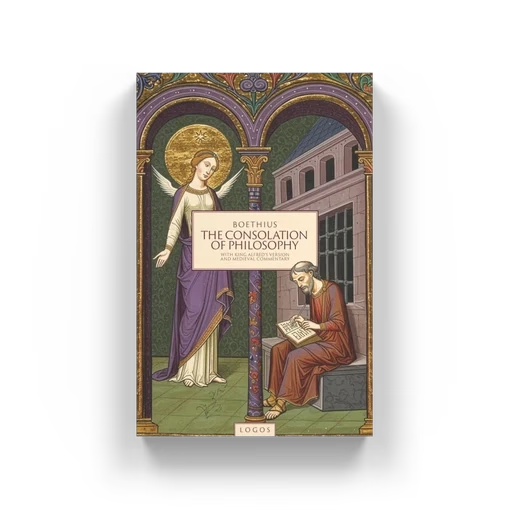
In the Logos edition, you will find a trilingual presentation of the text, bringing together Boethius’ Latin, a clear English translation, and the Old English version attributed to King Alfred.

The volume is enriched with medieval scholastic commentaries, editorial guidance, and the Logos Reader.

It is a book for those who want to understand how a rational life can endure even at the edge of ruin.

This is the question Boethius was forced to confront when power, status, and protection were taken from him, and death was already approaching.


Written in a prison cell at the twilight of the Roman world, The Consolation of Philosophy is a dialogue between a fallen statesman and Philosophy herself. It is not a work of abstract speculation, but a rigorous examination of happiness, injustice, suffering, freedom, and divine order, composed under the pressure of real catastrophe.

Boethius asks how to remain free when everything external is lost.

Through alternating prose and verse, Philosophy dismantles false goods, exposes the instability of fortune, and leads the reader toward a vision of the good life grounded in reason, virtue, and participation in what is eternal.

Every page insists on a hard truth that remains urgent today: what fortune gives, fortune can take away, but what is rooted in reason cannot be conquered.

In the Logos edition, you will find a trilingual presentation of the text, bringing together Boethius’ Latin, a clear English translation, and the Old English version attributed to King Alfred.

The volume is enriched with medieval scholastic commentaries, editorial guidance, and the Logos Reader.

It is a book for those who want to understand how a rational life can endure even at the edge of ruin.

Reserve Your Copy

What you will receive

What you will receive

Inside the Box

Inside the Box

Inside the Box

Trilingual edition: Latin text, English translation, and the Old English version attributed to King Alfred

Trilingual edition: Latin text, English translation, and the Old English version attributed to King Alfred

Authoritative medieval commentaries that transmit, interpret, and deepen Boethius’s thought.

Authoritative medieval commentaries that transmit, interpret, and deepen Boethius’s thought.

Editorial preface introducing the historical context, structure, and themes of the work

Editorial preface introducing the historical context, structure, and themes of the work

Hardcover binding with ribbon marker, designed for long-term study

Hardcover binding with ribbon marker, designed for long-term study

Includes a thematic bookmark and the Logos Reader: “The Unconquered Mind: Boethius and His World”

Includes a thematic bookmark and the Logos Reader: “The Unconquered Mind: Boethius and His World”

Reserve Your Copy

A woman with long hair and a black blazer holds a copy of Boethius's "The Consolation of Philosophy" next to her face, published by Logos.
Presentation of the hardcover of the book Consolation of Philosophy by Boethius, illustrated edition by Logos.
Hands holding the book The Consolation of Philosophy by Boethius, published by Logos, on a rustic wooden surface.
Woman wearing a black blazer holding the hardcover book The Consolation of Philosophy by Boethius, Logos edition.

Why This
Work Matters

Why This
Work Matters

Written in a prison cell, as Boethius awaited execution, The Consolation of Philosophy became one of the most widely read and influential books of the medieval world. From the early Middle Ages onward, it circulated in hundreds of manuscripts and was copied, commented on, and taught across monasteries, cathedral schools, and later universities throughout Europe.

By the ninth century, the work had already entered the cultural core of medieval society. It was translated into Old English under the patronage of King Alfred, who regarded it as essential reading for the moral and intellectual formation of his kingdom. In the centuries that followed, it was translated into Middle English, French, German, Italian, and other vernaculars, including the famous Middle English version by Chaucer.

Throughout the Middle Ages, The Consolation of Philosophy functioned as a bridge between classical philosophy and Christian culture. Its treatment of happiness, fortune, providence, free will, and moral responsibility shaped medieval ethics and political thought, influencing authors such as Thomas Aquinas, Dante, Jean de Meun, and countless lesser-known scholastic commentators. Its image of the Wheel of Fortune became a central symbol of medieval literature and art, appearing in manuscripts, sermons, poems, and political theory

The Consolation of Philosophy occupied a unique place in medieval reading culture. It was routinely studied alongside Scripture and the Church Fathers, and for centuries it ranked among the most copied and read books in Western Europe. Medieval sources and modern scholarship consistently describe it as one of the most widely read works after the Bible, especially among educated laypeople and clergy.

It taught generations of readers how to think about loss, injustice, and suffering without abandoning reason. In doing so, it helped shape the moral imagination of medieval Europe and secured its place as one of the foundational texts of Western civilization.

Written in a prison cell, as Boethius awaited execution, The Consolation of Philosophy became one of the most widely read and influential books of the medieval world. From the early Middle Ages onward, it circulated in hundreds of manuscripts and was copied, commented on, and taught across monasteries, cathedral schools, and later universities throughout Europe.

By the ninth century, the work had already entered the cultural core of medieval society. It was translated into Old English under the patronage of King Alfred, who regarded it as essential reading for the moral and intellectual formation of his kingdom. In the centuries that followed, it was translated into Middle English, French, German, Italian, and other vernaculars, including the famous Middle English version by Chaucer.

Throughout the Middle Ages, The Consolation of Philosophy functioned as a bridge between classical philosophy and Christian culture. Its treatment of happiness, fortune, providence, free will, and moral responsibility shaped medieval ethics and political thought, influencing authors such as Thomas Aquinas, Dante, Jean de Meun, and countless lesser-known scholastic commentators. Its image of the Wheel of Fortune became a central symbol of medieval literature and art, appearing in manuscripts, sermons, poems, and political theory

The Consolation of Philosophy occupied a unique place in medieval reading culture. It was routinely studied alongside Scripture and the Church Fathers, and for centuries it ranked among the most copied and read books in Western Europe. Medieval sources and modern scholarship consistently describe it as one of the most widely read works after the Bible, especially among educated laypeople and clergy.

It taught generations of readers how to think about loss, injustice, and suffering without abandoning reason. In doing so, it helped shape the moral imagination of medieval Europe and secured its place as one of the foundational texts of Western civilization.

Reserve Your Copy

A Journey Beyond One Book

A Journey Beyond One Book

Join the Logos
Philosophy Club

Join the Logos
Philosophy Club

The Consolation of Philosophy is not an isolated masterpiece. It belongs to a long tradition of works that ask how a rational life can be lived across changing historical conditions.

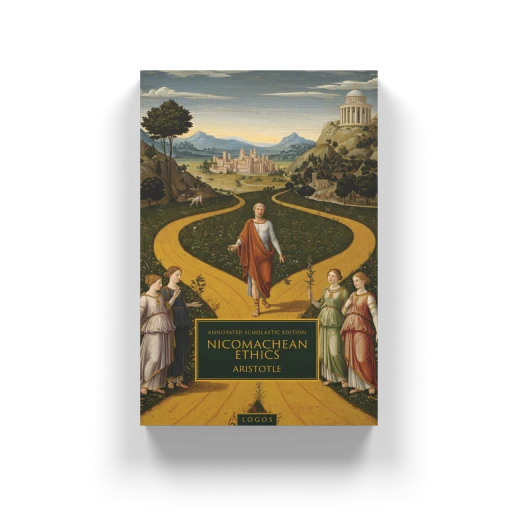
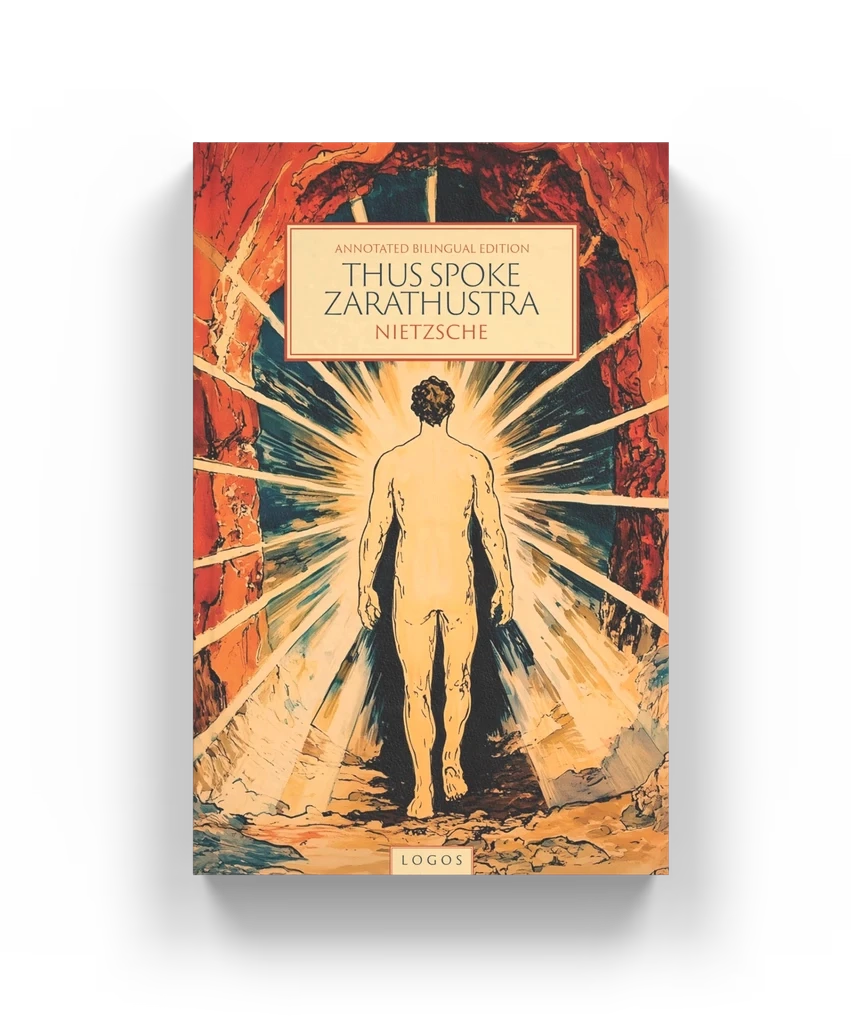
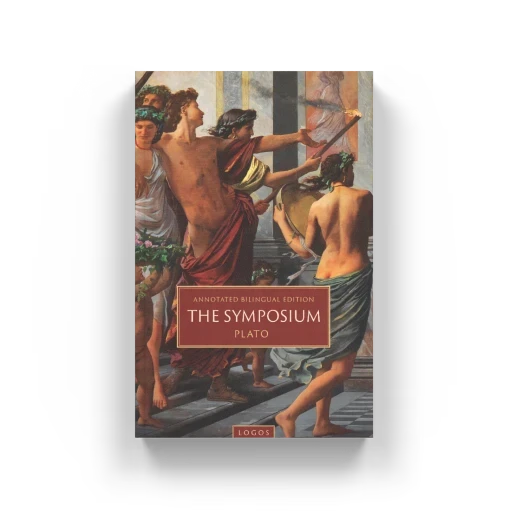
As a member of the Logos Philosophy Club, you receive a new volume every month, each one produced with the same editorial rigor and physical care:

The Consolation of Philosophy is not an isolated masterpiece. It belongs to a long tradition of works that ask how a rational life can be lived across changing historical conditions.

As a member of the Logos Philosophy Club, you receive a new volume every month, each one produced with the same editorial rigor and physical care:

Hardcover binding

Hardcover editions
made to endure

Bilingual or trilingual text

Bilingual texts:
original language and
English translation

Ribbon marker

A brief guide to
accompany and enrich the
reading experience

Fine, high-quality paper

Careful editing and printing
worthy of timeless works

Every edition comes with:

Every edition comes with:

Exclusive gifts — bookmarks, posters, or collectible items

Exclusive gifts — bookmarks, posters, or collectible items

The Logos Reader — a guide with essays, commentaries, and suggested readings to deepen your understanding

The Logos Reader — a guide with essays, commentaries, and suggested readings to deepen your understanding

Works carefully selected to trace the great line of thought from Ancient philosophy through the medieval and modern world

Works carefully selected to trace the great line of thought from Ancient philosophy through the medieval and modern world

Join the Club

A growing philosophical library,
delivered monthly to your home

A growing philosophical library,
delivered monthly to your home

Choose Your Plan

Choose Your Plan

Monthly Membership

Monthly Membership

starting with Boethius’s
The Consolation of Philosophy

starting with Boethius’s
The Consolation of Philosophy

Grant a philosophy masterpiece delivered each month

Grant a philosophy masterpiece delivered each month

The Logos Reader — a guide to deepen your understanding

The Logos Reader — a guide to deepen your understanding

Exclusive gifts — bookmarks, posters, or collectible items

Exclusive gifts — bookmarks, posters, or collectible items

Discount on the subscription

Discount on the subscription

$45

$45

$45

/ month

/ month

/ month

$540 / year

Yearly Membership

Yearly Membership

starting with Boethius’s
The Consolation of Philosophy

starting with Boethius’s
The Consolation of Philosophy

Grant a full year of philosophy masterpieces delivered each month

Grant a full year of philosophy masterpieces delivered each month

The Logos Reader — a guide to deepen your understanding

The Logos Reader — a guide to deepen your understanding

Exclusive gifts — bookmarks, posters, or collectible items

Exclusive gifts — bookmarks, posters, or collectible items

Discount on the subscription

Discount on the subscription

$35

$35

$35

/ month

/ month

/ month

$420 / year

Frequently Asked Questions

Frequently Asked Questions

When will my copy of The Consolation of Philosophy ship?

When will my copy of The Consolation of Philosophy ship?

When will my copy of The Consolation of Philosophy ship?

What am I subscribing to?

What am I subscribing to?

What am I subscribing to?

What is the difference between the Monthly and Yearly subscriptions?

What is the difference between the Monthly and Yearly subscriptions?

What is the difference between the Monthly and Yearly subscriptions?

When will I receive the other books in the Club?

When will I receive the other books in the Club?

When will I receive the other books in the Club?

Is shipping available everywhere in the U.S.?

Is shipping available everywhere in the U.S.?

Is shipping available everywhere in the U.S.?

What exactly is included in The Consolation of Philosophy edition?

What exactly is included in The Consolation of Philosophy edition?

What exactly is included in The Consolation of Philosophy edition?

Are taxes or shipping fees included?

Are taxes or shipping fees included?

Are taxes or shipping fees included?

How does billing work for the Yearly Membership?

How does billing work for the Yearly Membership?

How does billing work for the Yearly Membership?

Can I cancel my subscription?

Can I cancel my subscription?

Can I cancel my subscription?

What is your returns and damages policy?

What is your returns and damages policy?

What is your returns and damages policy?

Can I change my shipping address after subscribing?

Can I change my shipping address after subscribing?

Can I change my shipping address after subscribing?

Will I receive tracking information?

Will I receive tracking information?

Will I receive tracking information?

What if I only want The Consolation of Philosophy now and decide on membership later?

What if I only want The Consolation of Philosophy now and decide on membership later?

What if I only want The Consolation of Philosophy now and decide on membership later?

Timeless ideas
deserve
timeless editions

My account

Manage Orders

Address

4851 W Hillsboro Blvd, A3

Coconut Creek, FL 33073

© Logos Press LLC, 2025.

Timeless ideas
deserve
timeless editions

My account

Manage Orders

Address

4851 W Hillsboro Blvd, A3

Coconut Creek, FL 33073

© Logos Press LLC, 2025.

Timeless ideas
deserve
timeless editions

My account

Manage Orders

Address

4851 W Hillsboro Blvd, A3

Coconut Creek, FL 33073

© Logos Press LLC, 2025.